

Images shot with the 7Artisans 10mm f3.5 on the Sony NEX-5N
A few years ago, I needed somewhere to go and test out a new film camera I’d bought. This was the Reto Ultra Wide & Slim. So I took it to Southwell and put a roll of Kentmere Pan 100 through it.
I thought the results were decent enough. The imposing Southwell Minster made a good subject for that camera’s 22mm wide-angle lens. You can judge for yourself here.
So when I picked up a new 7Artisans 10mm f3.5 lens for my mirrorless camera and needed somewhere to try this out too, I thought why not head back?
Head back I did, and what we have here are the results from that day. Round two of shooting monochrome in Southwell with a very wide lens. This time on digital, and this time even wider than ultra wide.
Contents
Starting off at Southwell Minster
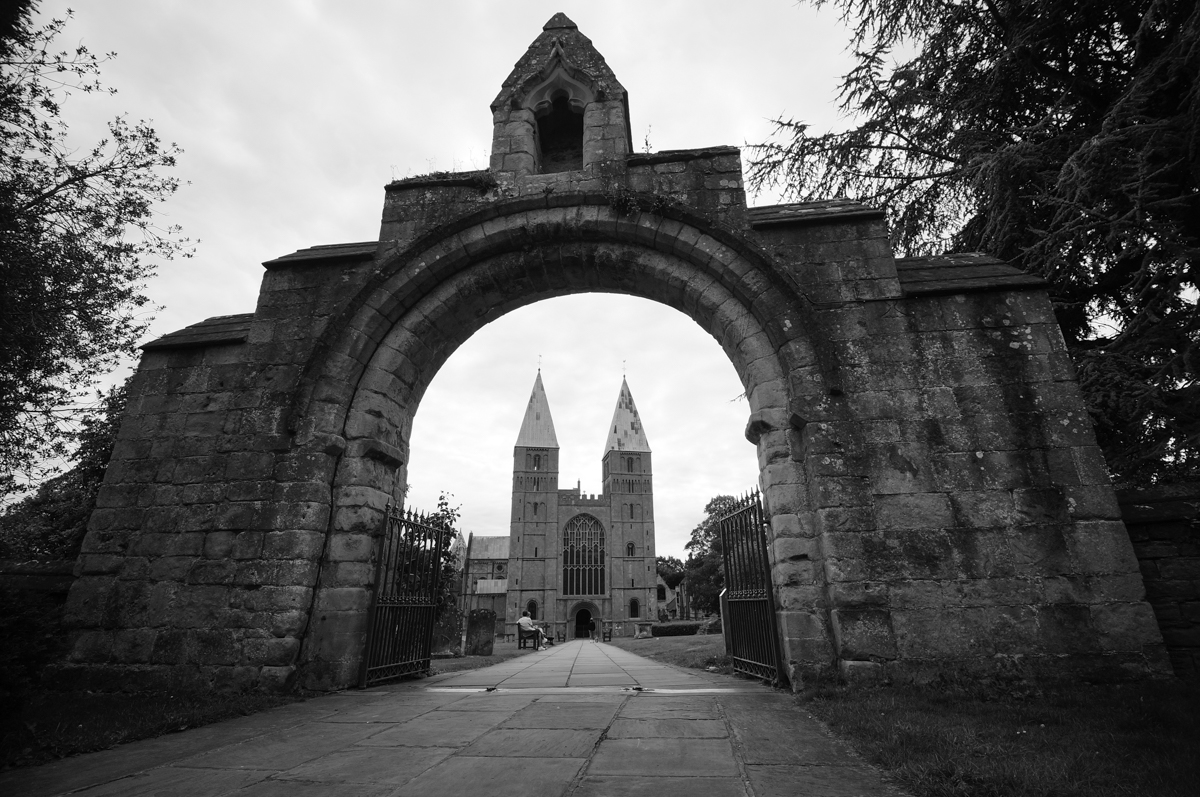
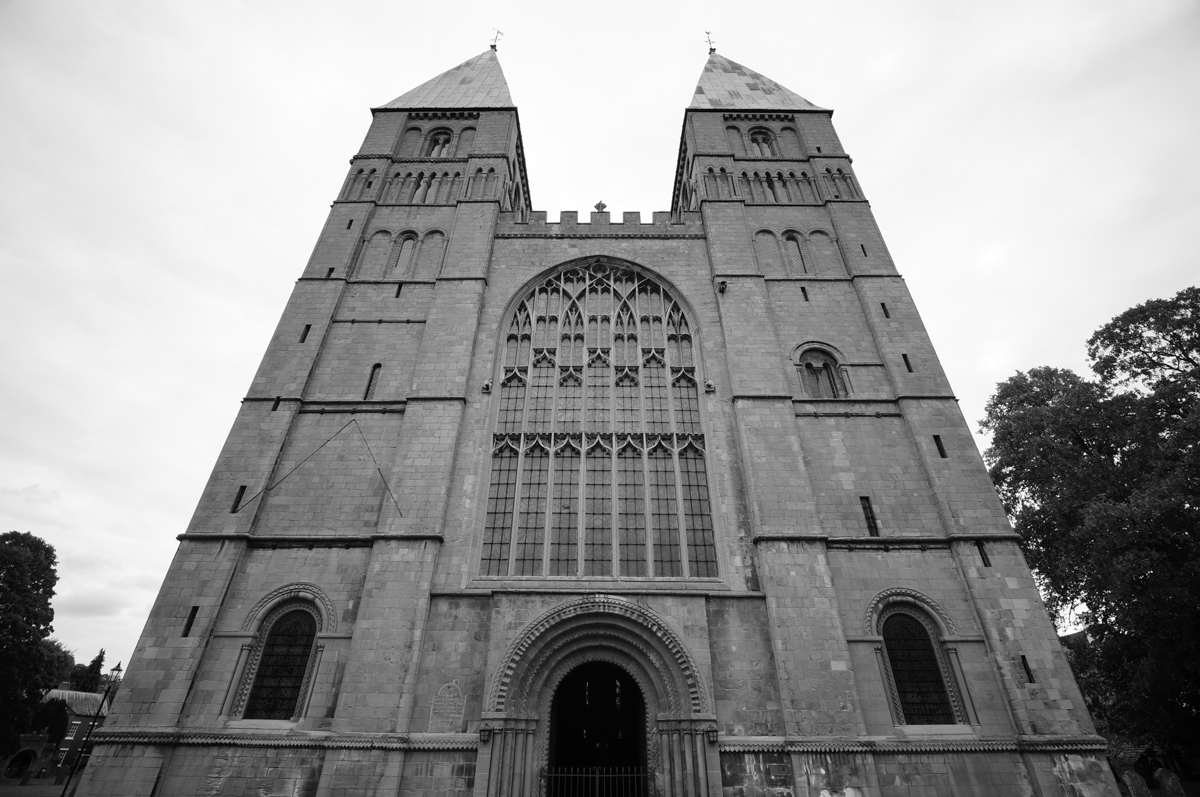
The obvious starting point for this day was Southwell’s most famous landmark – its minster. A decent-sized cathedral in this small market town.
I will say, the light wasn’t brilliant. An overcast sky. Nothing like the dramatic shadows and contrast I was blessed with when I visited previously with the Ultra Wide & Slim.
But then, shots where that would have been the main element weren’t really what I was trying to get. I just wanted to see what kind of compositions the extreme width of this lens would allow me to do.
10mm, remember. But using it on my (pretty old by now) Sony NEX-5N, with its APS-C sensor, renders it more like a 15mm. It’s all about the crop factor. I wrote a guide to all this a long time ago.
I do still believe the best thing you can have to make good photographs is good light though. If you have that, even the most normal 50mm lens will give you visually interesting stuff.
It was a little flat this time at Southwell Minster, but I think this lens did well regardless. It produced some good contrast. These have been minimally edited in that respect.



This was the first time in quite a few years that I’d taken the Sony NEX-5N out to play with. That’s something I’ll get into at the end of this post, but it’s worth mentioning now to point out some differences I reminded myself of between using this and shooting film, which I’d been doing exclusively for a long time.
Some of these differences are going to sound quite obvious, because they are. But they are things I had kind of forgotten how they felt.
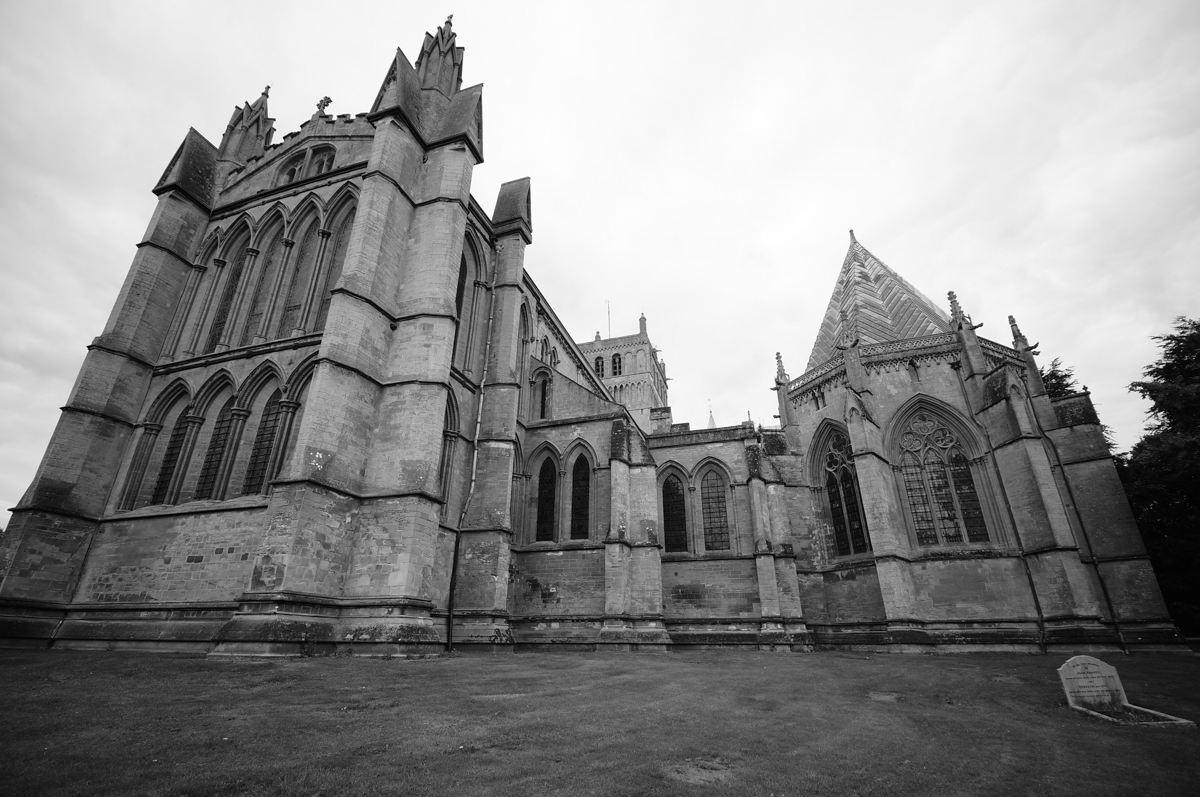
First up, the most obvious. Continuing on around the minster, it was nice shooting what looked like it might make a nice image and not worrying about if I then realised it would have been a better shot if I’d taken a few more steps in a certain direction, or composed lower down or higher up.
Unless your memory card is full, it doesn’t matter one bit. Like in these next four shots here.
I thought that big eastern face of the minster would look good in a big wide-angle shot.
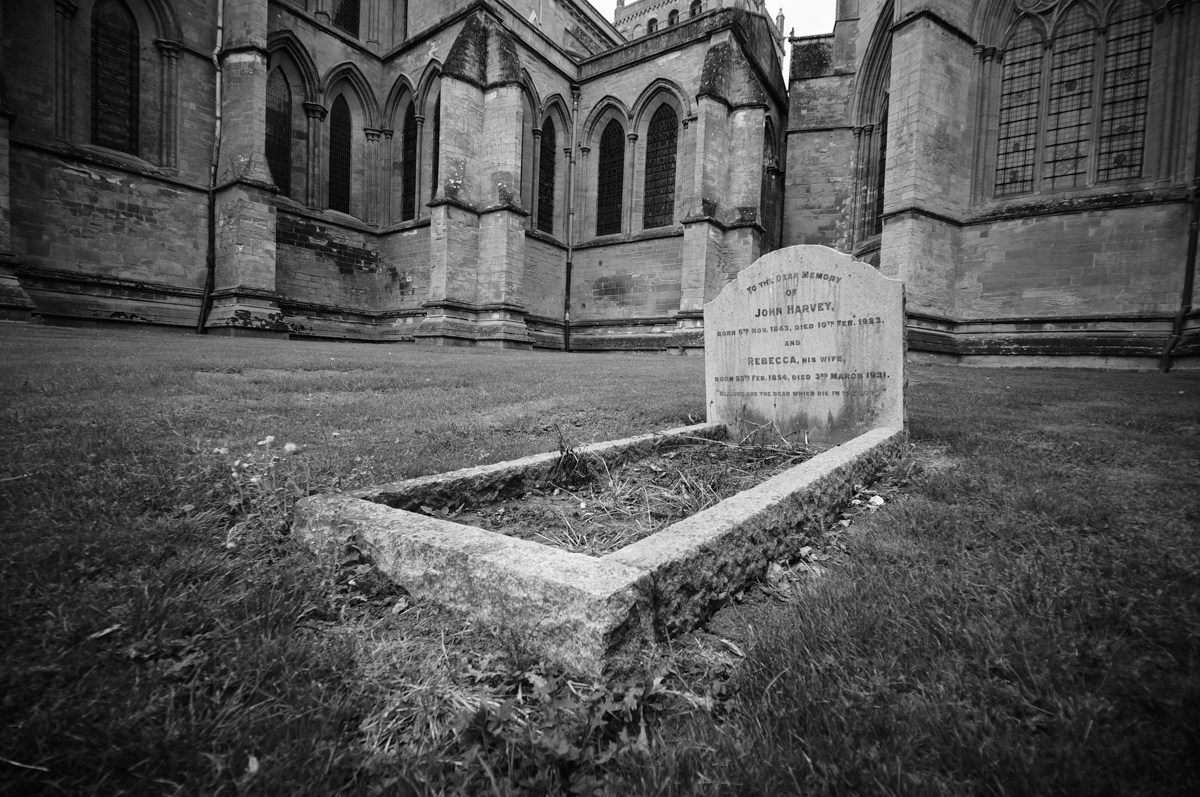
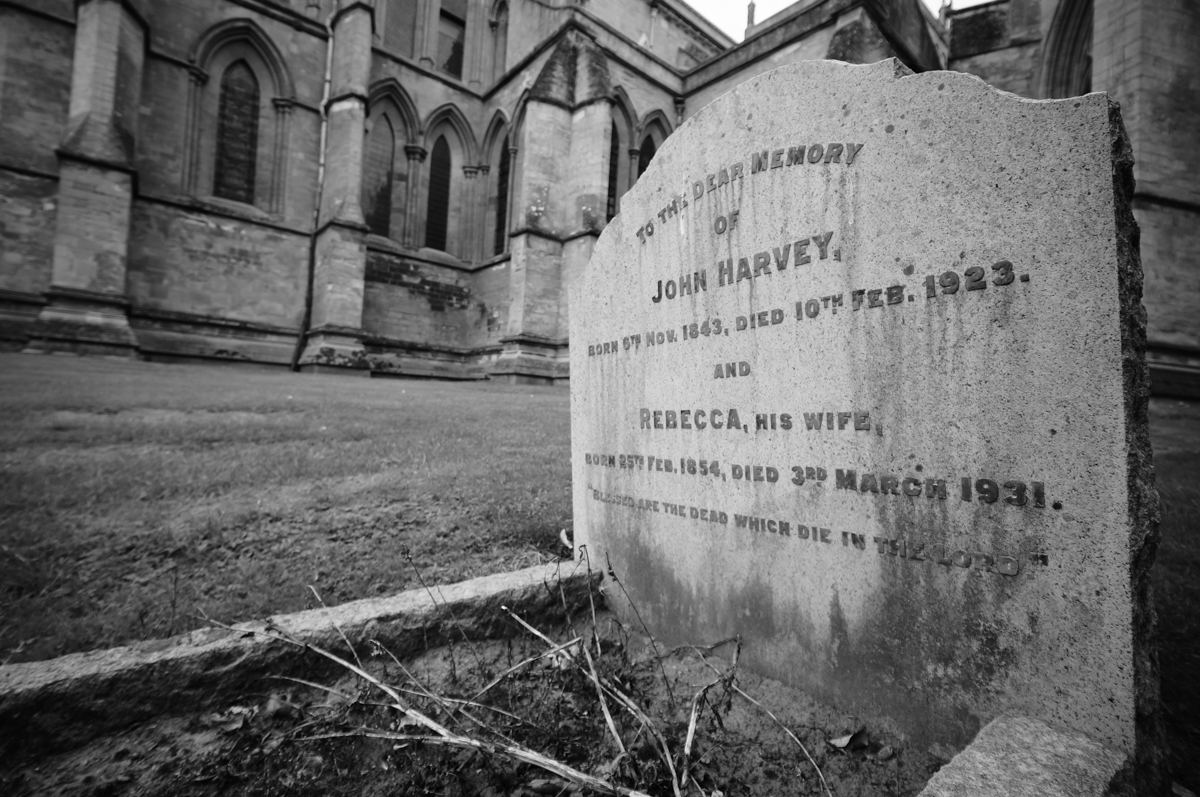
And then I wondered about the grave in the foreground. Maybe make that the main subject in the middle of the shot.
Or try getting the camera on the ground and have it with the whole minster rising up behind it.
Perhaps focus on the words on the front of it. Shout out to John Harvey, and Rebecca, his wife.
Or, you know, just try all of the above. I can tell you I wouldn’t have done that with film.

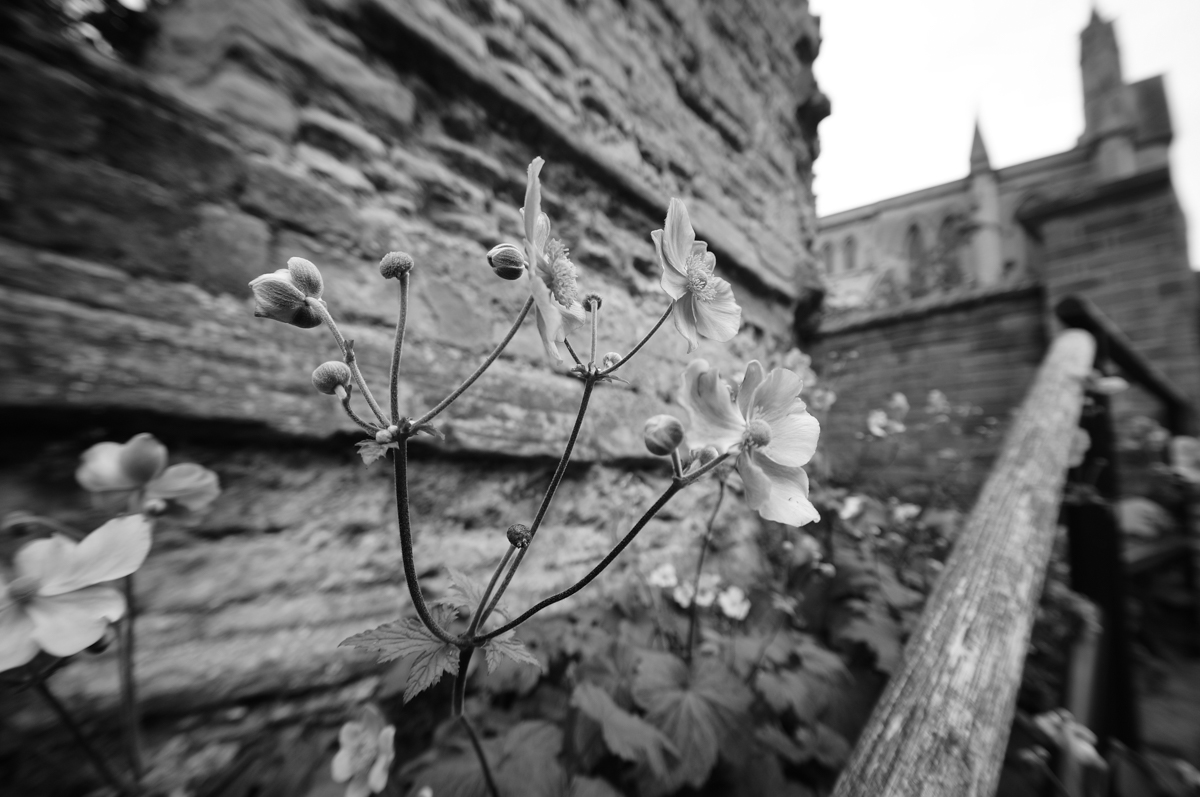
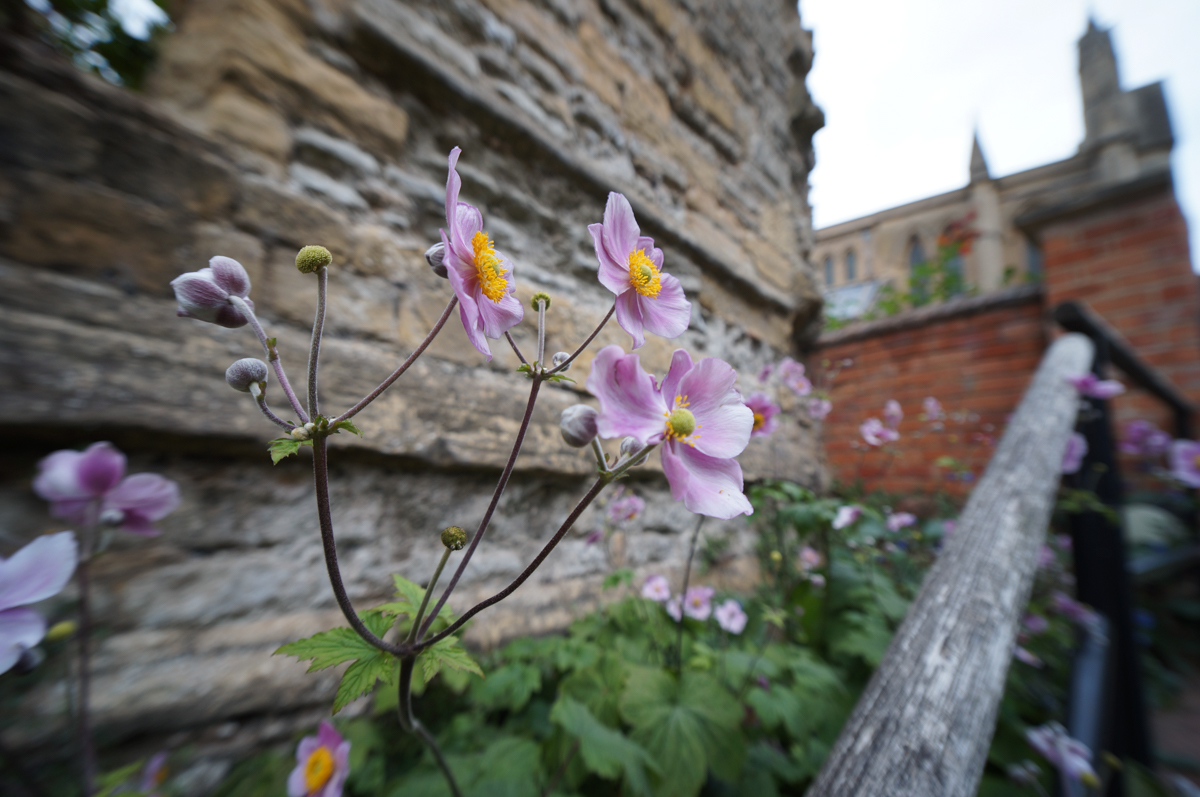
A little further along I found something else that helped me out in a couple of ways. Some nice Japanese anemones. Thanks, Google Lens. Not my favourite lens. But you’re not a bad one.
First up is that I wanted to try shooting something close-up with the aperture of this wide lens wide open and see how it turned out. It was only a quick attempt, but my verdict is ‘not bad’.
Second is that it’s another thing I couldn’t do with my film cameras, because I don’t have any with interchangeable film backs. But looking at the purple and yellow of the flowers, I thought ‘this might look better in colour’. So I tried that too.
Again, it turned out not bad.
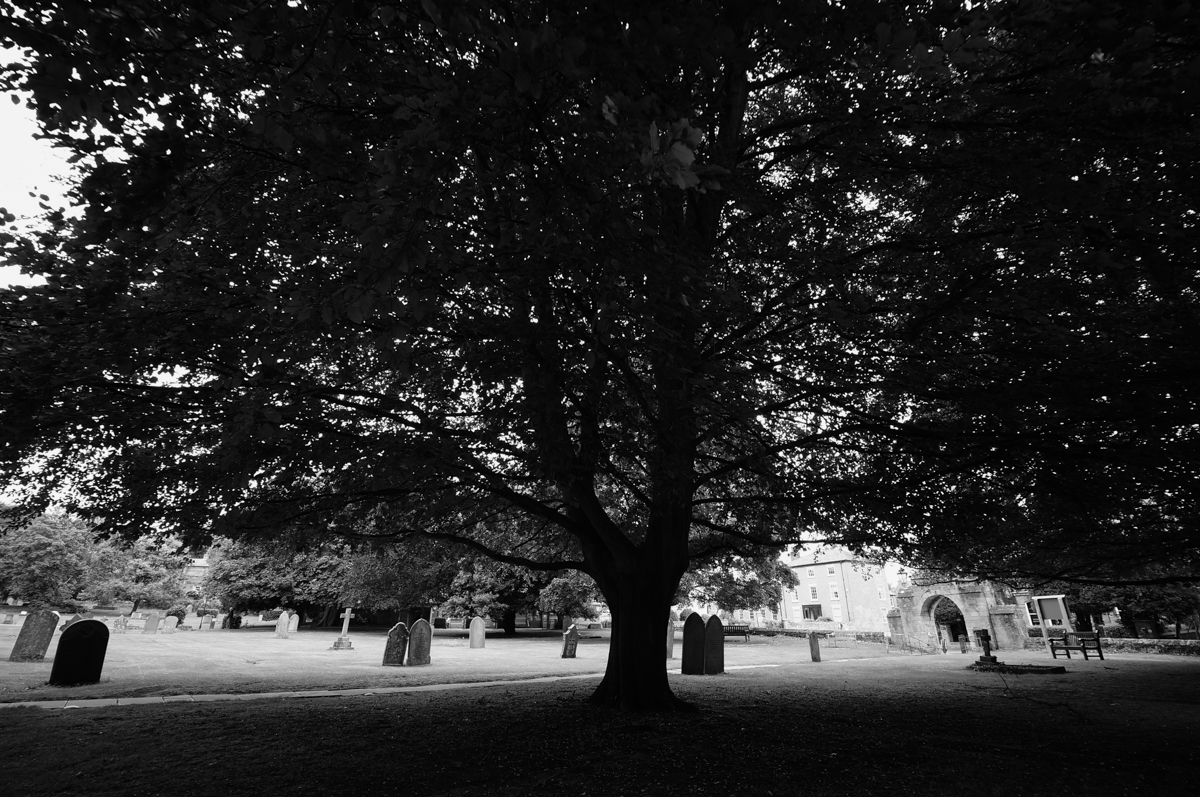
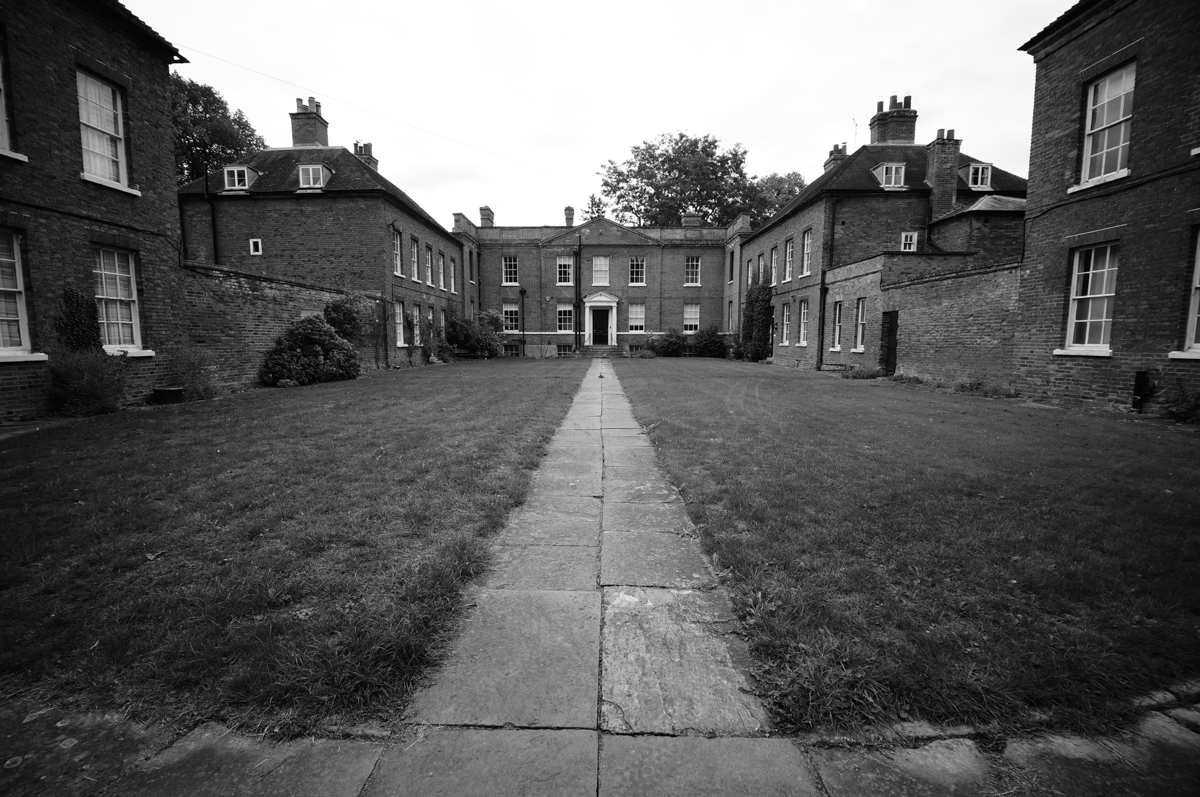
I’ll wrap up this section of this post with the rest of the shots I got walking around the yard at Southwell Minster.
They’re alright and show a bit more of what this 7Artisans 10mm f3.5 lens can do, but I don’t have much to say about them individually.
Aside from one thing, that is.
RIP H. We hardly knew ye.



Some more shots from Southwell market
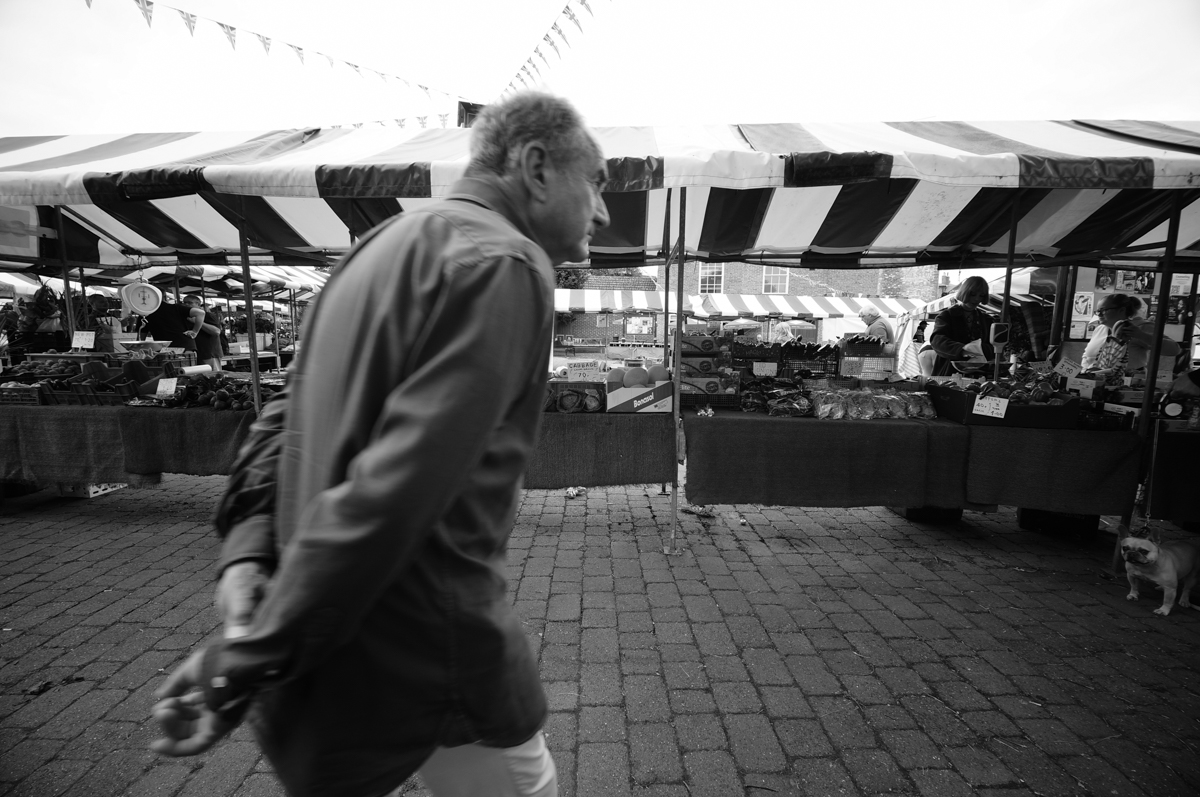
Moving on from the minster and finding ourselves at Southwell’s market now, where I managed to get probably my favourite photograph of the whole day.
Yes, wide-angle lenses are great for composing wide scenes where you have everything in focus and are mindful of how you’re filling the whole frame.
As with those flowers earlier though, and when I’ve shot with the Lomo LC-Wide before, I think a lot of the time when I shoot with a wide-angle lens the results I often end up liking the best are the ones where the subject is close up and you don’t really care about the background being perfect.
This is another one of those times. The dog’s expression, as well as the focus being on his face and shallow depth of field behind him, and the overall way this lens rendered the sharpness standing out from the softness makes it a good one for me.

Walking around Southwell market doing some street photography took me back again to the days when I used to do this all the time in Shanghai with this camera, before I got into film.
It also reminded me of another difference between using the Sony NEX-5N and any of my film cameras that I’d forgotten.
Using the screen versus using a viewfinder. Because the NEX-5N doesn’t have the latter.
After the sun actually had come out while I was at the market, the relative dullness of the screen meant I was finding it hard to see exactly what I was shooting. Nothing like the bright and clear optical viewfinders I’m used to on analogue cameras.
Without focus peaking, I would probably have missed focus more often than not when shooting at f3.5. It was fine at f8 and above, because you’re pretty much okay just zone focusing there and treating it like a point and shoot.
Unless your man is just a bit too close, of course.

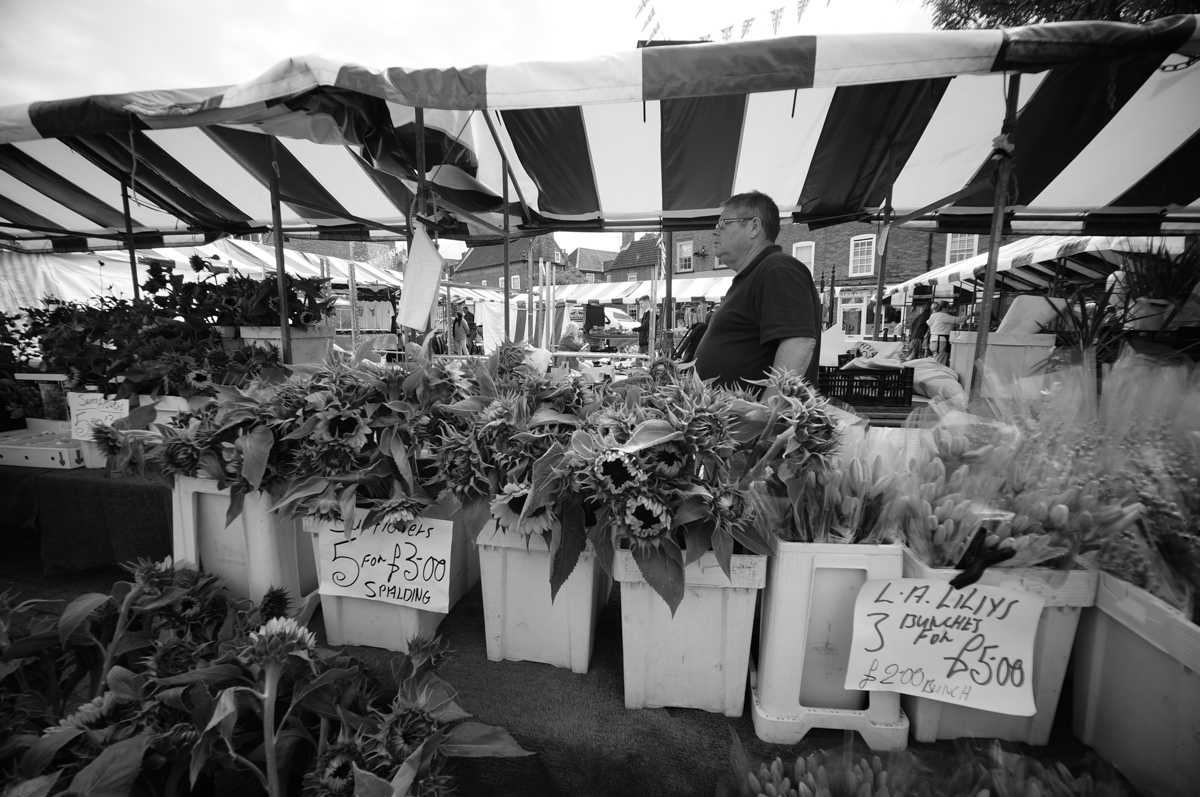

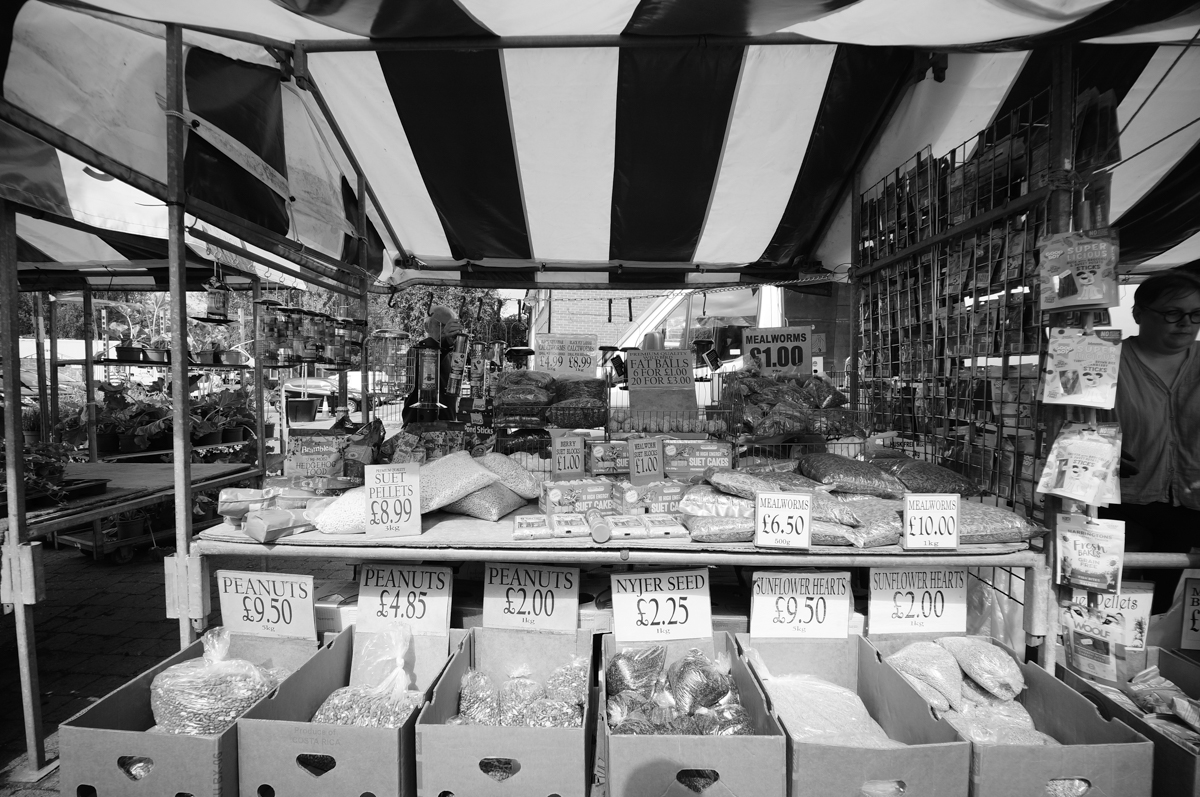
The upshot of all that was I didn’t really know how good my shots were until I got home and saw them on my PC monitor. So I suppose that in a way is similar to the film photography I’ve been doing.
Added to this was the classic advantage of shooting digital – that you’re not constrained to having a limited number of exposures, like with film. Obviously that means you can take a few of each composition and just see which was the best later.
These two aspects combined to make me really enjoy doing these photographs. I’m not slowing down trying to make each shot the best it can be like I do with film. And I couldn’t anyway even if I wanted to, because I couldn’t really see what was happening on the screen.
It all meant I could – and pretty much had to – shoot with an abandon I’ve not felt for a long time. Neck strap wrapped around my wrist, carefree, thinking you’re doing okay but not being sure but knowing it didn’t really matter if you weren’t anyway.


A bit of history and a look to the future
A mirror selfie for the last shot in this piece? That’s original mate.
Before we end this though, a bit of a My Favourite Lens history lesson and look to the future, if you’ll indulge me.
When I started this website, which was quite a long time ago now, I was big into shooting vintage lenses on this Sony NEX-5N. I bought it when it was still quite cutting edge, I think. Over a decade ago.
I pumped out quite a few blog posts featuring those vintage-lens-on-digital-camera photographs, and I wrote a few lens reviews too. But I think the best thing I did with that medium was the #leesixtyfive project; a 365 street photography project shot mostly in Shanghai.
The year I was doing that however was the year I discovered film photography. And that just took over my whole photography output afterwards.
The vintage lens reviews took a back seat to film reviews. The last digital photography blog post I wrote, until the one you’re reading now, was the final #leesixtyfive update.
Digital photography felt soulless in comparison to film. Even when using the manual focus vintage lenses. I wasn’t sure I’d ever go back to it.
Film photography was everything.
And then I just got jaded with it. The pressure I put on myself to only shoot a roll at a place interesting enough and in good enough light to make it worthwhile. Trying to get enough keepers from a roll. Rising costs. Unreliability of results. Waiting a while to even see the results.
This day with the 7Artisans 10mm f3.5 was a breath of fresh air. I had the images edited and ready to publish the day I shot them and they didn’t cost me anything after I bought the lens. I was able to write this post the day after as well.
And yes, when I compare these shots to the film ones from Southwell a few years previously, there is definitely a difference in their feel.
These are more clinical. Cleaner, but not necessarily in a good way. I like the grain and character of the film ones, shot as they were on a budget stock and in a lo-fi plastic lens camera.
But if I’m enjoying the digital process a little more right now, I’m going to keep going with it. And I’ll shoot film again when I feel like that too.
Film isn’t dead for me. It’s just that manual focus lenses on a mirrorless have been resurrected. 🙂
If you enjoyed this return to Southwell and also to digital photography and want to read more posts about images shot on a mirrorless camera with vintage lenses, why not have a look at some of these too:



And if you think others will find this post worth a read, help them find it by giving it a share 😀
