
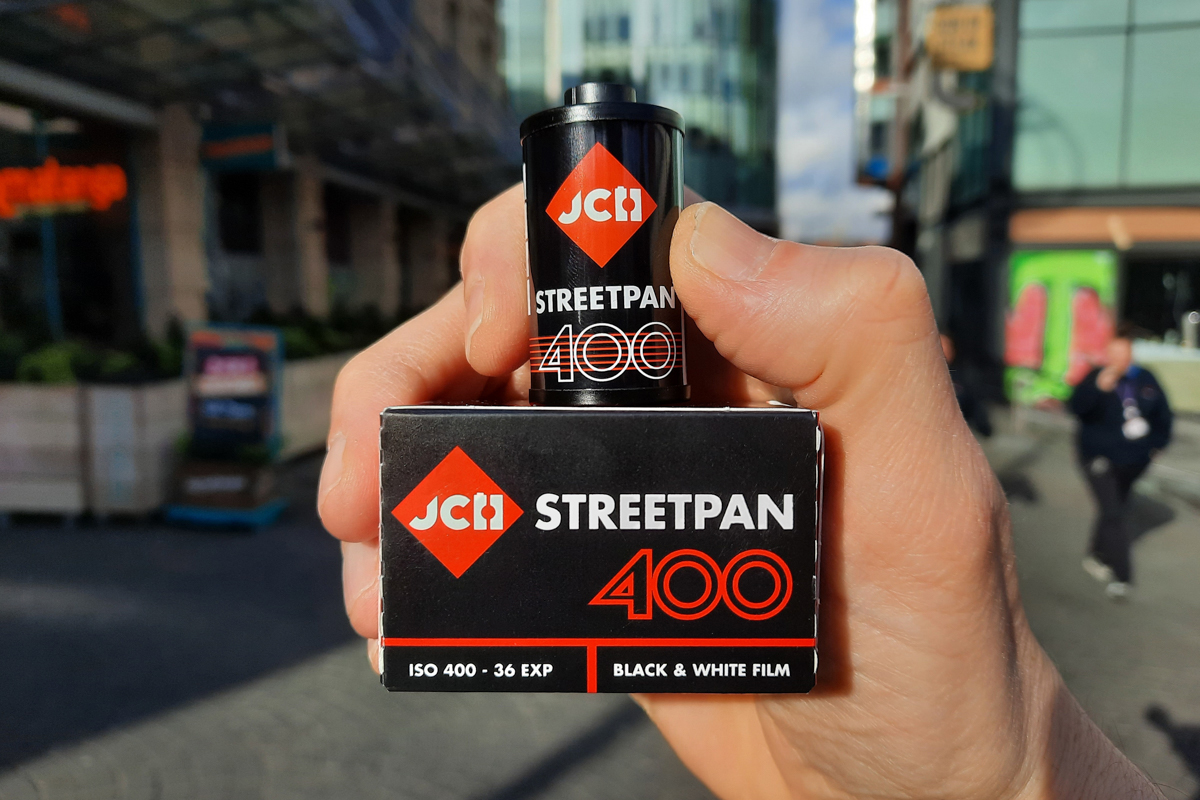
A 2026 update: I first wrote this review back in 2019 when JCH Street Pan 400 was still going strong. Unfortunately, it appears it has more recently been discontinued.
I’ve revised parts of this post to reflect that while leaving most of it as it was when this film was available. For example, I’ve removed any advice on where to buy this film, but I’m not going through it all to change everything to the past tense.
Thanks for reading, and rest in peace JCH Street Pan 400. 😐
Since I started shooting film and reading about all the different stocks available, I’m not sure I’ve found any that stir up such extreme positive and negative emotions as JCH Street Pan 400.
Those who like it seem to really like it. They like the results it gives and fully support the man behind it.
Weirdly, considering we’re talking about a photographic film, many of those on the other side don’t seem to care how it performs. Much of the negativity is aimed instead at the overall project and its creator.
Why would that be so? Is the criticism at all justified? And once you get past the nonsense, how is the actual film? Come find out and see whether you should have got some when you had the chance in this review.
What is JCH Street Pan 400?
JCH Street Pan 400 is a monochrome film brought to the market in 2016 by Bellamy Hunt, who runs the Japan Camera Hunter website.
With having a new emulsion made being out of the question for all but those with the deepest of pockets, Bellamy decided to resurrect an old one. That meant putting back into production an Agfa traffic surveillance film that had previously been discontinued.
As he states on the post announcing the birth of JCH Street Pan, this is not a re-spooled or re-badged film already available under a different name. Nor is it old stock that had sat around frozen somewhere, unloved and unsold.
Yes, it’s technically an old film. But what you’re buying is new, freshly-made batches of that old film. The first rolls I bought in 2018 had an expiry date of 2021.
The origins of JCH Street Pan 400 were clearly outlined in that first pre-launch post and I see no reason not to take Bellamy at his word. Unfortunately, some people find a way to.
We can get into that more at the end of this review. For now, I’d prefer to talk about the film itself.
JCH Street Pan 400 image qualities
Something else Bellamy said when producing this Japan Camera Hunter film was he wanted something bold, slightly grainy, and with strong contrast.
Having found Ilford Pan 400‘s grain a little too much and Kentmere 400‘s contrast a little too flat, JCH certainly sounds more like what I’m after.
The more technical specifications also tell of the film’s extended red sensitivity which creeps up into the near-infrared range. What this means in the real world is clearer images when shooting in haze, fog, mist, low cloud, or any other synonyms for those atmospheric conditions.
As luck would have it, that’s exactly what I was faced with on the morning I shot my first roll of JCH Street Pan. As I was then able to finish the roll in good afternoon sunlight, I can show you examples of both aspects of the film’s supposed image qualities.
It’s impossible to tell how another film would have performed on that same morning in that same mist because I didn’t shoot one. All I can say is that the JCH 400 didn’t fail me.
I like how the backgrounds in the shots, which is where you’d be concerned about losing too much detail, turned out.
Once the mist had dissipated and the sun was allowed to shine, it was time to see about that low grain and high contrast. And once again, I have to say the film lived up to the claims made about it beforehand.
For me, the bottom line about the image qualities, and of course the image quality, of JCH is that they’re very good.
Note that I say for me. You may prefer more grain and less contrast. From what I’ve shot so far, I’m liking what I see from this stock.


Street photography with JCH Street Pan 400
There are a few things about this film – aside from it having the word street in its name – that suggest it should be good for street photography.
The first two are the high contrast and ISO 400 rating.
Street photography and high contrast have long gone hand in hand, from Daido Moriyama in the past to daily uploads on Instagram right now, so choosing a film with that characteristic for your own efforts seems logical.
The 400 ISO rating gives you more leeway in the amount of light you can shoot in than slower films with lower ISO, which is good when you’re in situations where you can’t control that light. Like on the street, for example.
In the rundown of technical details, it’s noted that JCH Street Pan works well at dawn and dusk due to its sensitivity to red light. It’s also said to be extremely suitable for low sun angle photography.
In practical terms, this means it should be good for the morning and evening golden hours when the sun is rising or falling, when the shadows are long, and when the light and contrast makes for the most dramatic results, which sounds ideal for a film aimed at street photographers.
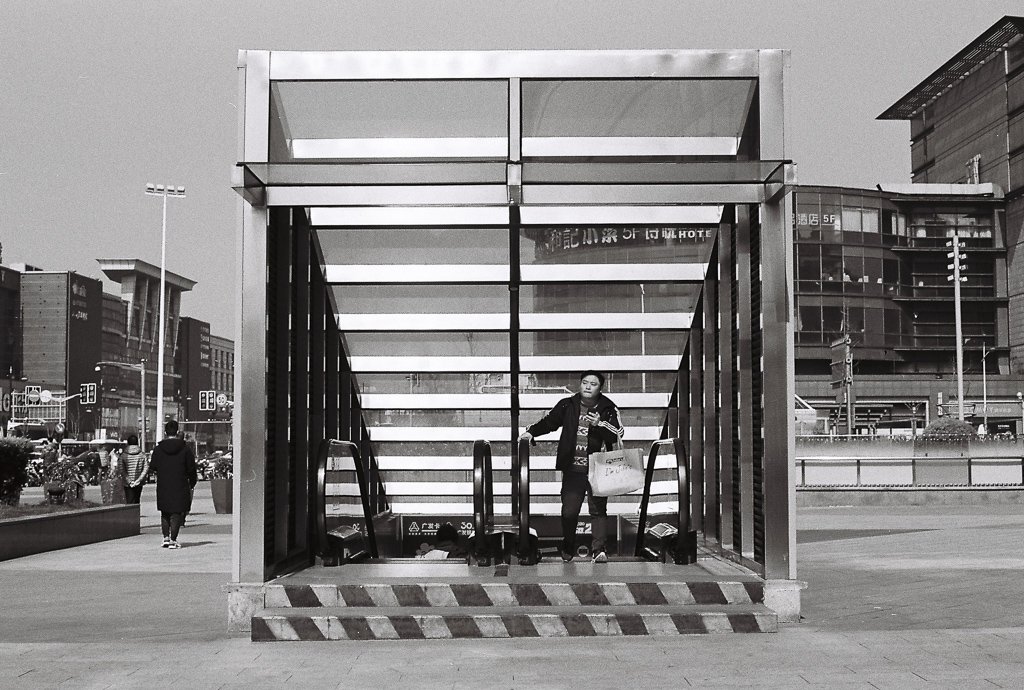
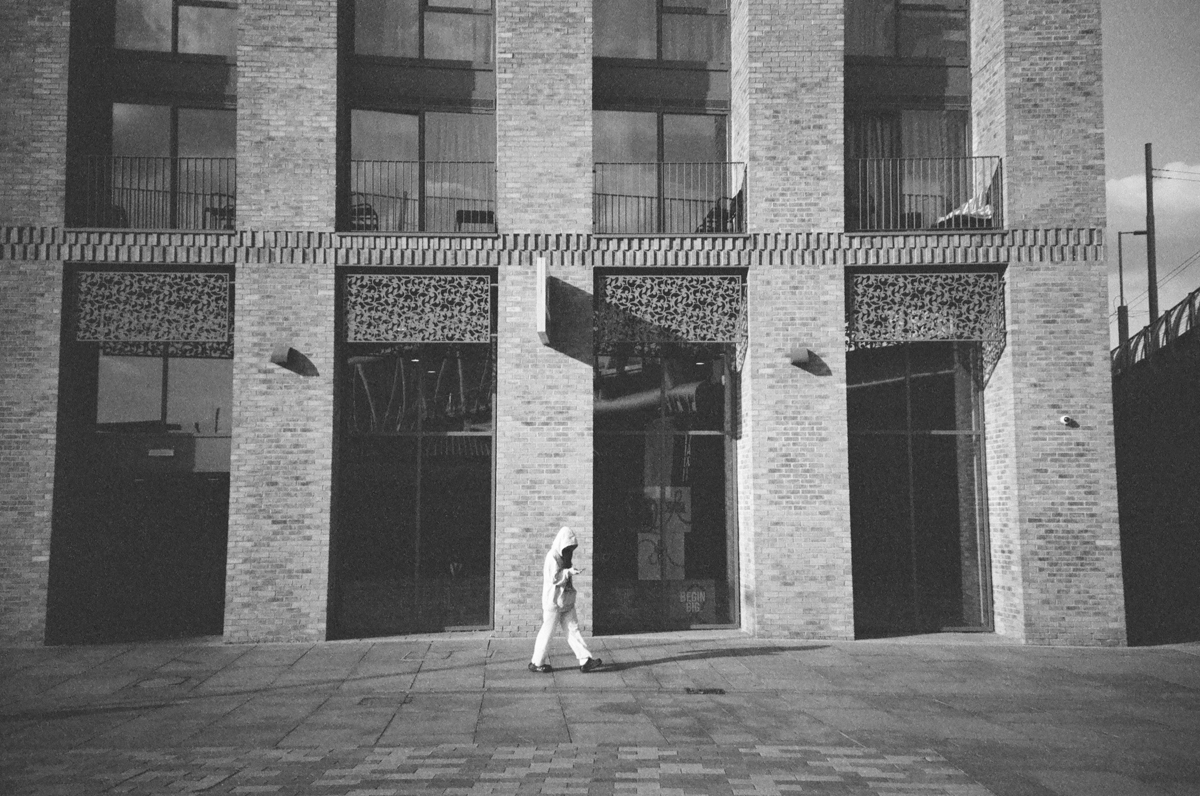
These shots were taken on a sunny late afternoon and do back up the claims made about Street Pan. There’s a lot of contrast and very little grain.


JCH Street Pan 400 specs and development
JCH Street Pan 400 is an ISO 400 black and white negative film released in 35mm format in 2016, with the 120 version appearing a year later. The 36-exposure 35mm cartridges have the DX code 868400.
I don’t develop my own film, yet, so this section isn’t going to be the most comprehensive part of this review. What I can tell you though is that this film’s red sensitivity reaches into the IR range at 750nm and has good exposure latitude.
This means it can be shot at half a stop under or a whole stop over and still be developed for its box speed.
The film’s emulsion lies on a 0.1mm transparent polyester base which helps with its dimensional stability, i.e. its propensity to stay flat while processing.
There’s plenty of technical information online about Street Pan which I don’t really need to parrot.
The best place to read it would be from Bellamy Hunt himself here, while all the numbers you’ll probably need are on the massive dev chart here.
Where to buy JCH Street Pan 400
As mentioned in the edit at the top of this post, JCH Street Pan 400 appears to have been discontinued.
At the time of writing this, I’m seeing a few places still have some stock of the 120 version left, but 35mm Street Pan is almost nowhere to be found.
I say almost because there were some listings of expired rolls on eBay.
Of course whether they or indeed the 120 format at actual shops are still there is not something I can by the time you read this and potentially do a search. So I’m not going to link out to anywhere here.
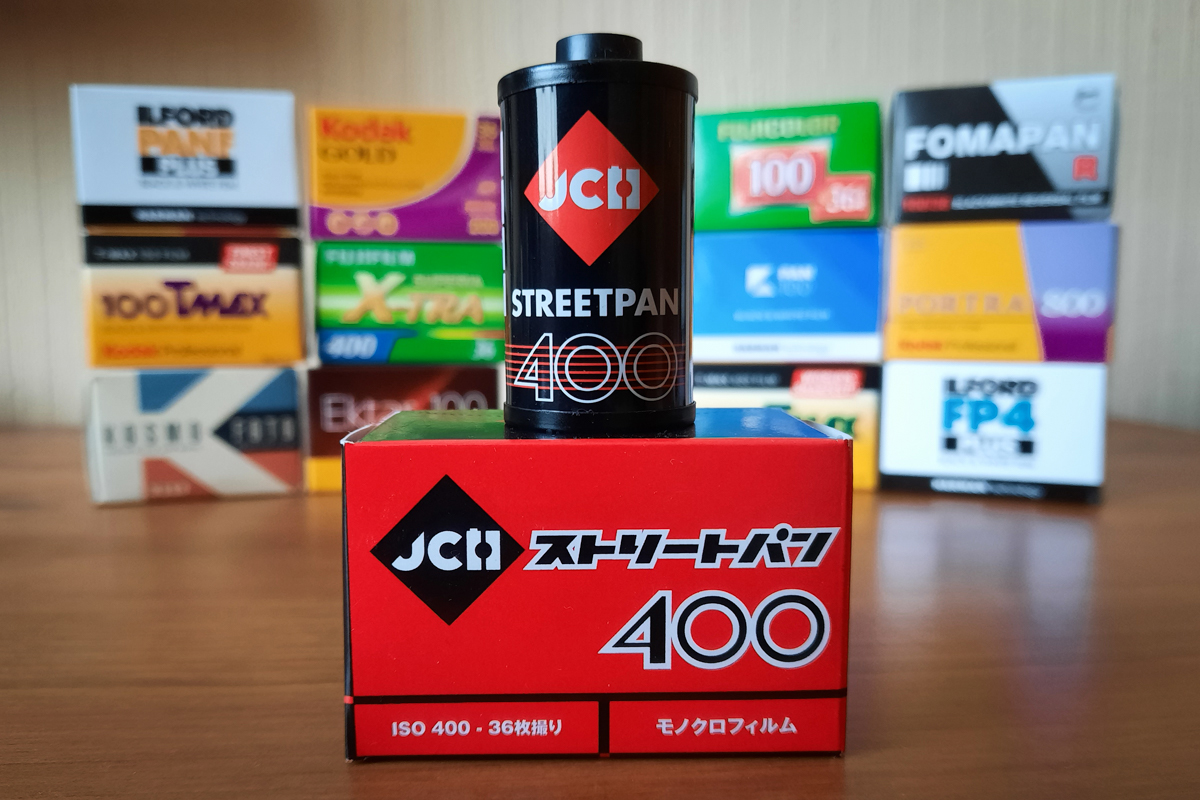
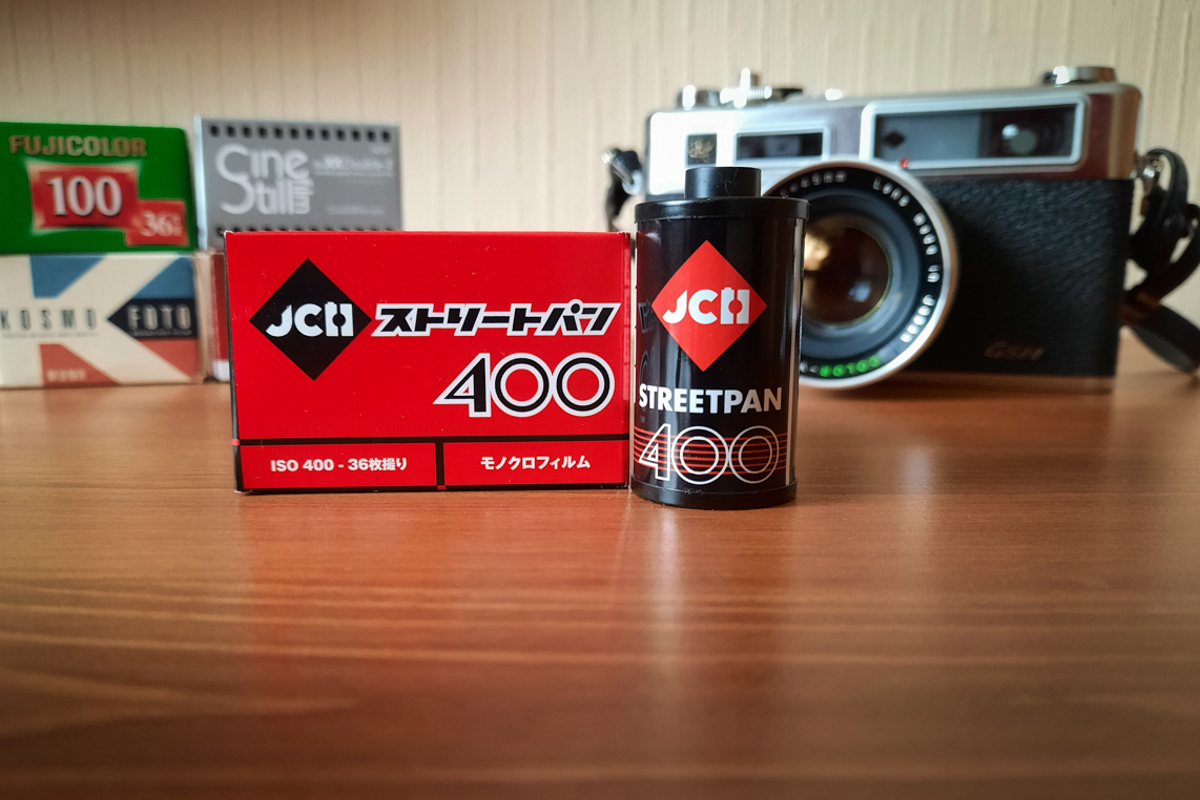
All I will say is if you see any old stock still being sold in the original packaging shown below, that is the really old stuff. The box design was updated to the one shown on the rest of the images on this review in 2021.

Final thoughts on JCH Street Pan 400
As mentioned at the top of this piece, JCH Street Pan and its creator have found themselves the targets of many a vitriolic online forum commentator.
The main themes I’ve seen tend to doubt whether the film is what Bellamy says it is, question his motivation behind releasing it, or just complain it’s too expensive.
Some claim JCH Street Pan isn’t a resurrected film at all; that it’s just a currently available stock re-badged and sold at a higher price. I’ve seen the claim it’s Rollei Retro 400s thrown around, and I’ve also seen that specific claim repudiated.
Since JCH Street Pan was released, a raft of other new films have followed it onto the market. A few of these genuinely are, by their own admission, re-badged versions of currently available stocks.
This practice is nothing new, nor confined to the smaller players.The high street camera shops Boots and Jessops did not make the films they sold under their brands. The last version of Agfa Vista Plus 200 was a Fuji stock.
If such a thing is the cause of someone’s ire, and personally I don’t care either way, it seems odd to be aiming that at JCH when there are plenty of others out there that definitely do it.
Or perhaps the anger comes from people thinking at least those brands are being upfront about their films whereas with this one they’re being deceived?
Again, I have no reason not to trust what the creator here says, and think there are enough internet detectives out there to have uncovered some concrete evidence by now, if any existed.
As for questioning the motivations behind bringing this product out, why be cynical when you could look at the positives instead?
It’s very easy to sit and complain about the number of film discontinuations in recent years, as plenty of people continue to prove. It would also appear very easy to complain when someone is proactive and tries to do what they can – however big or small – to help reverse that trend.
As someone with a known name and presumably a few contacts in the industry, I have to commend Bellamy for doing something to help when not doing it would have been far less trouble and cost him far less money to get going.
Of course he can’t start producing a brand new emulsion. The cost and logistics of doing so mean pretty much nobody can. So resurrecting an old one was the next best thing.
And yes, it will be expensive in the beginning as small batches are produced. If you want the price to come down, show there is demand by buying some and perhaps the next batches will be bigger.
I can’t imagine the profit margins are high on this at all, although in fairness there surely are brand awareness benefits for his overall business that may compensate for that somewhat. How much though is impossible to say.
I don’t want that to sound too cynical though, as I’m pretty sure his intentions are in the right place here. It definitely feels like a project that gives back to the film community rather than one done for financial reasons.
Perhaps it’s worth pondering, of all those who ever disparaged Street Pan, how many have worked to put themselves in the position to bring out their own film, or any other product. And also how many would have taken action if they did find themselves able to.
It would also be nice to know how many have been forced to buy some JCH and shoot it instead of the films they actually like.
I think that’s the real reason I don’t understand the criticism this film and its creator get. Spending the mental energy on such a strong negative emotion towards a film seems unhealthy.
If you don’t enjoy the look it gives, shoot something else. If there’s something about its story you don’t like, think about something else.
None of that is a problem for me because I like the results I got from JCH Street Pan, and I’m grateful that Bellamy Hunt decided to bring it to market.
And, in my view at least, it’s a shame it’s now gone. 🙂
Further JCH Street Pan 400 reading on My Favourite Lens
If you want to see even more shots taken on JCH Street Pan 400 or just enjoy reading blog posts on film photography, take your pick from the selection just below.
Alternatively, if you’re in the mood for more reviews of different film stocks, why not dive into some of those instead. 🙂




Such positivity! I love your reviews!
Thank you
Thank you for reading and commenting, Jorge. I’m happy that positivity comes through and I hope it encourages people who read my stuff to pass it on too. 🙂