
Images shot on Kodak Kodacolor 200 in the Kodak Snapic A1
Just based on two long weekends spent there in the last few years, I can say that Barcelona is one of my favourite places to walk around shooting film. Especially when the sun is out on days like this one.
You can see from these other shots from this trip and these from the previous one how photogenic this city is when the light is good. And even when it isn’t, it’s still worth getting the camera out.
Those three posts I’ve linked to all feature black and white photography. But Barcelona is too vibrant and vivid a city to stick to monochrome only. So I tried out a new Kodak colour film – kind of – in a new Kodak camera – kind of – while I was there too.
Read on to see how it went, and an explanation of what those two instances of kind of are all about too.
Why this is kind of a new Kodak film and camera
I went to three locations in Barcelona whilst shooting this roll of film and am going to post the images in that chronological order, and then end with some general street shots I got whilst walking home as the sun set.
Before we truly begin at the Jardins de les Tres Xemeneies though, let’s clear up why this is kind of a new Kodak film and kind of a new Kodak camera.
It’s kind of a long story but I’m going to keep it short-ish. There are kind of two Kodaks. Kodak Eastman, who makes the film, and Kodak Alaris who for a long time have distributed it.
In late 2026, Kodak Eastman introduced a couple of new films that Alaris had never sold; Kodacolor 100 and Kodacolor 200. They then began to release some new box designs for long-time Alaris-distributed staples like Gold 200 and Ultramax 400.
You can read an article about it from the time here.
Since then, Eastman have introduced new box designs and begun directly selling most if not all of the films Alaris always did, including renaming the ubiquitous Portra and professional T-Max range.
A split is happening between Eastman and Alaris and, at the time of writing, nobody is really sure how it’s all going to end up once the dust has settled.
For now though, let’s go back to the beginning of this whole thing. Those Kodacolor films that came out. Specifically the ISO 200 one. Because that’s what I shot on this day.
The reason I’m saying this is kind of a new Kodak film is that a strong case has been made by Dmitri over at Analog Cafe that it’s merely ColorPlus 200 in different clothes.
I can’t say for sure if it is, but I’m also never going to do the kind of tests that Dmitri did to try to find out. So I’m going with his word on this.
As for the camera, the Kodak Snapic A1, the kind of here stems from the fact it isn’t produced by Kodak, but by Reto, a company that I really like by the way, with the Kodak name used under license.
It seems there’s a lot of renaming going on in the analogue photography world. Things could get confusing. Imagine if such a situation occurred in other areas of life.
Like having two different places in Barcelona called Three Chimneys, for example.
Shooting scenes at Jardins Tres Xemeneies
A little up the coast from central Barcelona, almost out at Badalona, stand the Tres Xemeneies. The Three Chimneys.
Rising up around 650 feet above the shore, they are the remnants of a controversial 1970s thermal power plant, and a perhaps surprisingly visually-jarring landmark for a place as known for its ornate architecture as Barcelona is.
I’ve never been to those three chimneys, though. Maybe one day. But not this day.
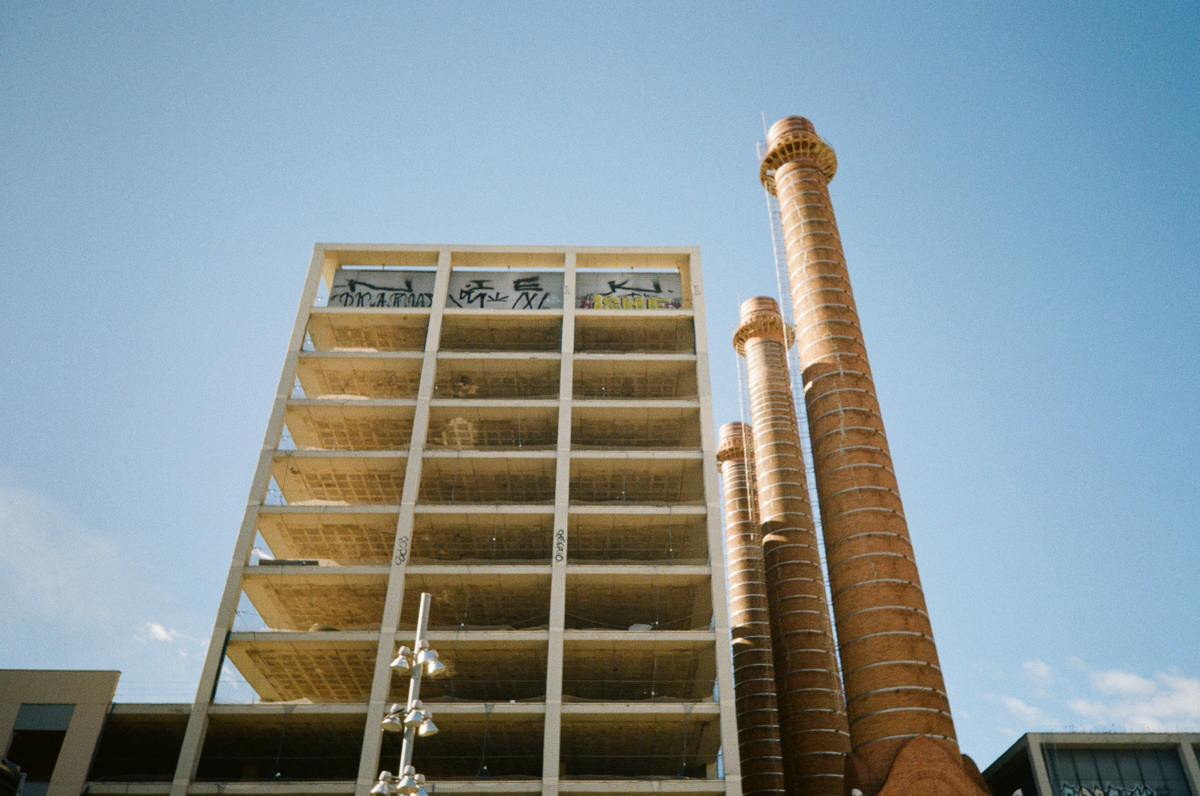
Instead, I went to the Jardins de les Tres Xemeneies. The Gardens of the Three Chimneys. A place much more in the middle of town, and the remnants this time of the old Paral·lel power station.
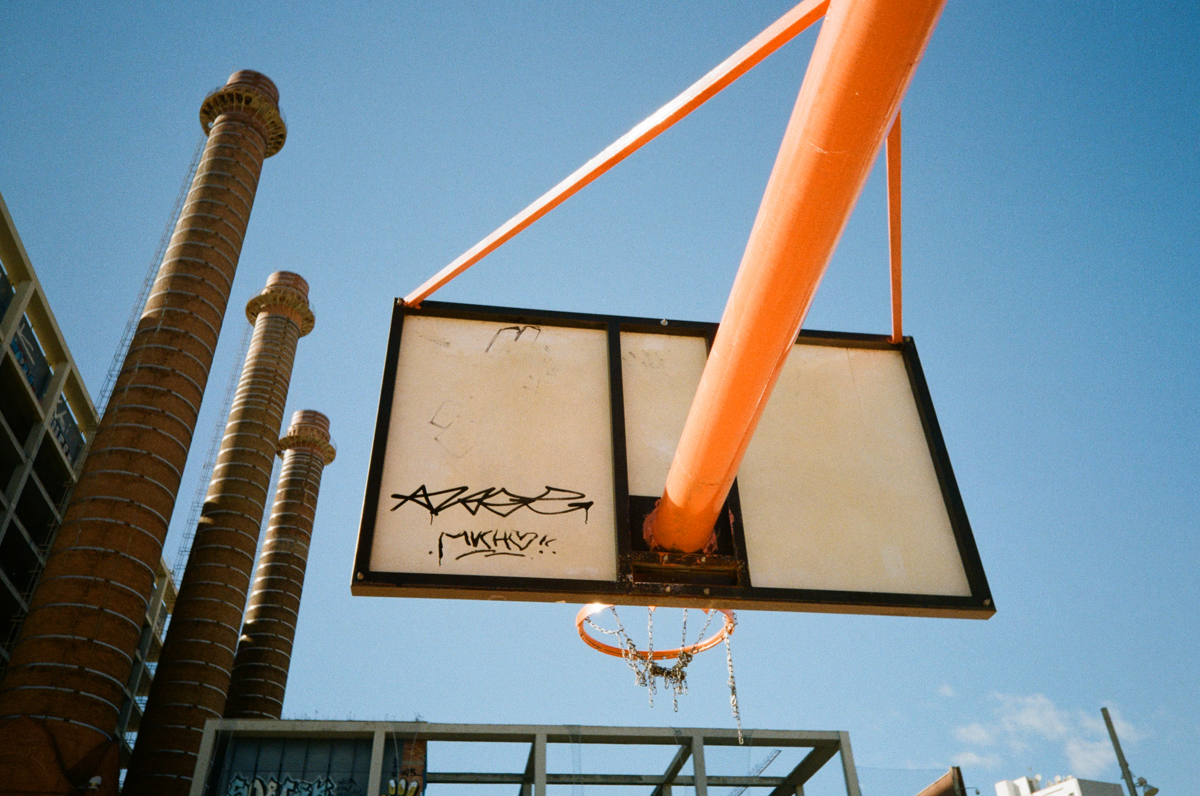
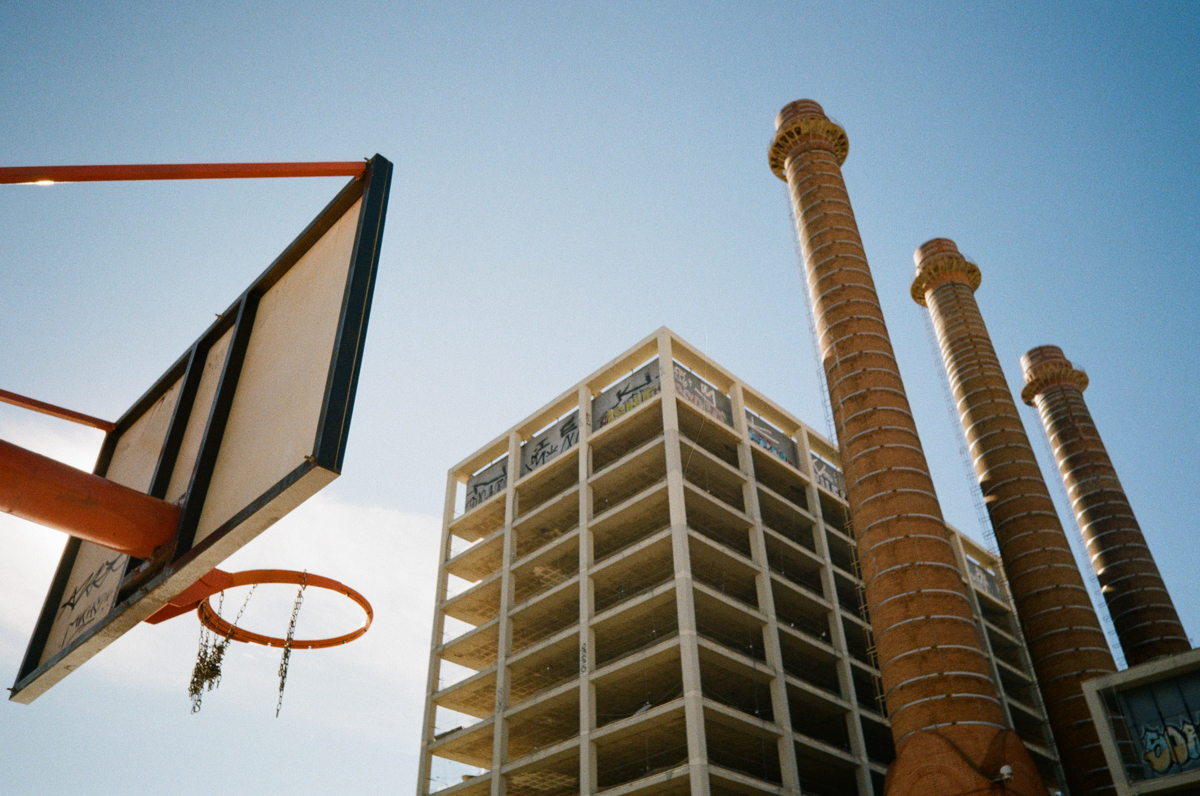
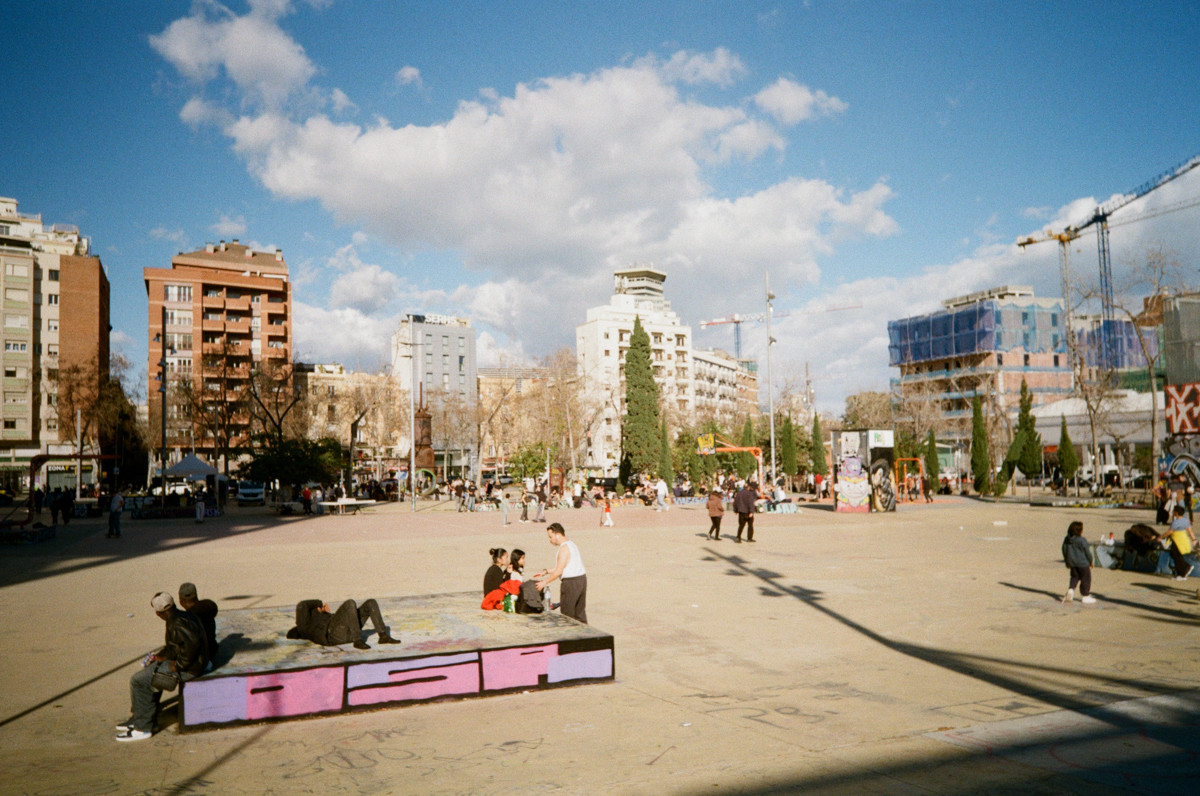
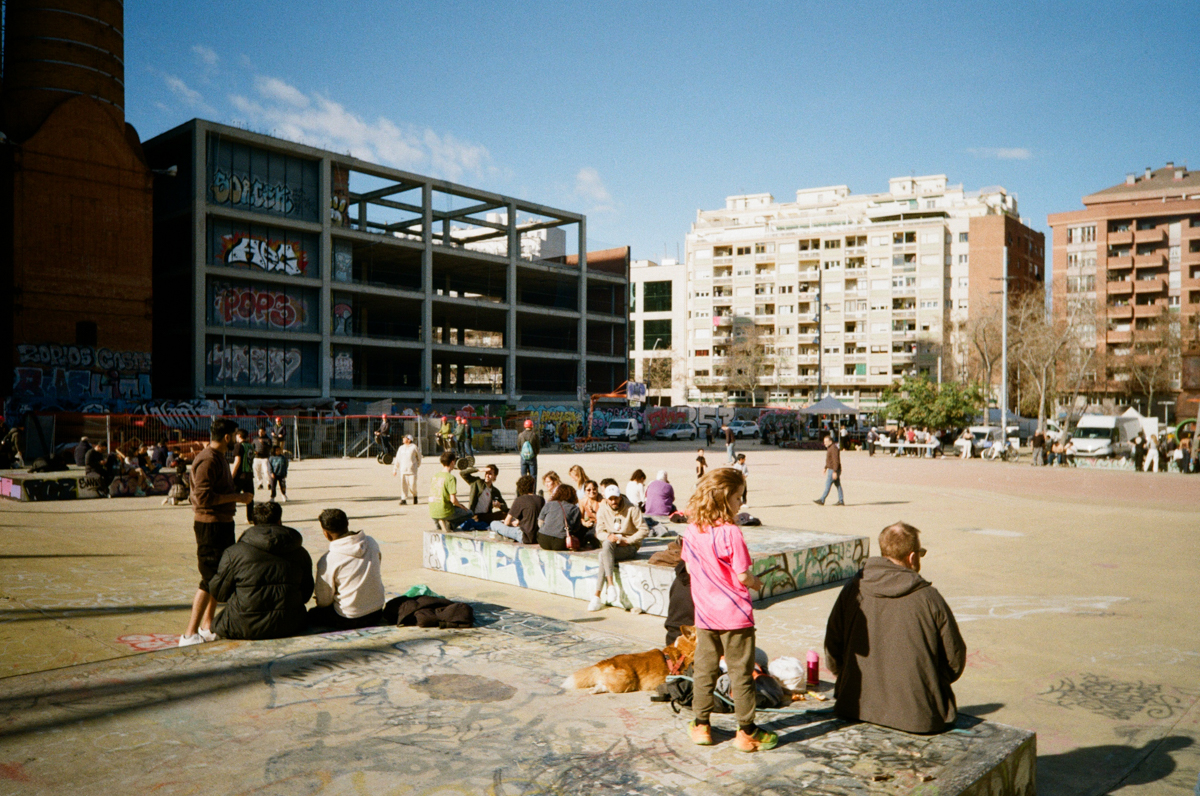
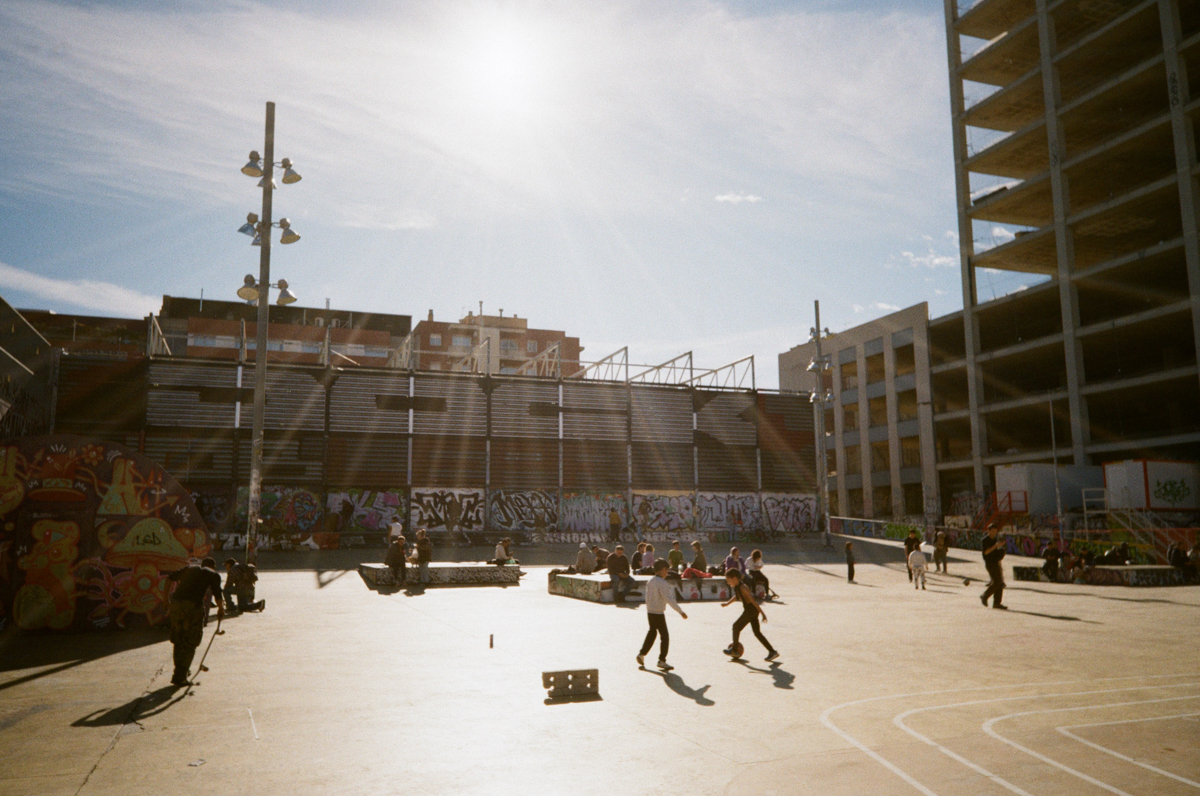
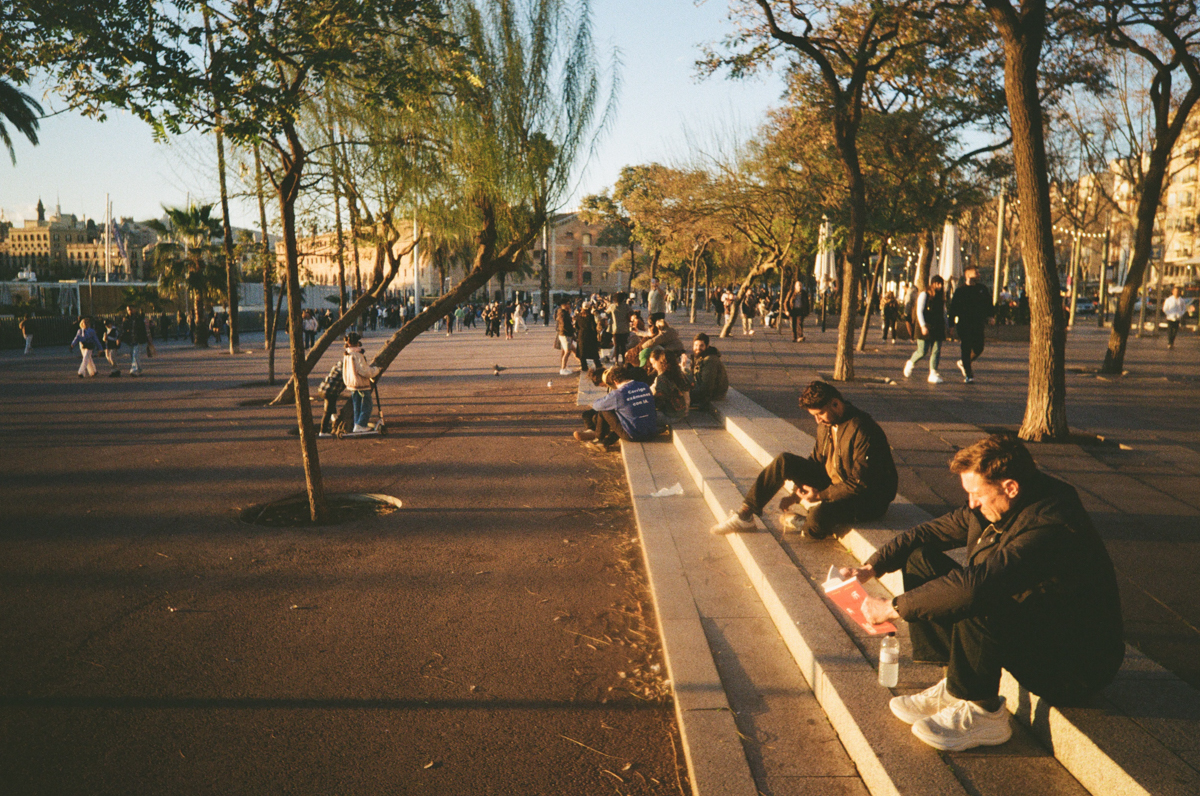
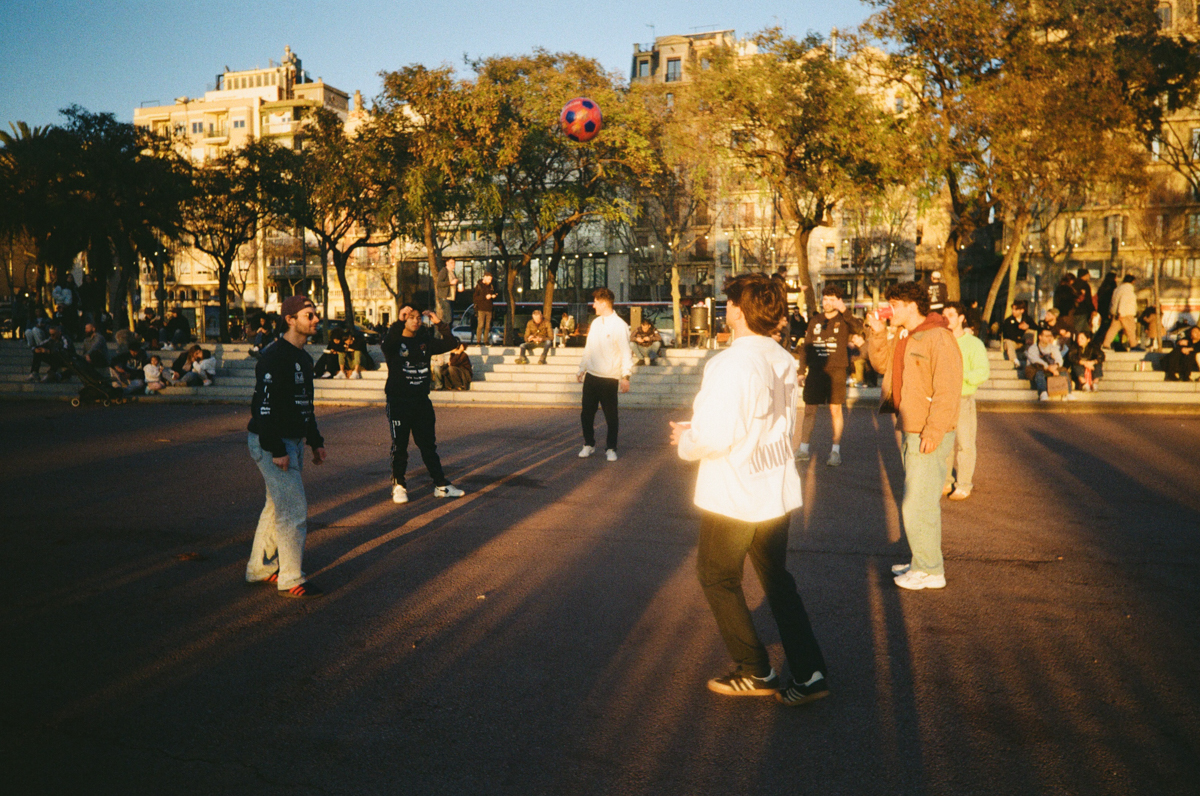
Today it’s an urban park popular with skaters, basketballers, al fresco fitness folk, graffiti artists, people who just like to sit down and have a minute, and on this day, at least one bloke (me) with a film camera.
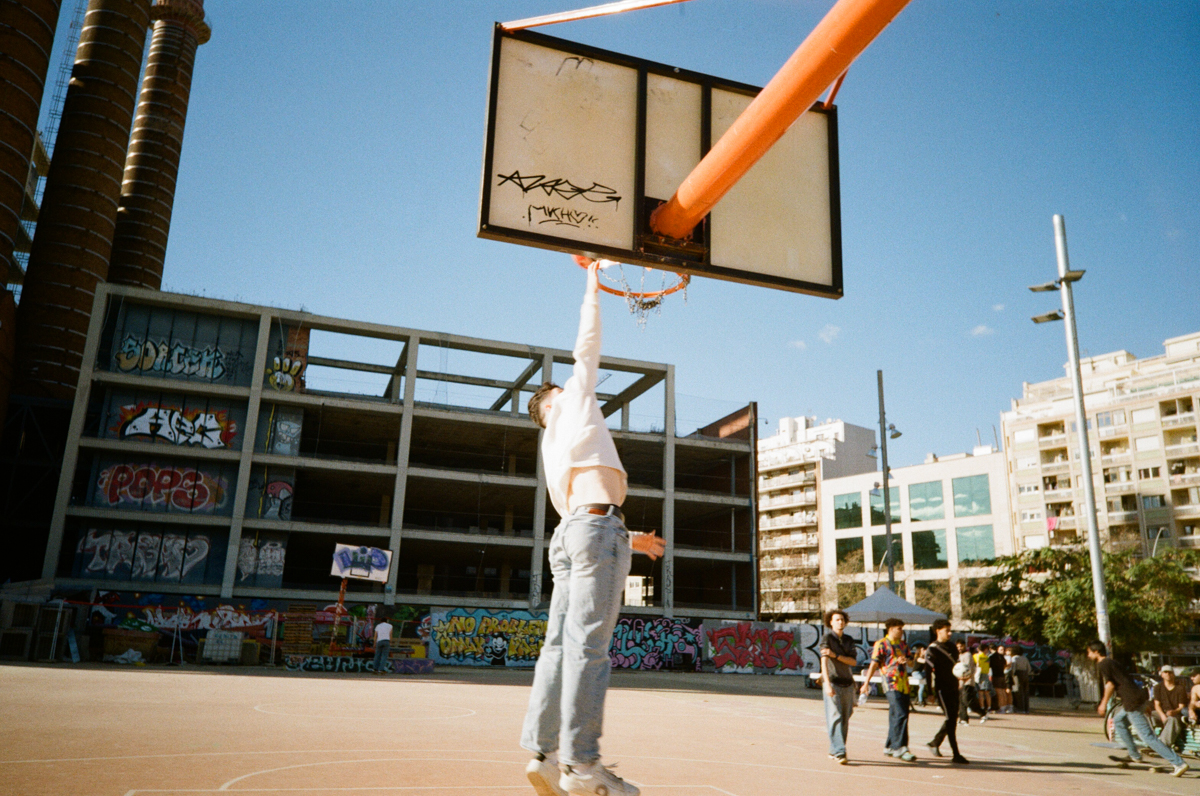
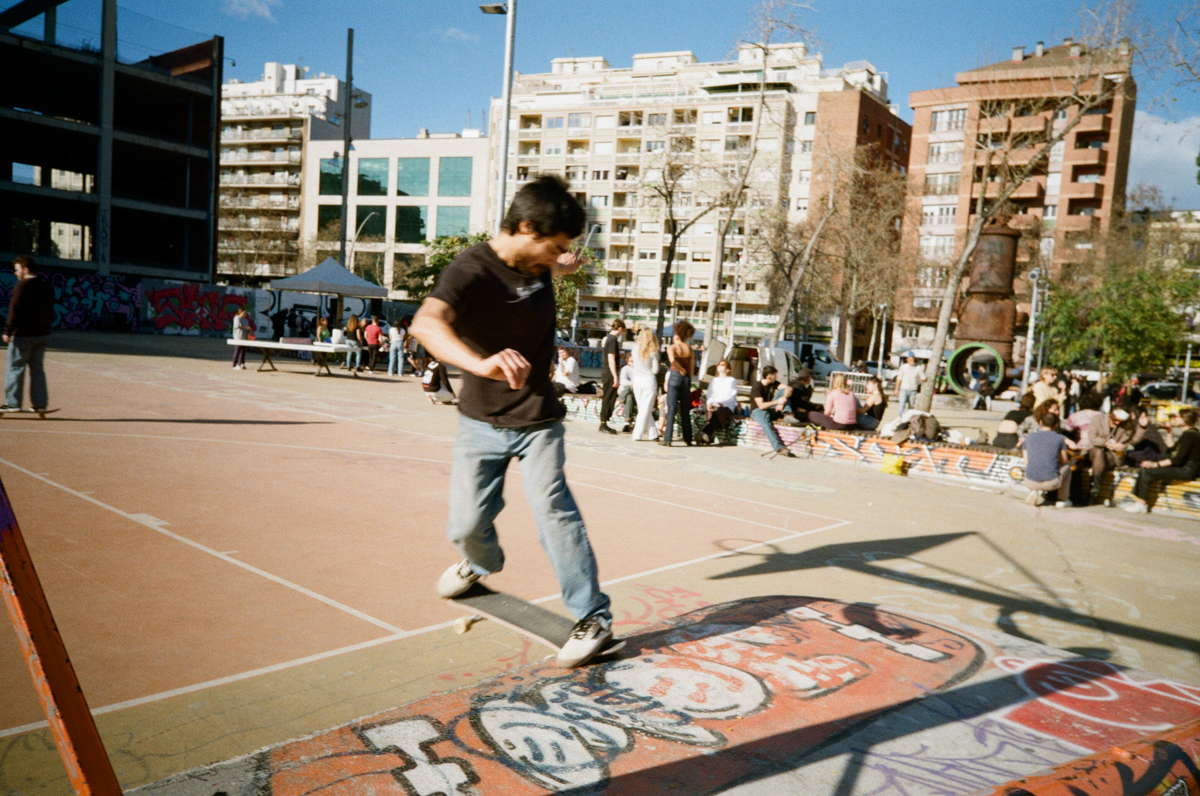
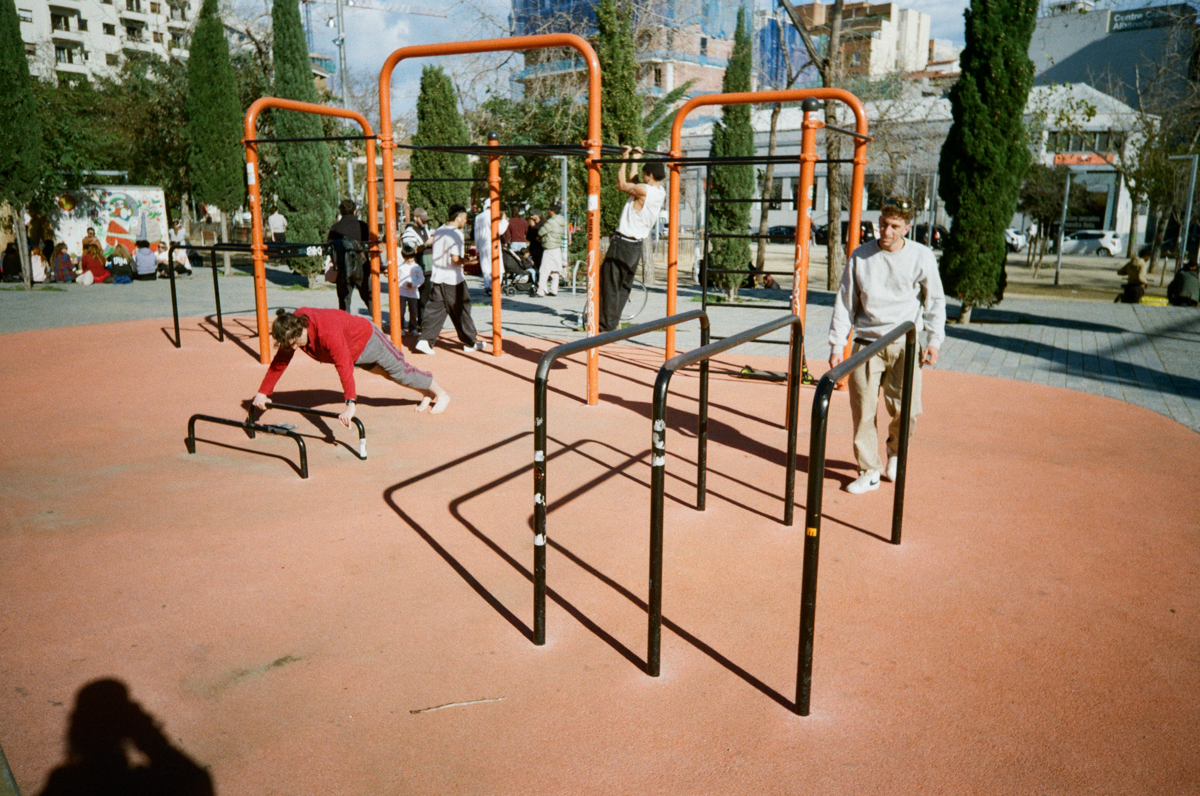
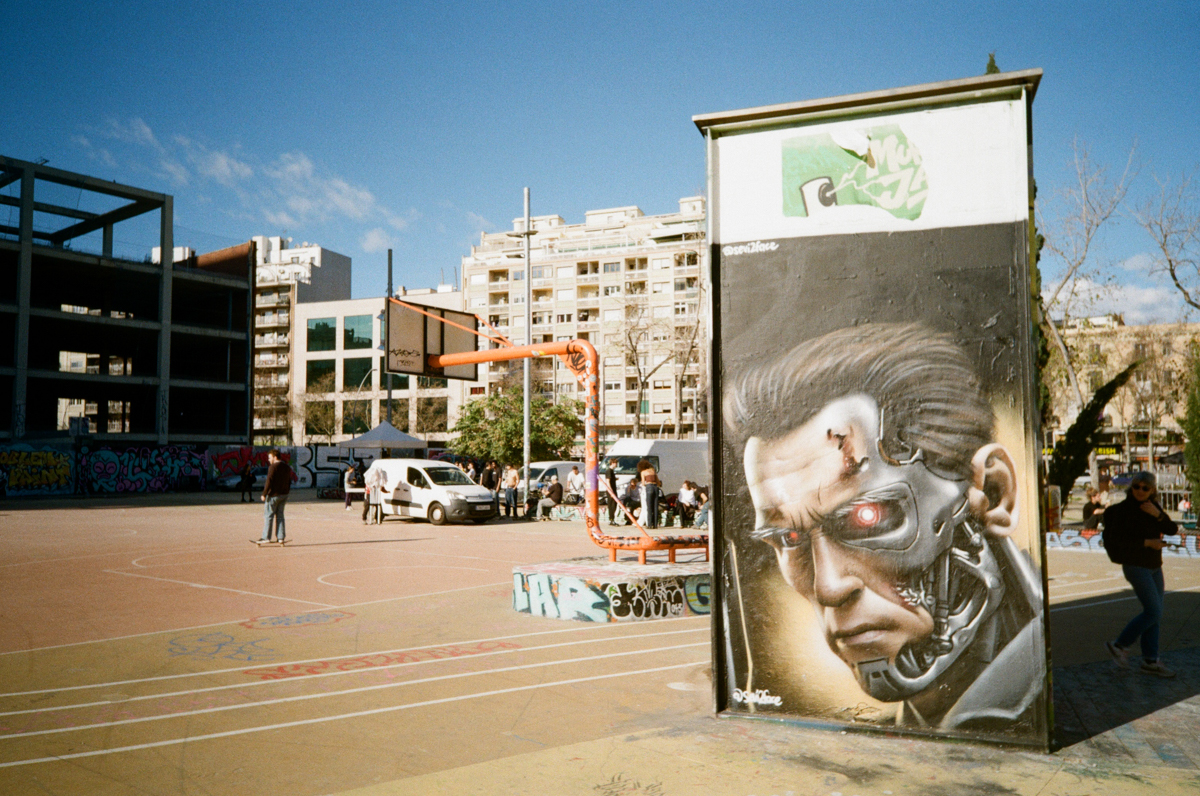
I’d shot here before, a few years ago, with some Ilford Pan F Plus 50 in the Lomo LC-A. The results didn’t come out that well. Too slow a film to be trying to capture skaters, I’m afraid.
These from this day ended up better, and I really could have stayed there for a while longer than I did.
Not necessarily to shoot more of this roll of film, but just to be one of those aforementioned people who were just sitting about and enjoying the time. The light. The relative peace from the city. Some drinks.
Unfortunately, but also fortunately, I had to get to the next spot. The sun was threatening to set, as you can see in the third image below, and I had a hill to climb next to get to one of my very favourite spots in Barcelona.
Looking over Barcelona from Salts Bar
I recently published a post on here talking about a place that gives one of my favourite views of Barcelona. At over 500 metres, Tibidabo hill is well worth the effort to go to, especially with the lovely church sitting at the top too.
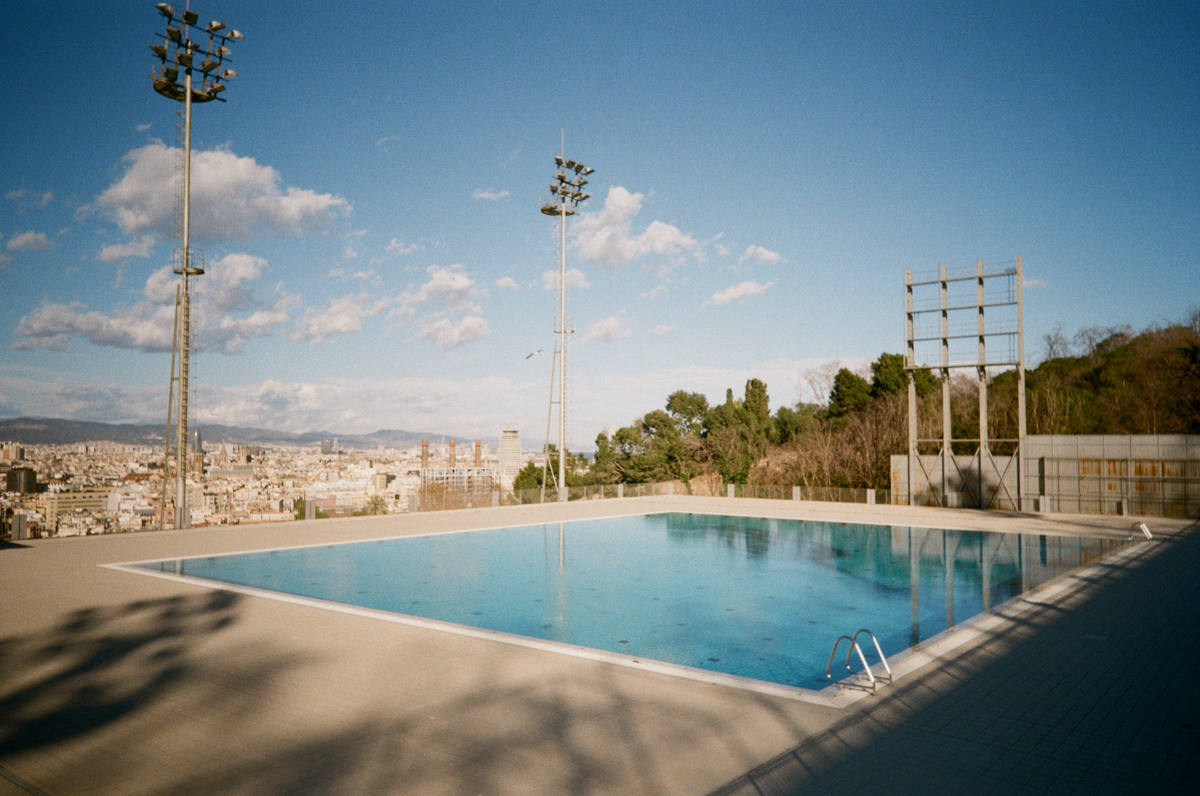
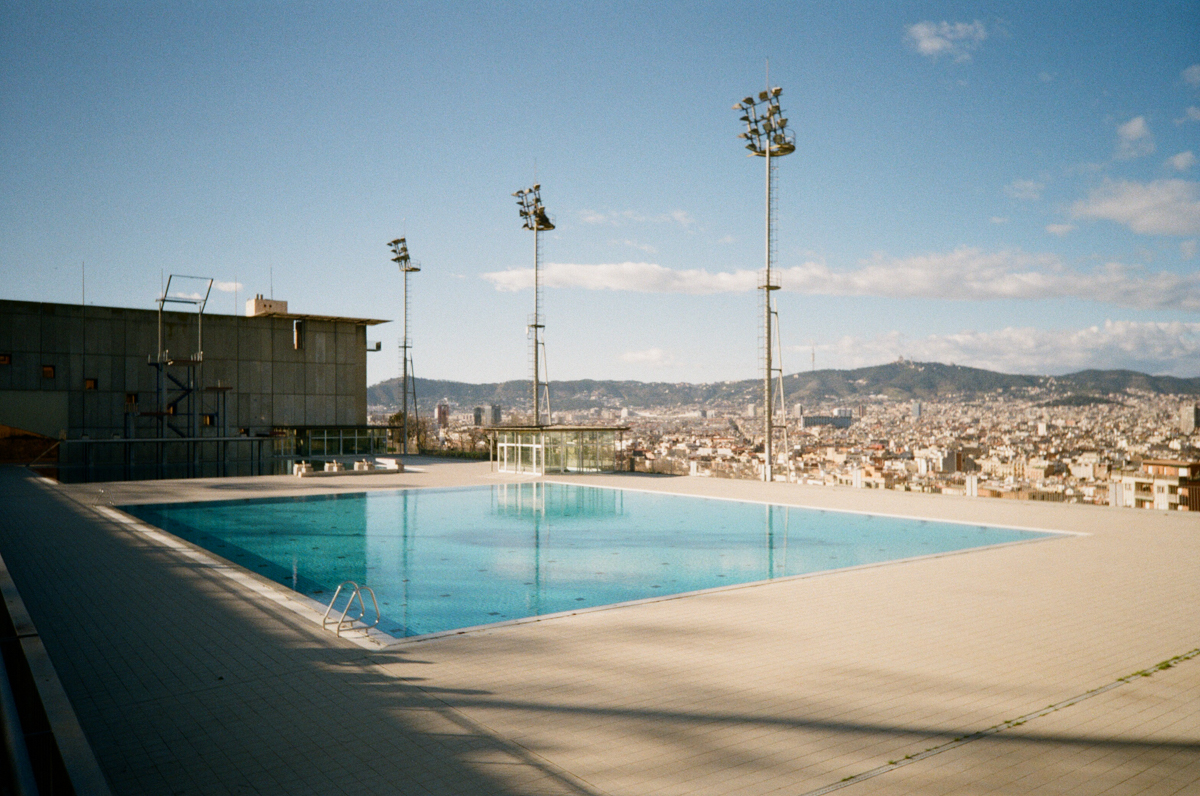
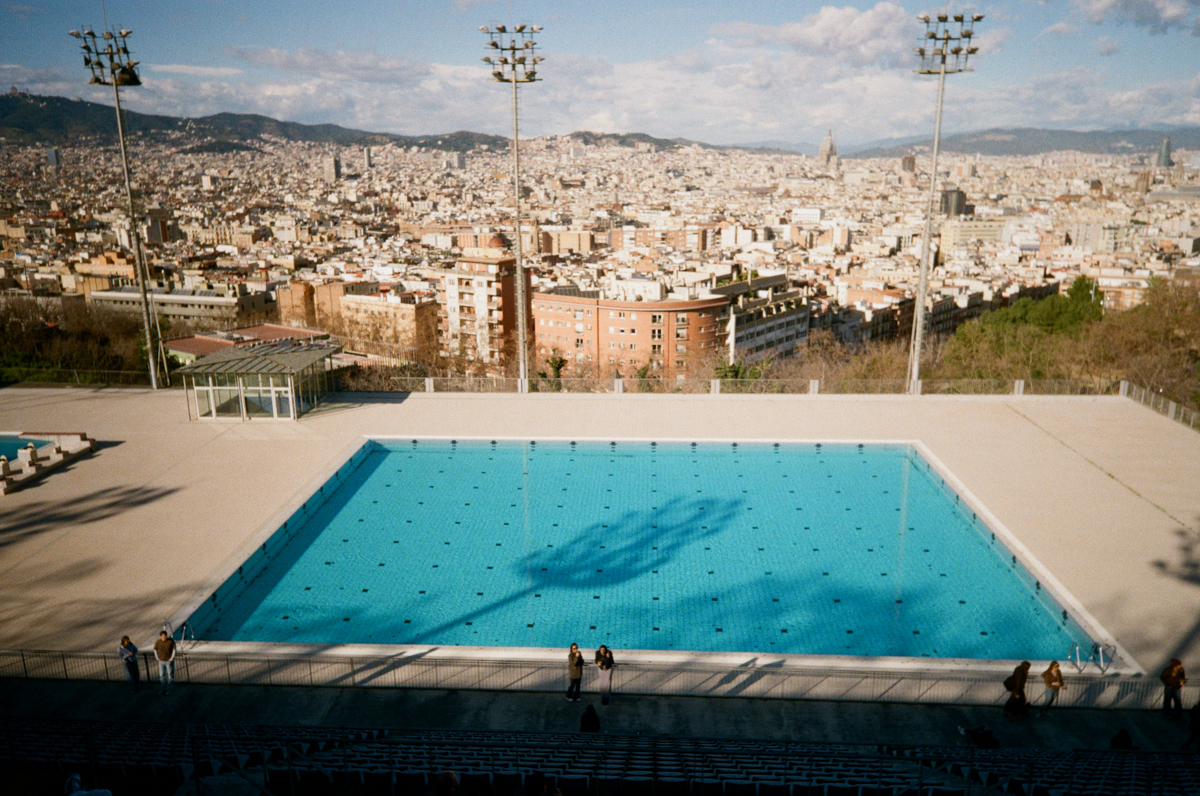
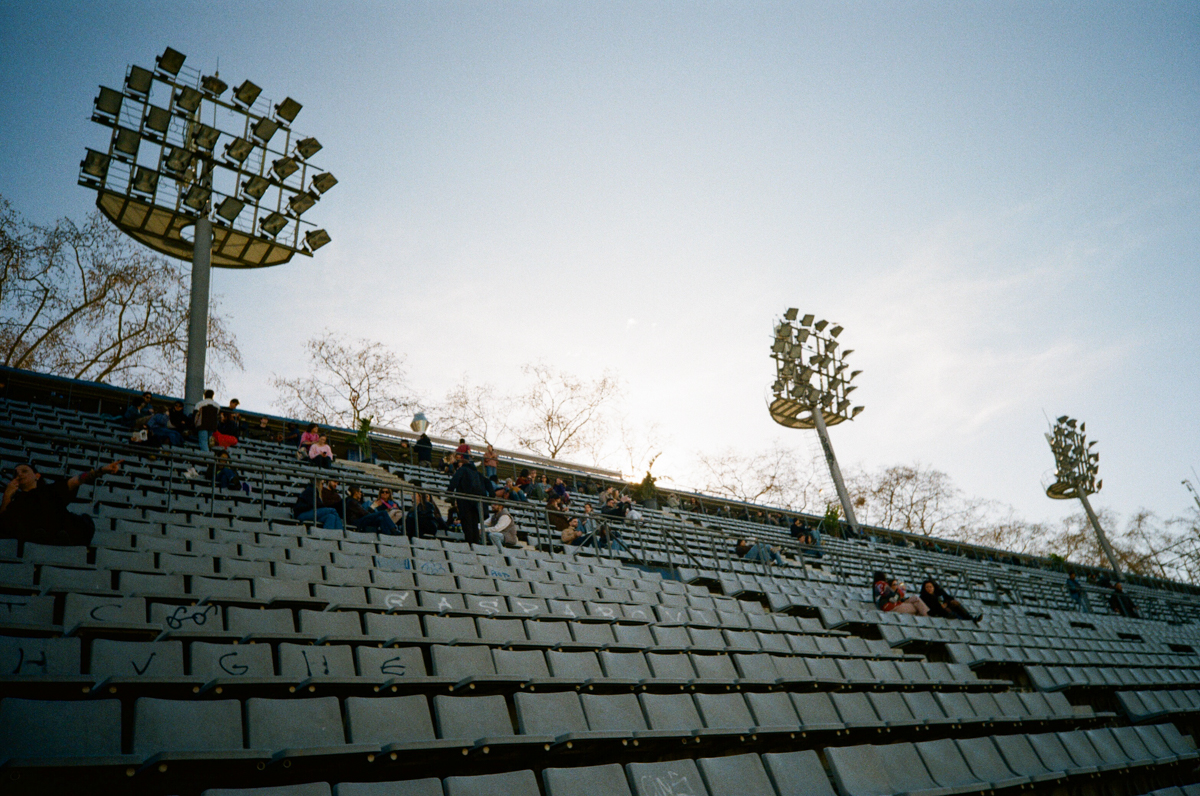
I mention that because this next place is another of my top choices for looking out across the city: the iconic (if you remember the 1992 Olympic diving competition) Piscina Municipal de Montjuïc.
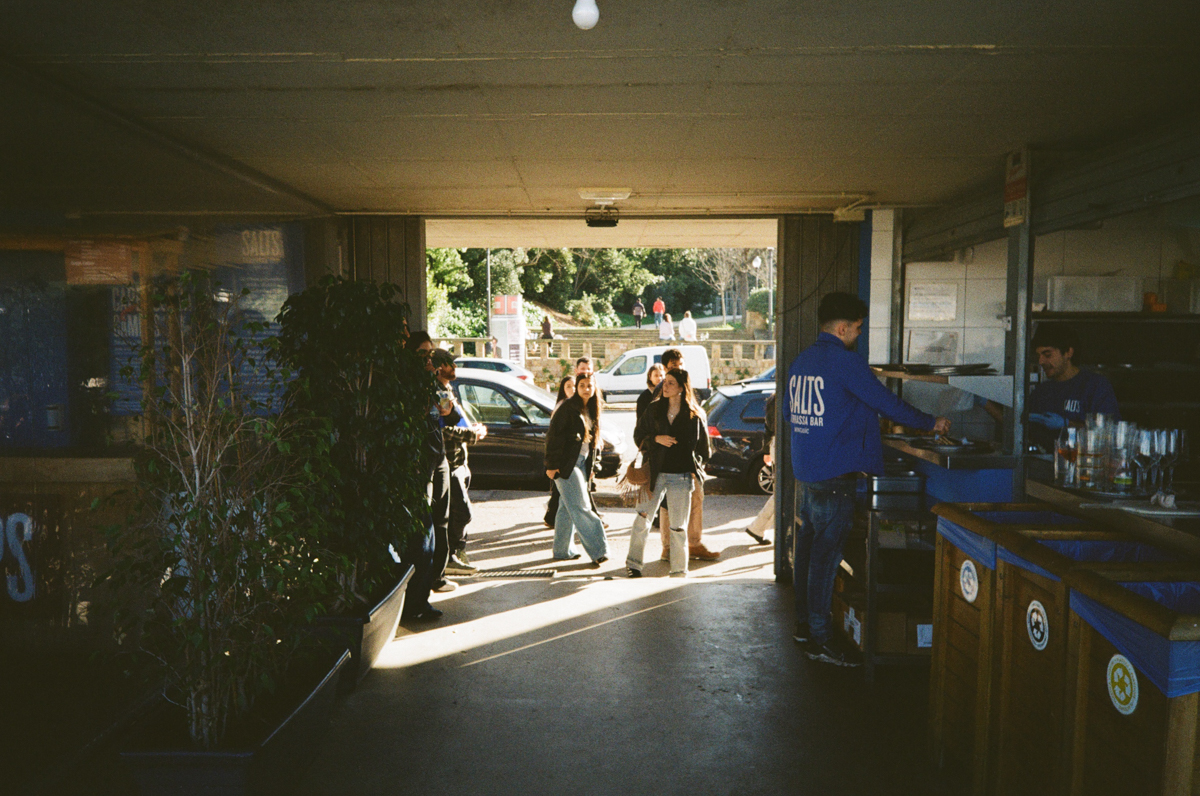
You can swim there in the summer months, but if you don’t fancy that you can just get a drink and some food from Salts Bar, sit at their tables or in the pool’s stadium seating, and take in what is another great view of Barcelona.
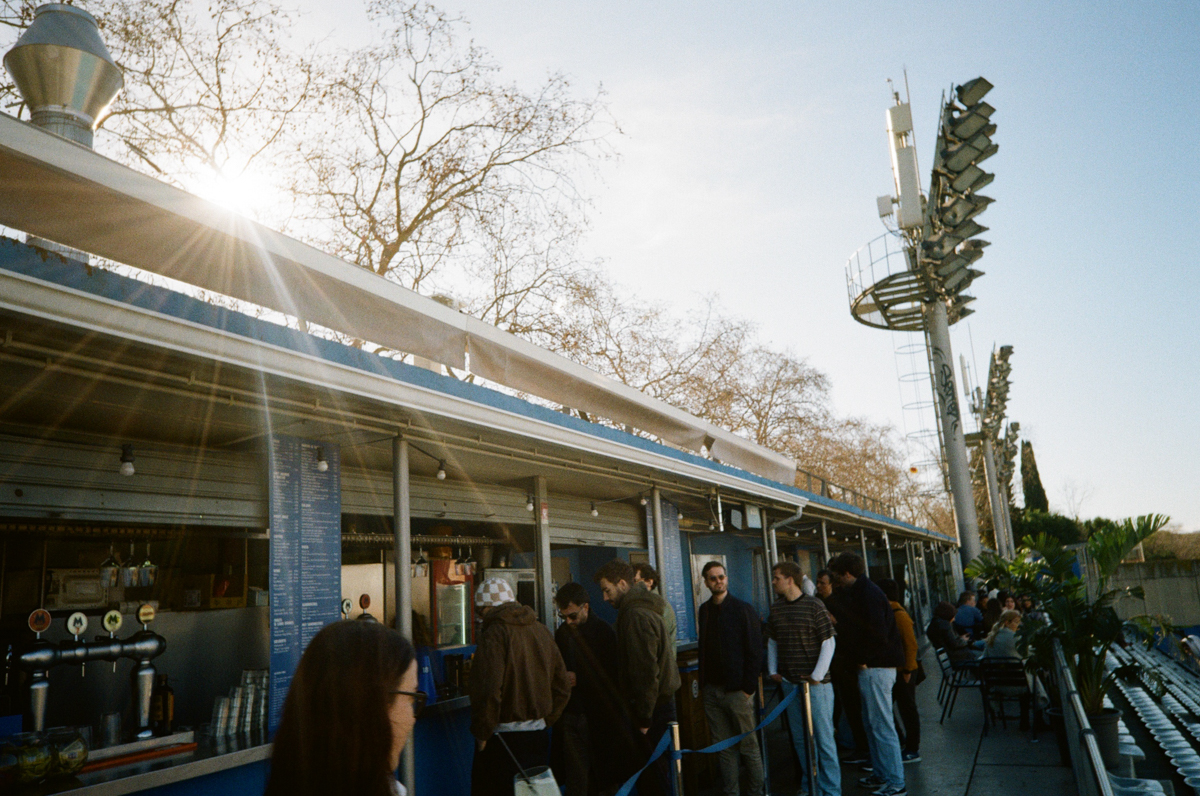
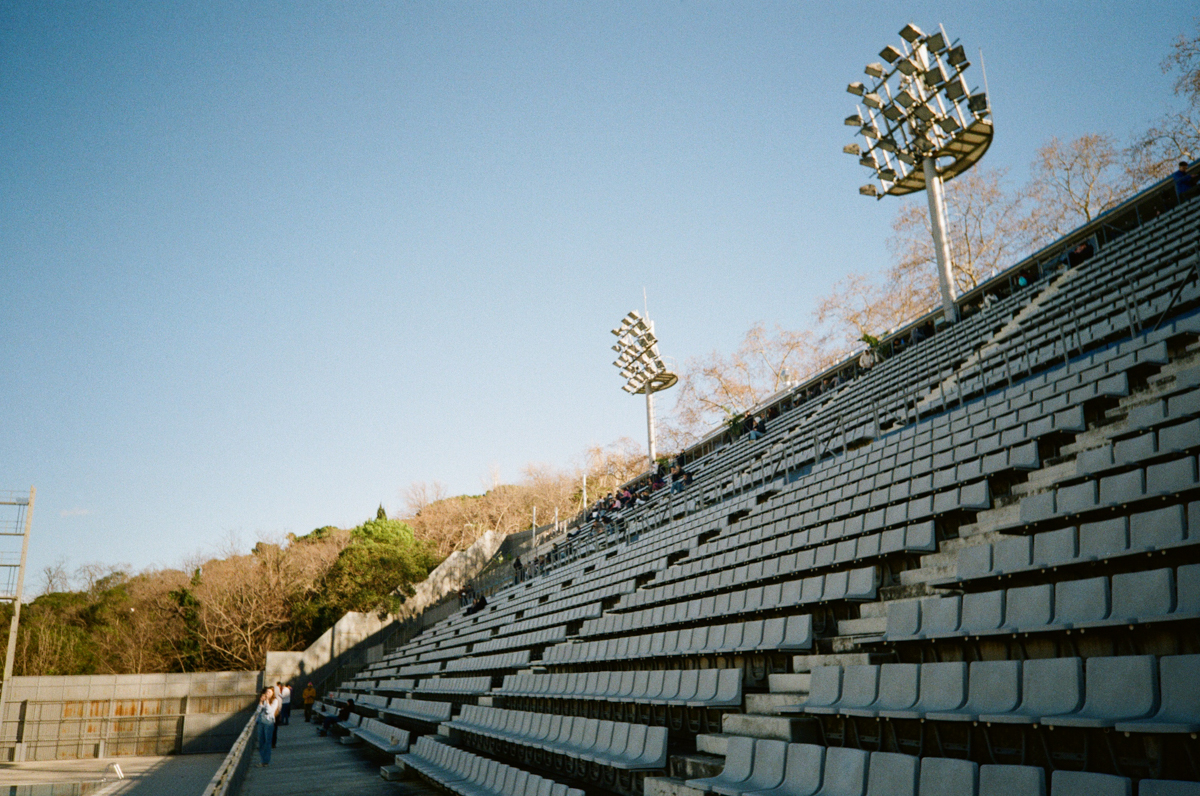
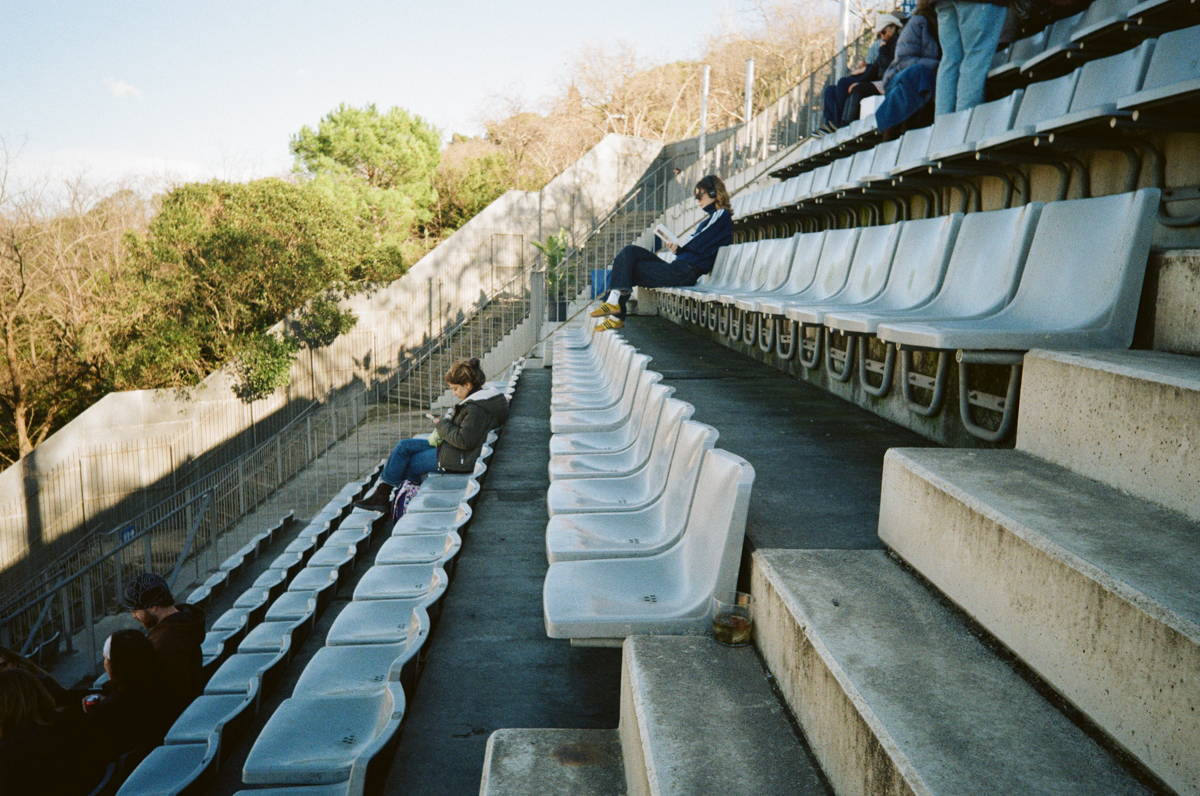

I mentioned this next point in that other post where I’d gone up to Tibidabo, but I’ll reiterate here in case you can’t be bothered to go and read that one.
The respective heights and distances from the city of this swimming pool and that tallest hill in the Serra de Collserola range means I got a pretty different feeling from each. More than just the obvious case of being able to see more or further from Tibidabo.
Up there, I felt like a distant observer of the city. You’re seeing the whole thing, but I did feel high enough and far enough away that I was separate from it.
At Montjuïc, being lower and a lot closer – indeed, being still in the city – I felt like that connection to Barcelona hadn’t been broken. Yes, you’re looking out over it, but I also felt still a part of it rather than apart from it.
That all sounds a bit pretentious now I’ve written it out. But it was all true to me at the time.
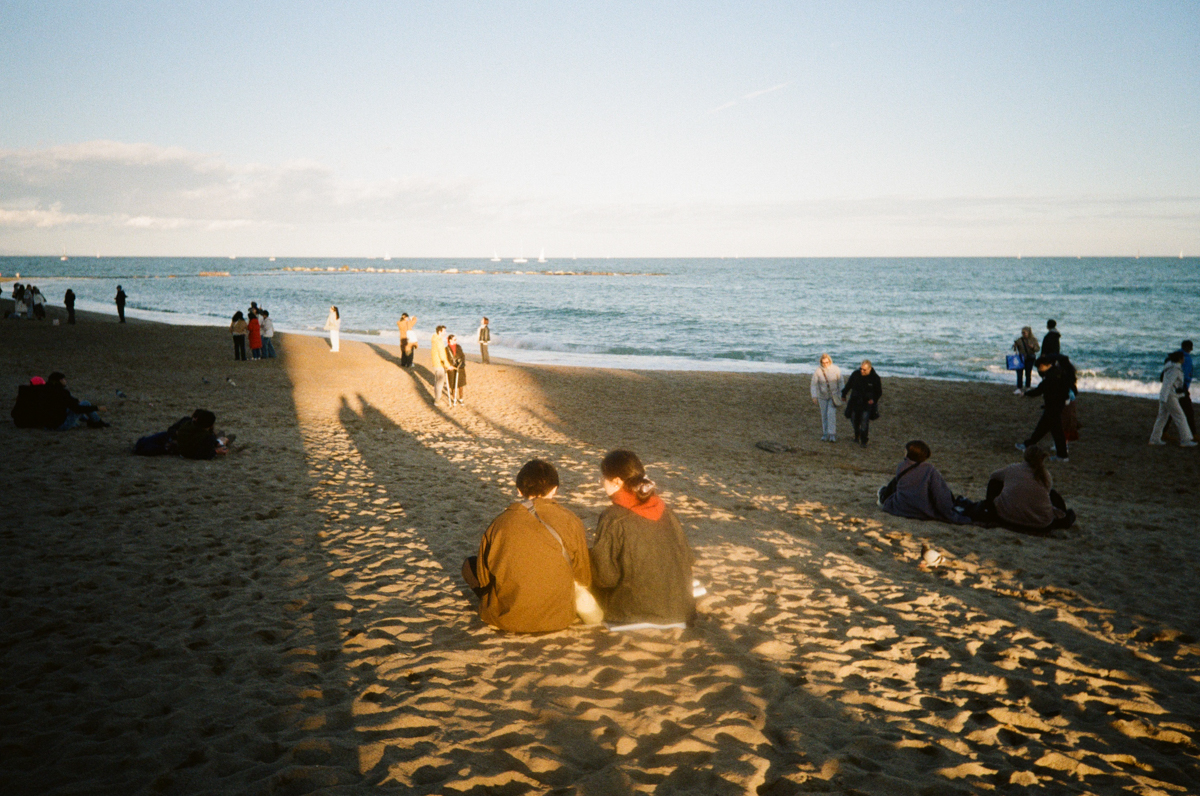
Back down to Barceloneta beach
By now the sun really was going down, and I wanted to get this roll of Kodacolor 200 finished that day before it was too late. So with little time to get to the final location, I had to run.
Actually run.
It was only a little run, which was good because I’d had a few drinks, very little food, and had a bigger one to do the following morning, but it was a run nonetheless.
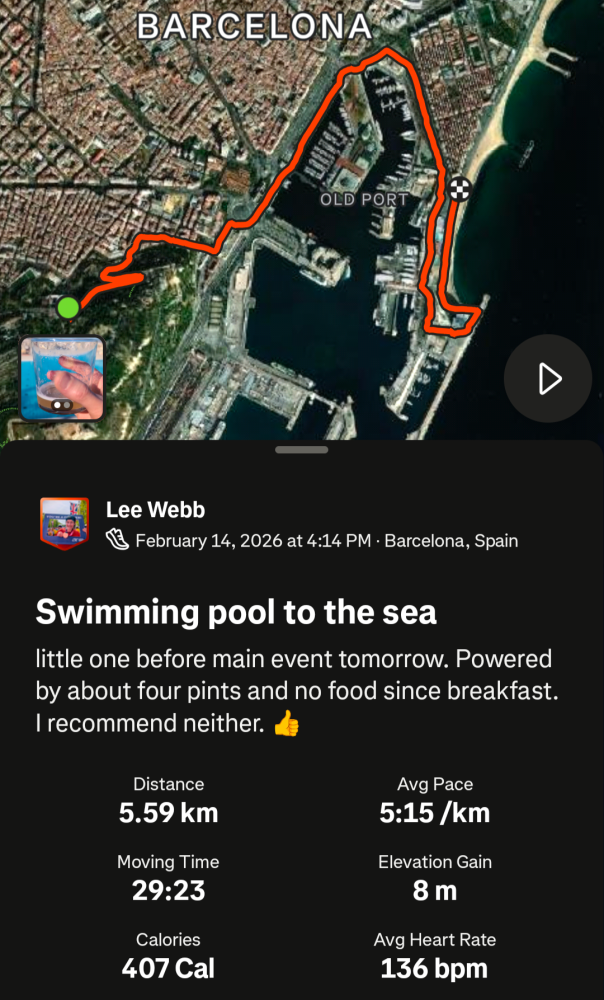
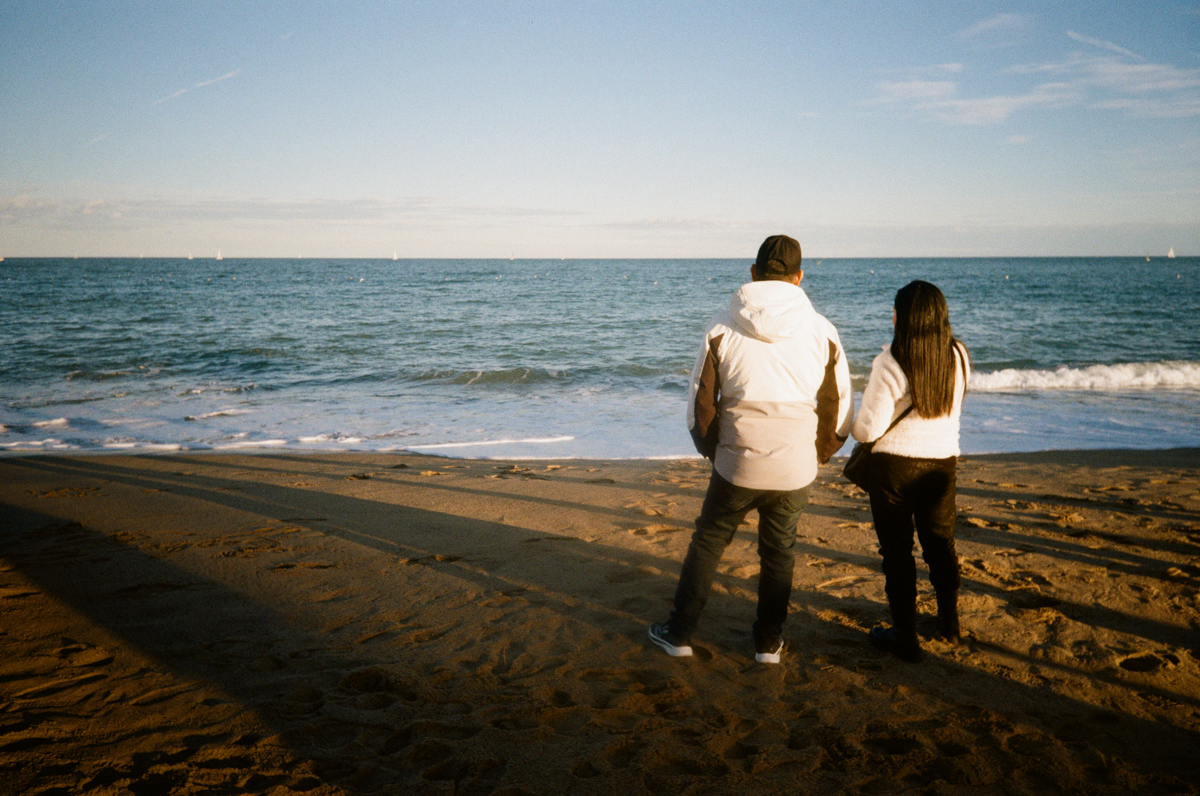
Once down at Barceloneta beach, after taking a few minutes to have another drink and regain the desire to actually get up and start moving around again, it was time to get on with the job at hand.
The Kodak Snapic A1 I was shooting came into its own a bit here, just as it had done at the Three Chimneys earlier in the day.
In both places, I wanted to remain as inconspicuous as possible, and walking around with a relatively large SLR would have made that a touch more difficult.
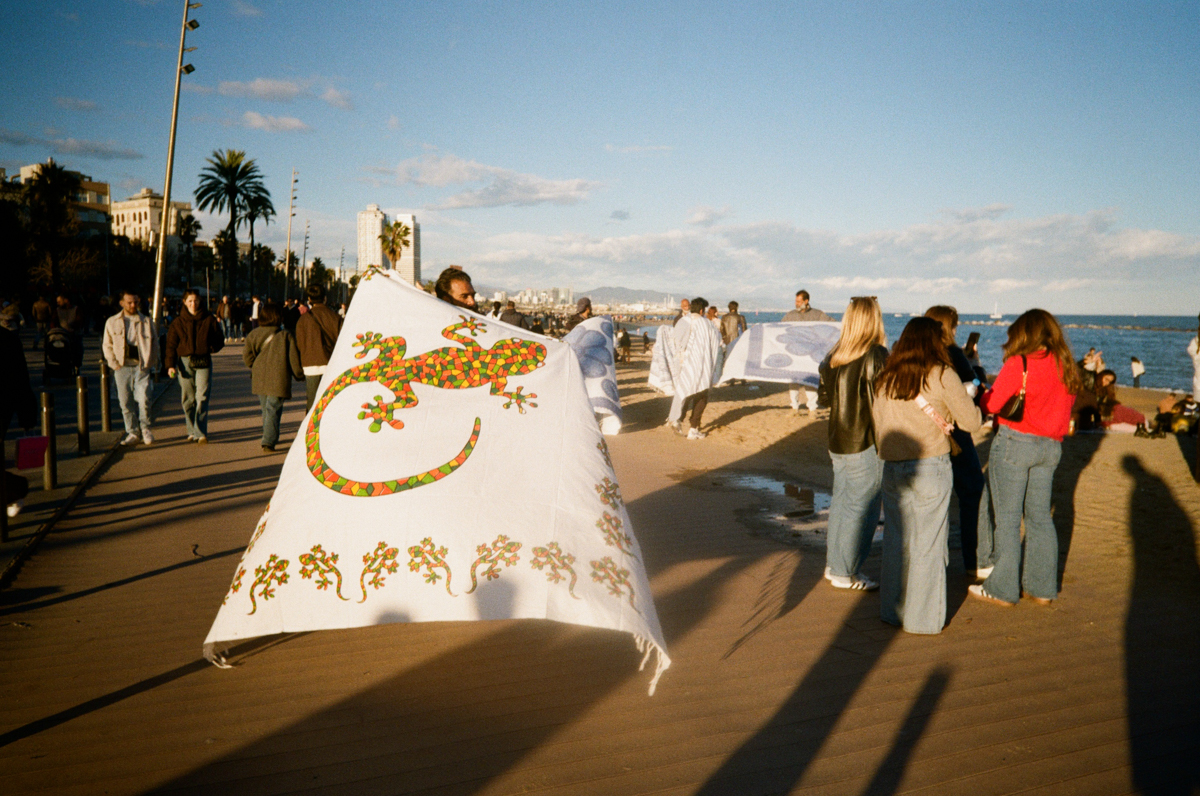
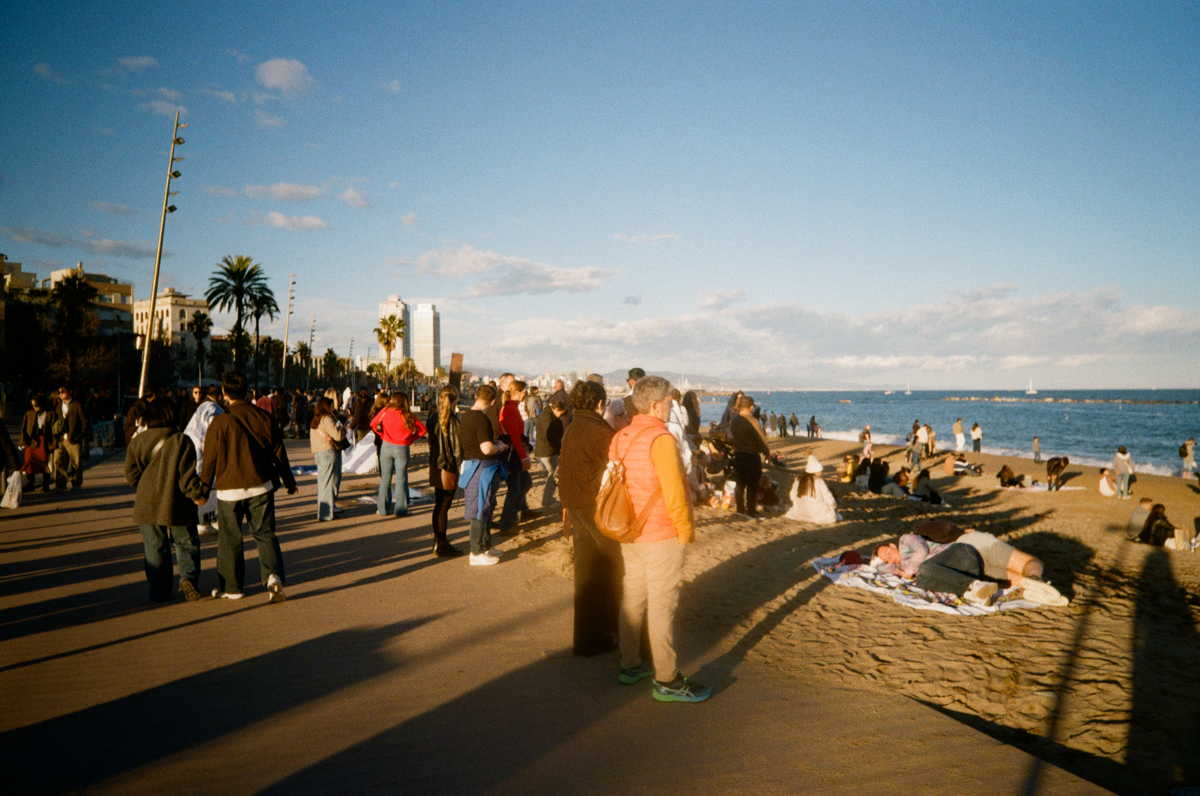
I’m not sure if the gentlemen selling the blankets are strictly operating within the local laws, but I suspect not. And it’s always wise not to make yourself too obvious when shooting scenes of people doing something like that.
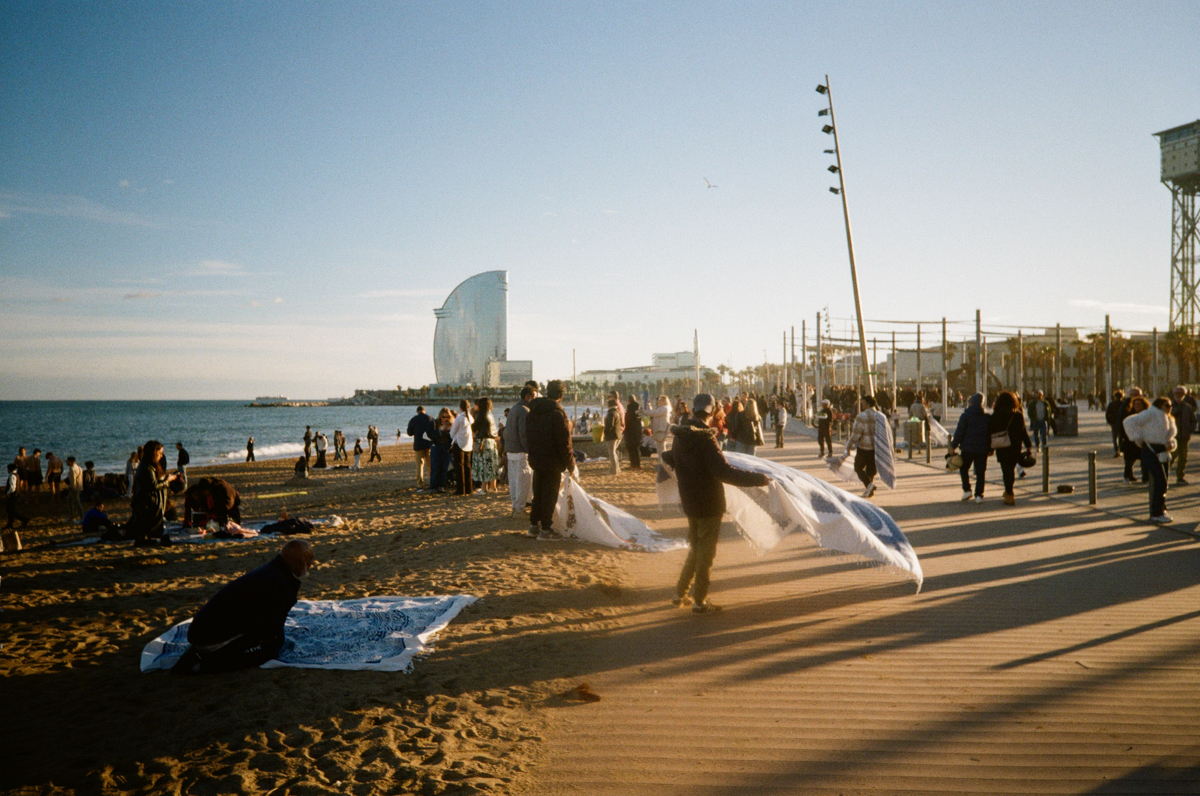
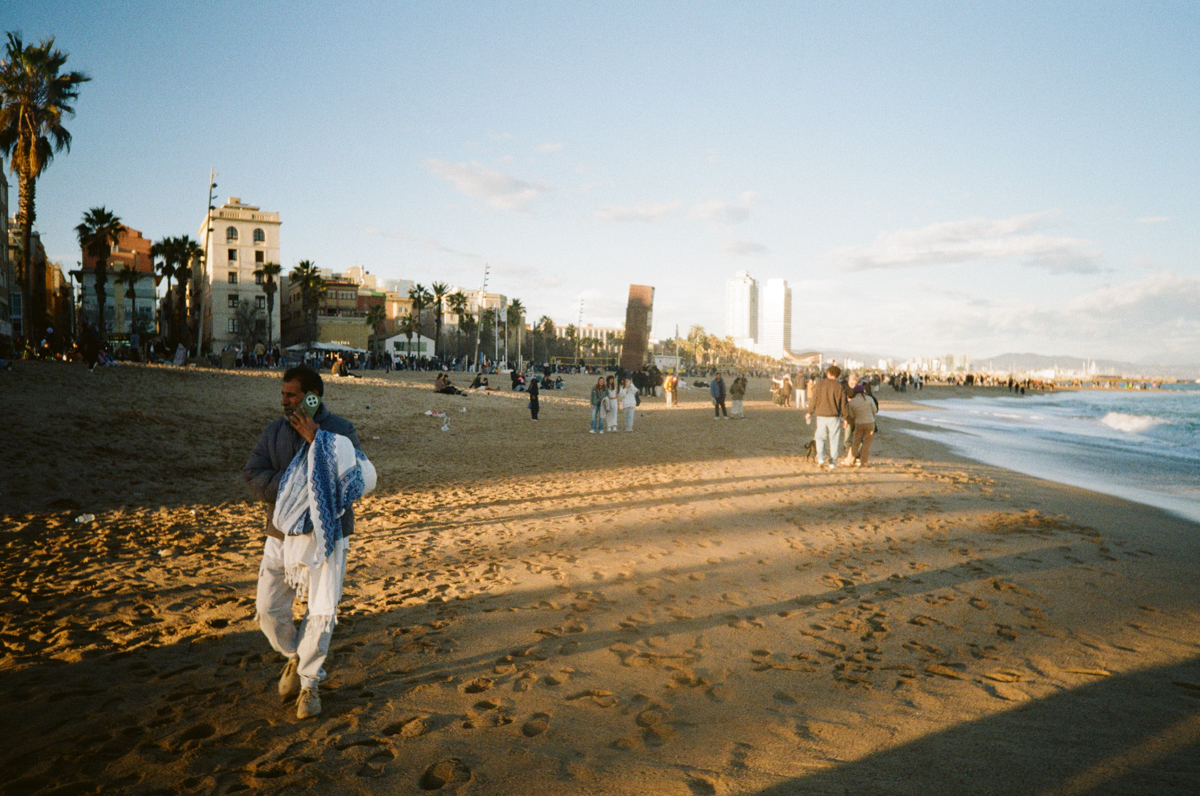
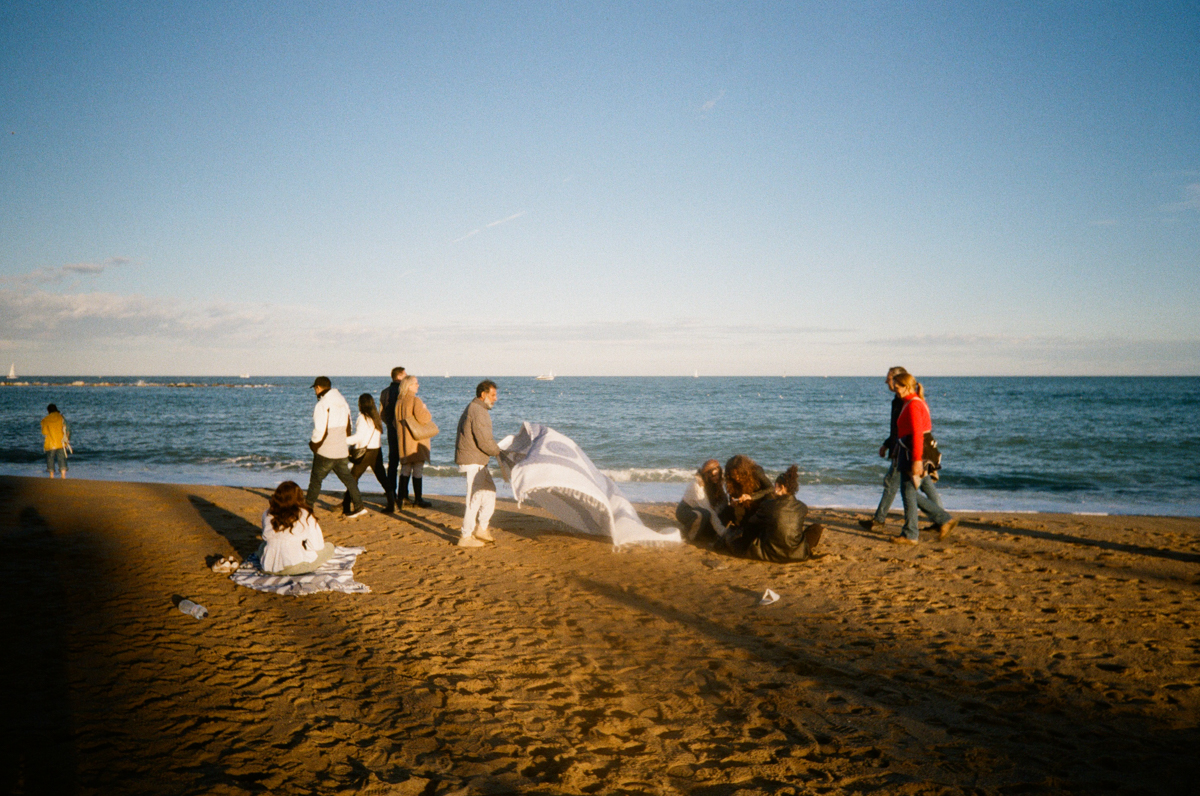
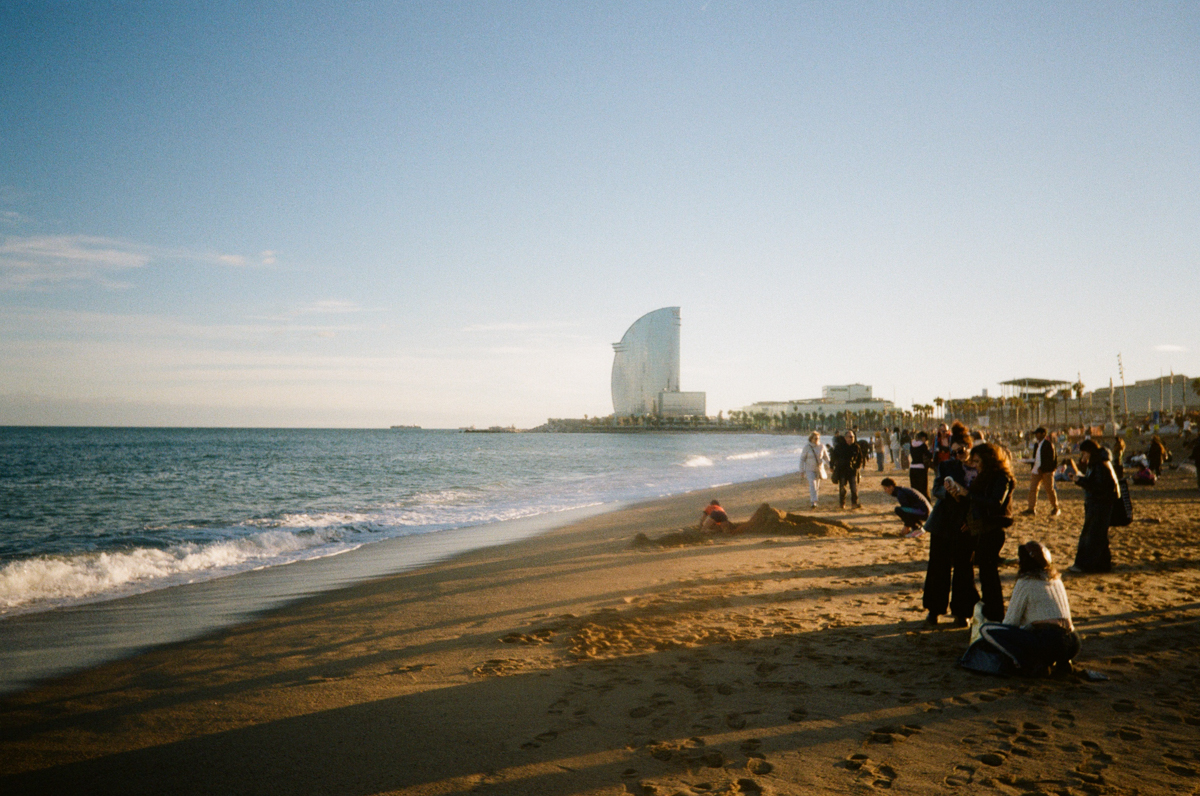
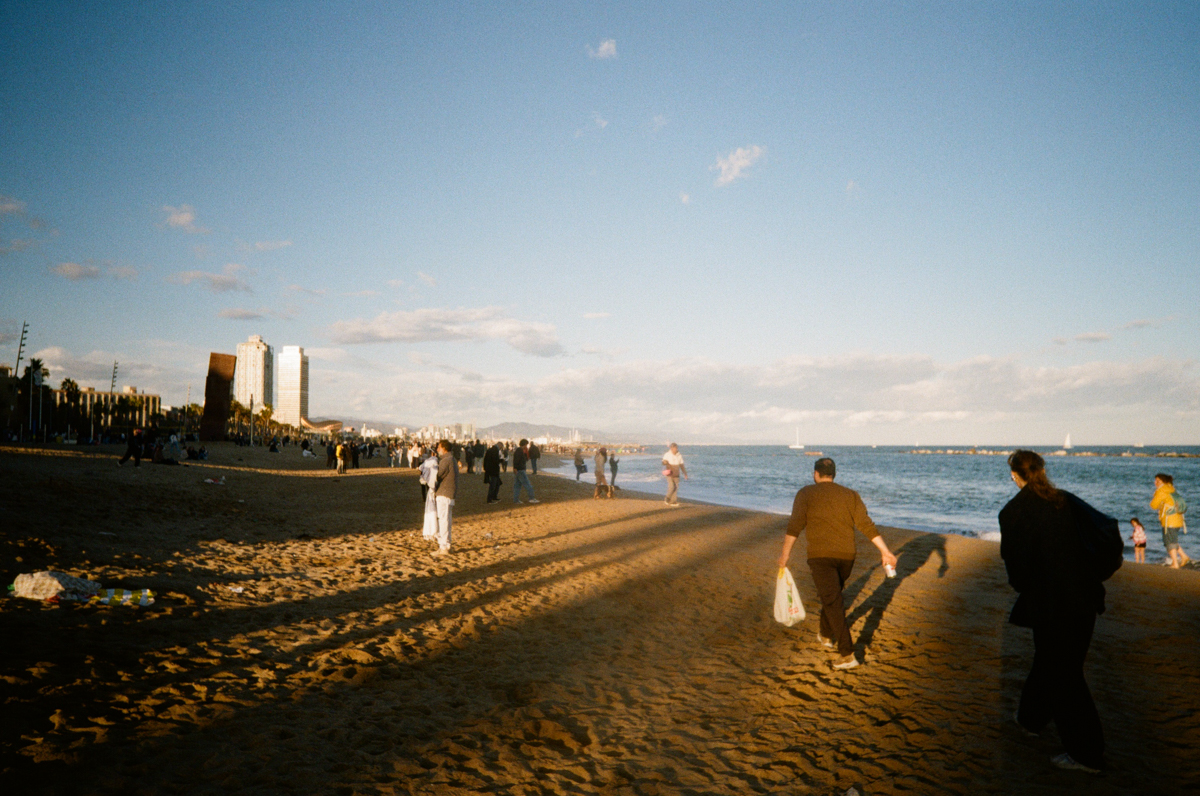
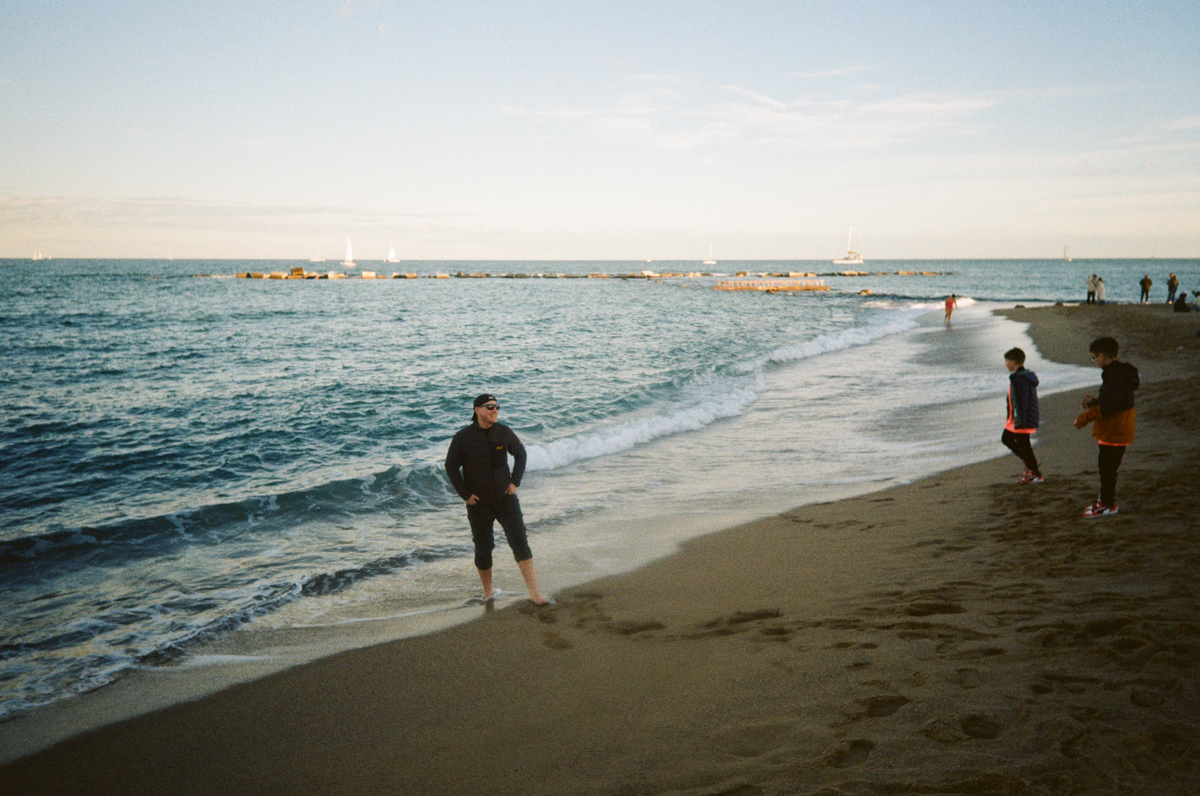
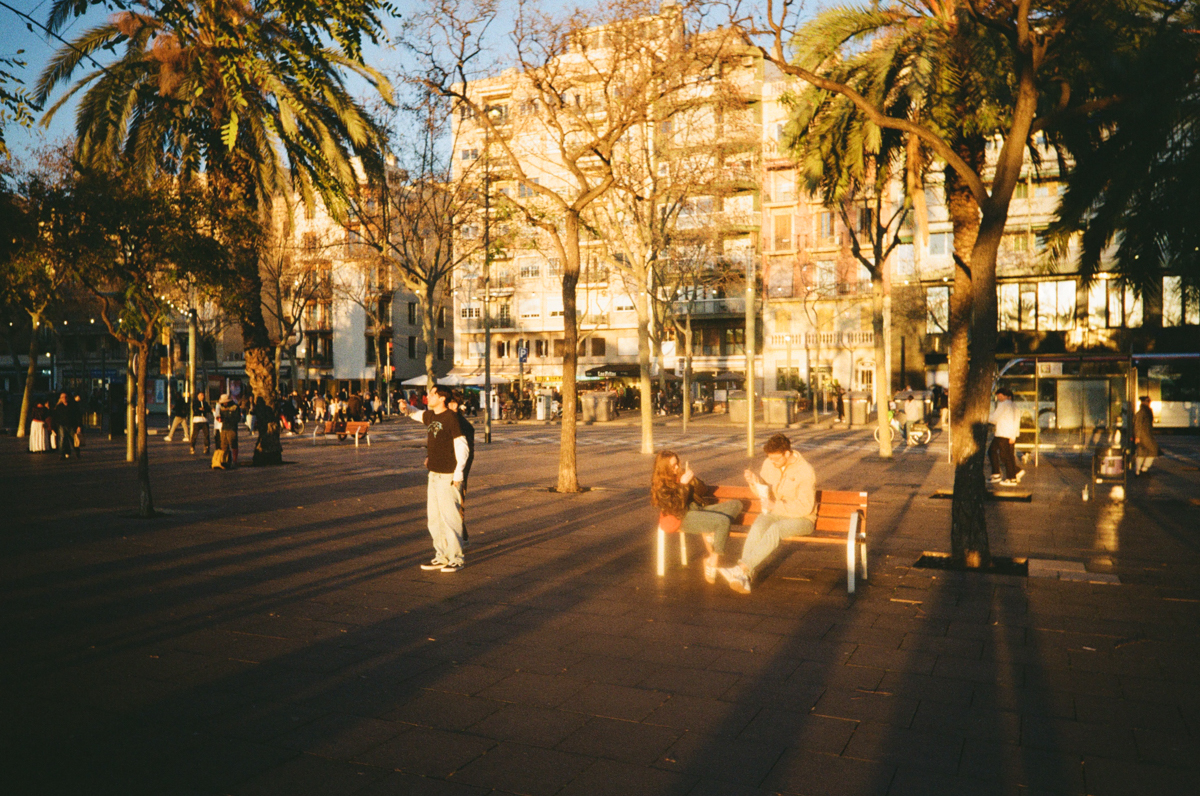
The sunset at Barceloneta beach was as photogenic as I’d remembered from the last time I was there, and it was again easy to find things that I thought would look good on film in that light and with the long shadows.
Looking at some of these shots now though, I do see a kind of fuzziness in them that didn’t happen anytime else when I used this Snapic A1 camera. Not on the earlier shots from this roll, and nowhere on any previous ones either.
I’m assuming it was some slight fogging on the lens that I could have easily wiped off but didn’t notice. Perhaps from the sea air, or perhaps from when I was a bit of a sweaty mess during and after the run down from Montjuïc.
But I can definitely understand how I would have been a bit too tired, mentally especially, to have thought to check the lens like I normally would at this point.
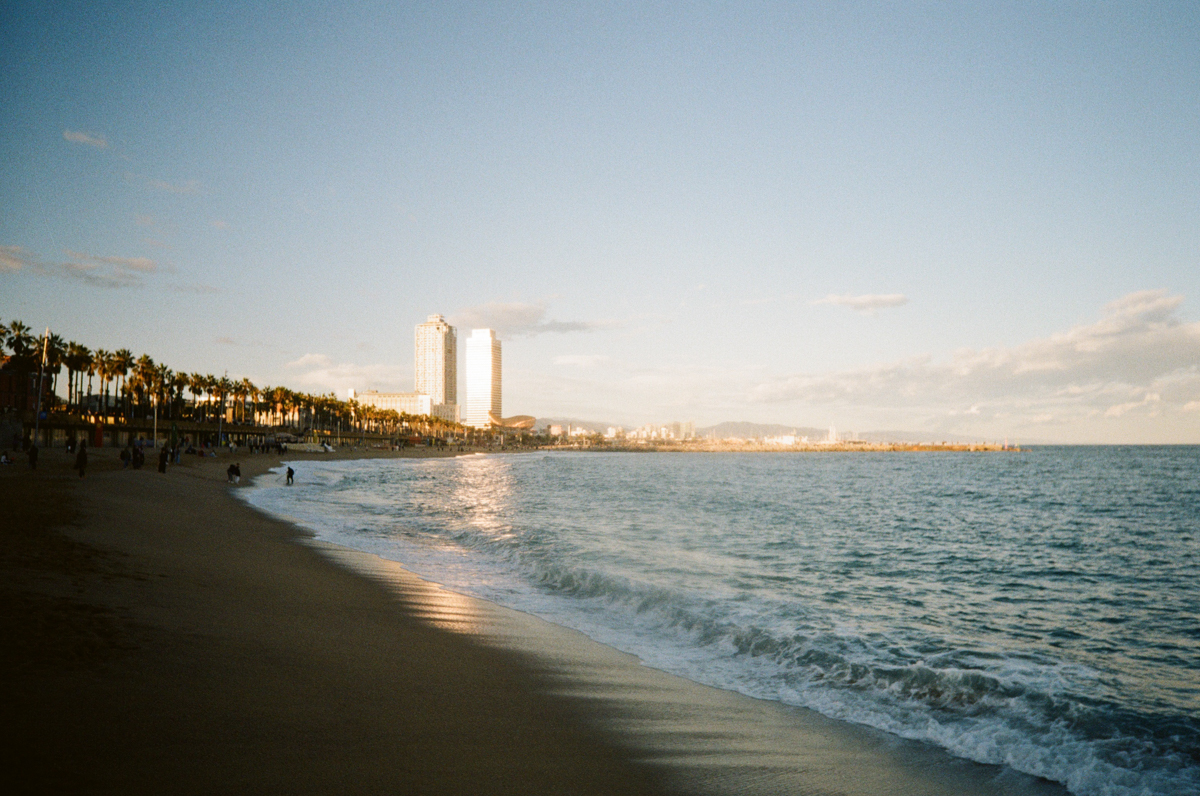
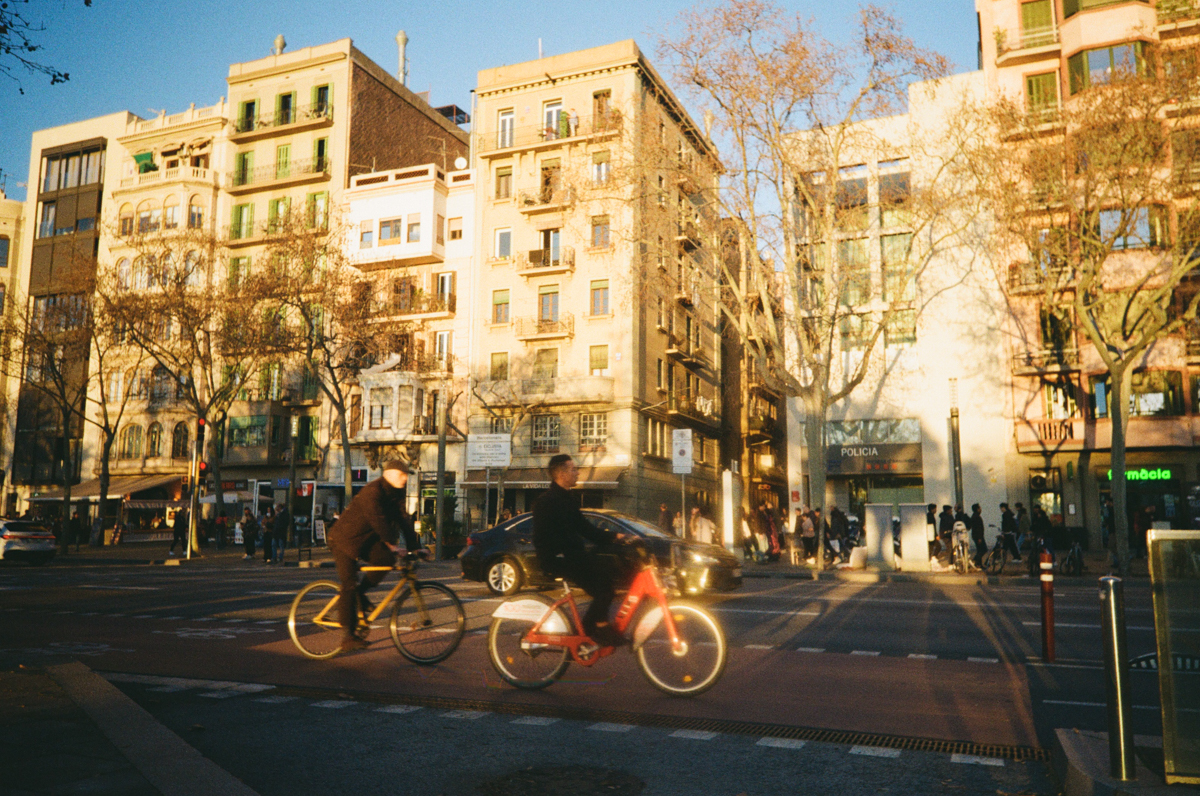
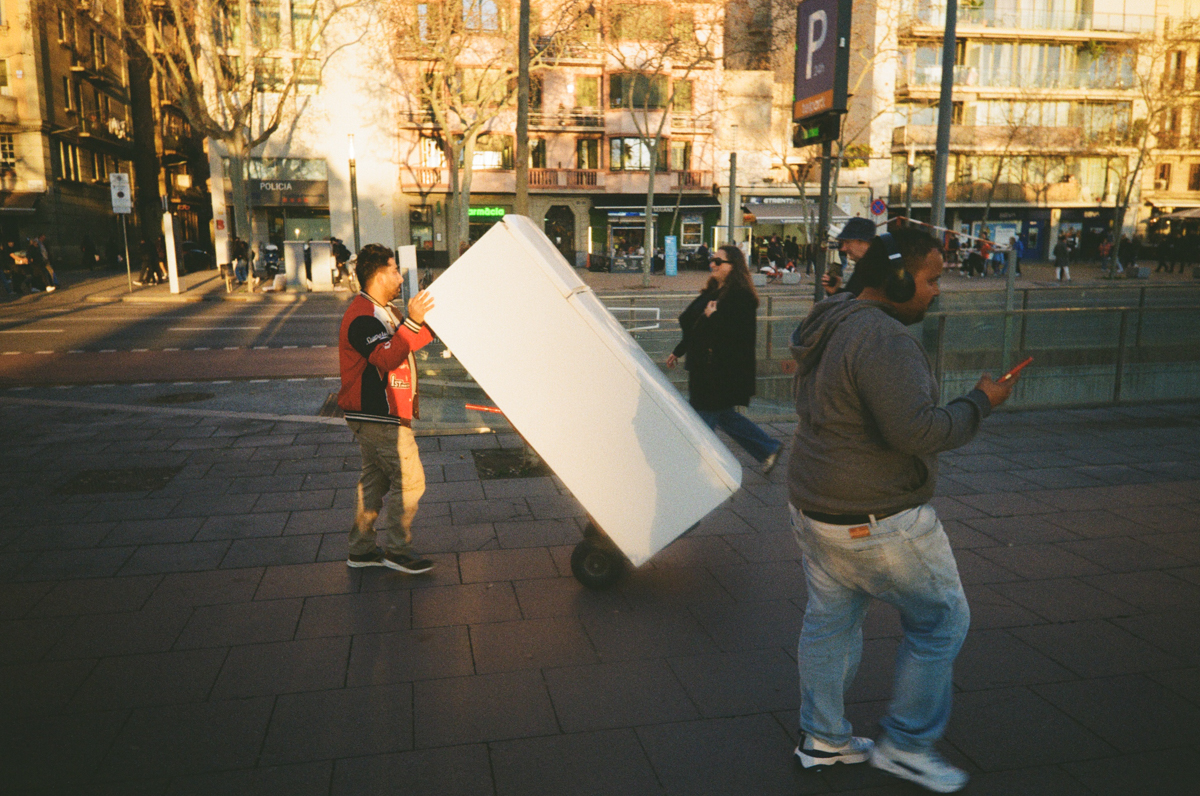
Finishing this roll in the Barcelona streets
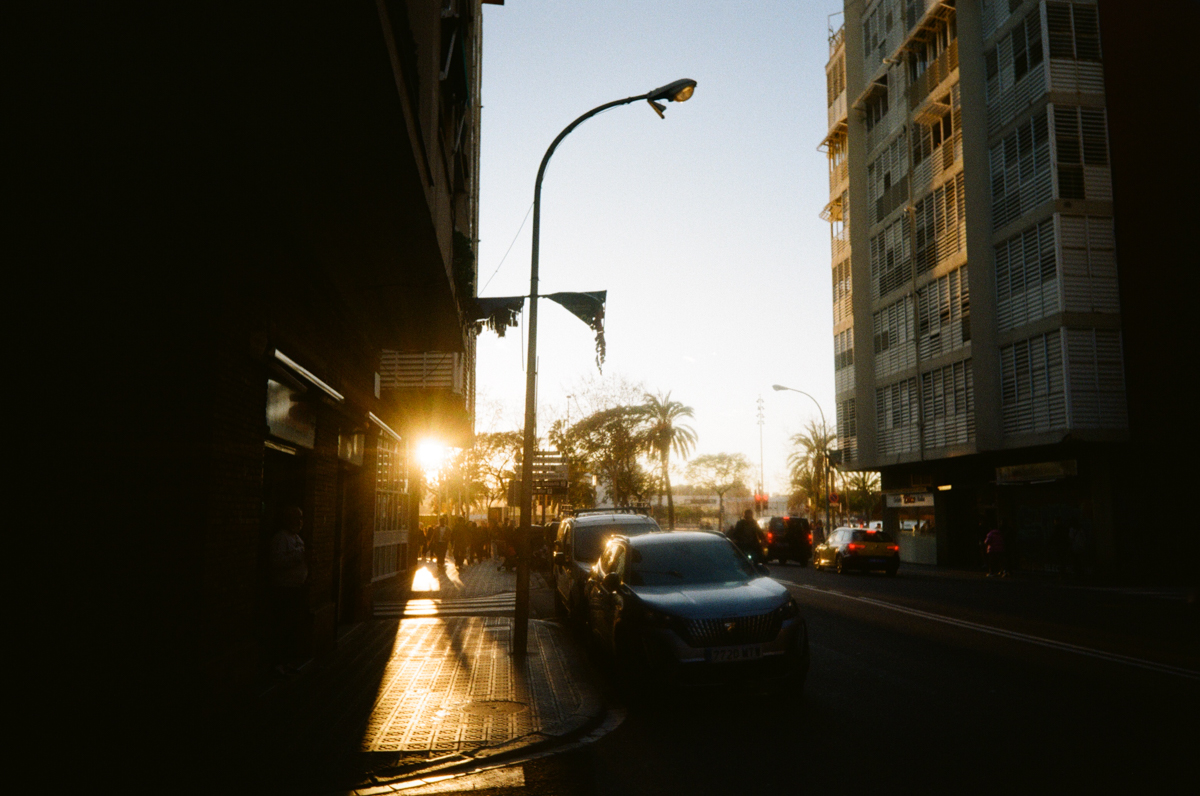
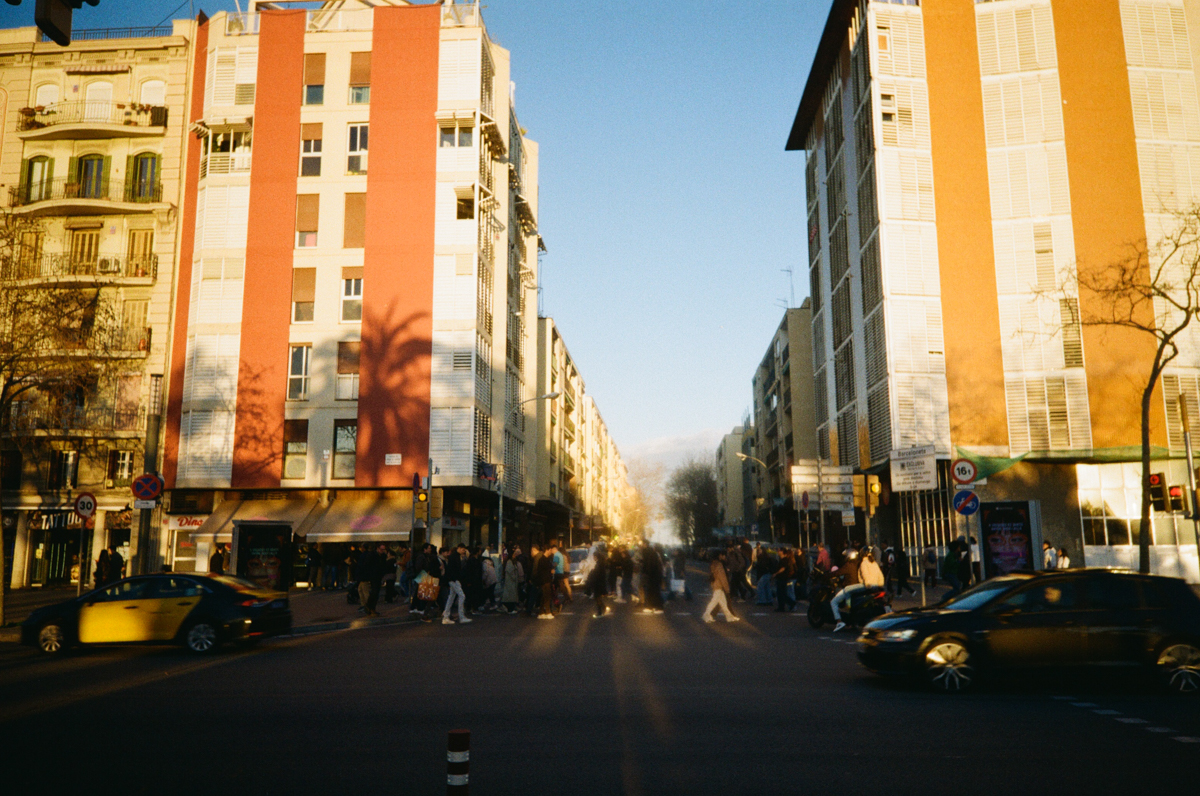
By now I truly was ready to go back to my room and have a massive lie down on my bed. The fact it was almost an hour’s walk away up near Arenas de Barcelona was both bad and good. But honestly, mainly good.
Yes, I could have taken the metro and got off at Rocafort, right next to my place. But I still had some of this film to finish, and the sun was still making the streets look fantastic for shooting.
And also, I’ll always enjoy walking through Barcelona, no matter how tired I might be.
The views on the Metro are the same as any underground transit system. London. Shanghai. Paris. New York. I’ve been on plenty, and I’d rather be seeing the Passeig de Joan de Borbó illuminated by the early evening sun than the inside of a tunnel any day of the week.
Apologies for the fuzziness that was again present in some of these images.
Wrapping up this post and this Barcelona trip
This Kodacolor 200 was the third and final roll of film I shot on this trip over to Barcelona. The other two were some Kodak T-Max 400 on the rainy Friday, and some Ilford FP4 Plus 125 on the sunny Saturday morning.
These colour images we’ve been looking at here were from the same day as the latter of those monochrome ones, and I have to say I was exhausted by the time I’d finished. Especially with that 5km run thrown in there too.
I mentioned in the first post of this Barcelona mini-series the nightmare 12-hour delay on the journey over that meant I’d been awake for about 30 hours before I could check into my room on the Thursday night.
I’d then spent the Friday afternoon and all day Saturday walking around shooting film. Which was good. It was my choice to do that. But I was still dead on my feet at this point.
So an early night it was, in bed before 10 o’clock so I could get up and give my best effort to the real reason I was even in this great city.
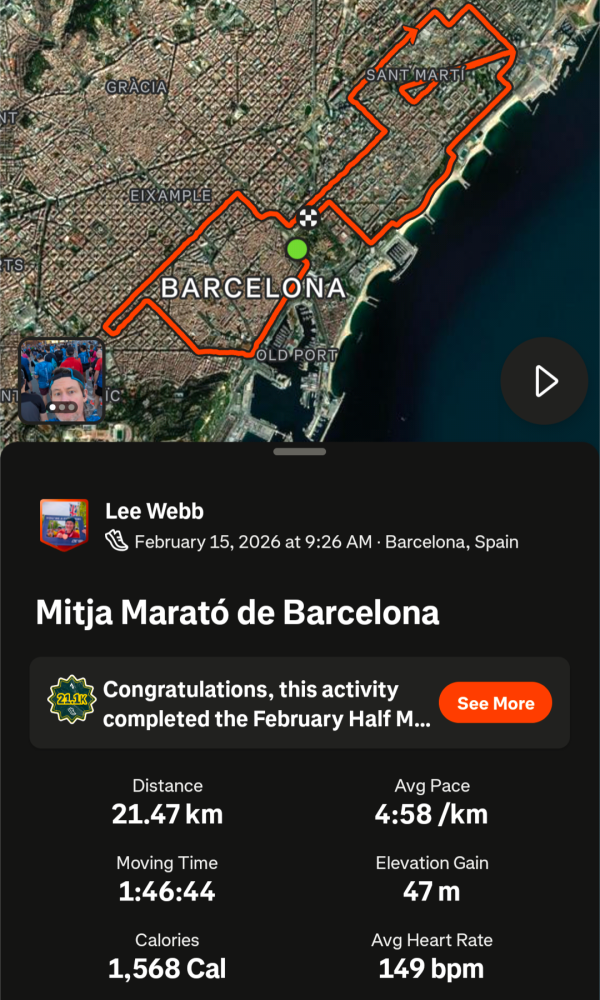
It wasn’t a PB, but I’m always going to be happy with a sub 5-minute kilometre pace on a half marathon.
And that’s that. I loved my time in Barcelona again, and I’ve enjoyed writing up the trip as a three-part set of posts.
It started off with me tired and a bit grumpy after the troublesome journey over, and ended with me tired and very happy after the Mitja Marató de Barcelona.
In truth, running has taken over photography as my main interest and hobby these days, but it’s always great to combine the two with a weekend in one of my favourite places too.
I might not do this particular half marathon again, but I’m sure one day I will back in Barcelona. 🙂
If you liked these colourful shots from around Barcelona and want more adventures illustrated with film photography, why not have a look at some of these:


And if you think others will find this post worth a read, help them find it by giving it a share 😀

That turns out really well. And i like the fuzziness. 😆
Thank you 😀 I’d still prefer them without the fuzziness haha but overall yes, I thought the Snapic was really good and Barcelona is always magical too. Cheers for reading and the nice words. 🙂