Finally Shooting Ilford’s Most Iconic Film [Ilford HP5 Plus 400]

Images shot on Ilford HP5 Plus 400 in Yashica Electro 35 GSN I still remember my process for choosing which films to shoot back when I first got into this … Read more

 Lee
Lee Images shot on Ilford HP5 Plus 400 in Yashica Electro 35 GSN I still remember my process for choosing which films to shoot back when I first got into this … Read more

Images shot on Kodak Ektar 100 in the Yashica Electro 35 GSN As much as I enjoy shooting film, seeing the results, and writing about it on here, there’s a side … Read more

Images shot on Fujicolor C200 in the Yashica Electro 35 GSN Before I moved to Shanghai, a place I’ve shot more photographs of and written about more than any other on this … Read more
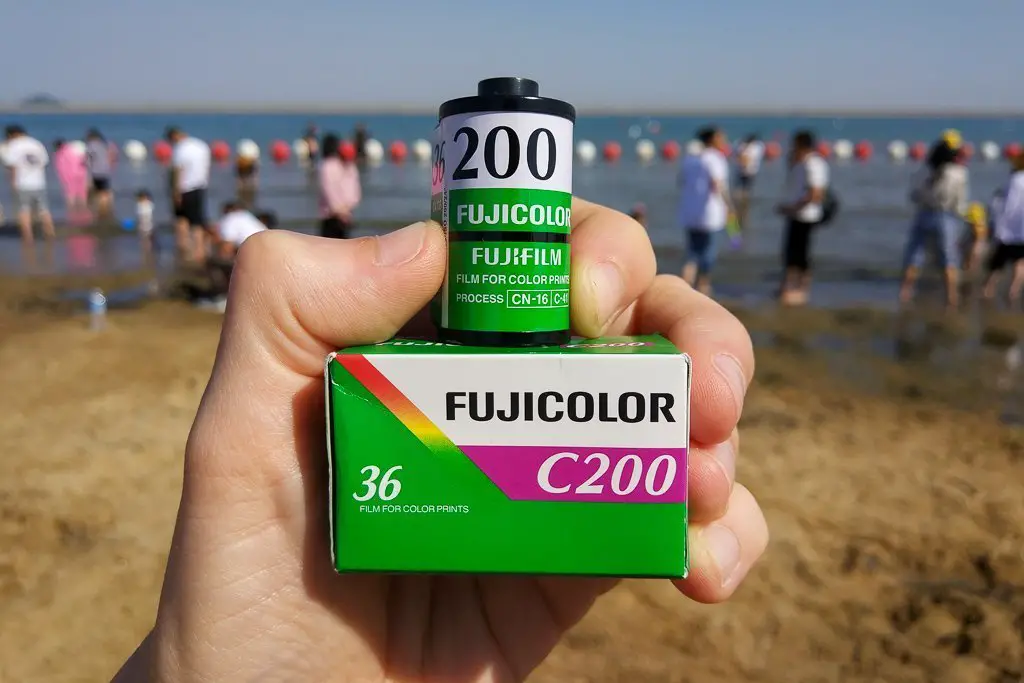
If you were to look at the outdated box design, the budget price, the ubiquitous availability and the results it gives, it would be easy to conclude that Fujicolor C200 … Read more

Two of the most important things about film photography for me are the process of making something unique that you will always be able to keep, and to actually enjoying … Read more

Images shot on Ilford Pan 400 in an Olympus Supertrip One of the first film photo essays I published on this site showed what I got from a roll of Ilford … Read more

It’s been a while since I did a camera review on here, as it’s not often I get a new one to play with. I suppose that while not having … Read more

I try to avoid superlative adjectives when reviewing films, cameras and lenses on this site. I can say which are my favourite ones, but using definitive terms like the most, … Read more

If you’ve seen any of the film photo essays I usually publish here, you’ve probably noticed from that first image that this one is going to be a little different. … Read more

Images shot on CineStill 800T in Yashica Electro 35 GSN I talk a lot on here about the importance of creating and making things. About getting out there and shooting as much … Read more

Ilford is one of the very biggest names in the world of analogue photography, with some of its films being among the best-known and most-loved out there. The Ilford Pan … Read more

Images shot on Shanghai GP3 100 and Lomography Color Negative 100 in Holga Glo 120N Back in the winter of 2017, the man known as @Givemeabiscuit on Twitter and (I guess) … Read more

CineStill 800Tungsten Xpro C-41 – more commonly known simply as CineStill 800T – is a special film in more ways than one. Most of the other stocks I see in … Read more

If you’ve had your DSLR or mirrorless camera for a while and still only have the kit lens that came with it, the thought of picking up a prime lens … Read more

Images shot on CineStill 800T in Yashica Electro 35 GSN I’ve never really thought about this before, but it seems one way you could categorise film stocks is by whether they … Read more

It seems to me there’s a school of thought that street photography is inherently better shot in monochrome. For that timeless, classic, gritty look, of course. However, most of the … Read more

Images shot on Oriental Seagull 100 in the Yashica Electro 35 GSN If there’s one thing I like doing when I shoot a roll of film, it’s squeezing as many photographs out … Read more

When you do a lot of your film photography in Shanghai, the name Seagull is bound to jump out when you see it. That’s because Seagull brand cameras were, and … Read more

Images shot on Oriental Seagull 100 in the Yashica Electro 35 GSN The Shanghai marriage market is something I’d heard mentioned a few times during my time in the city … Read more
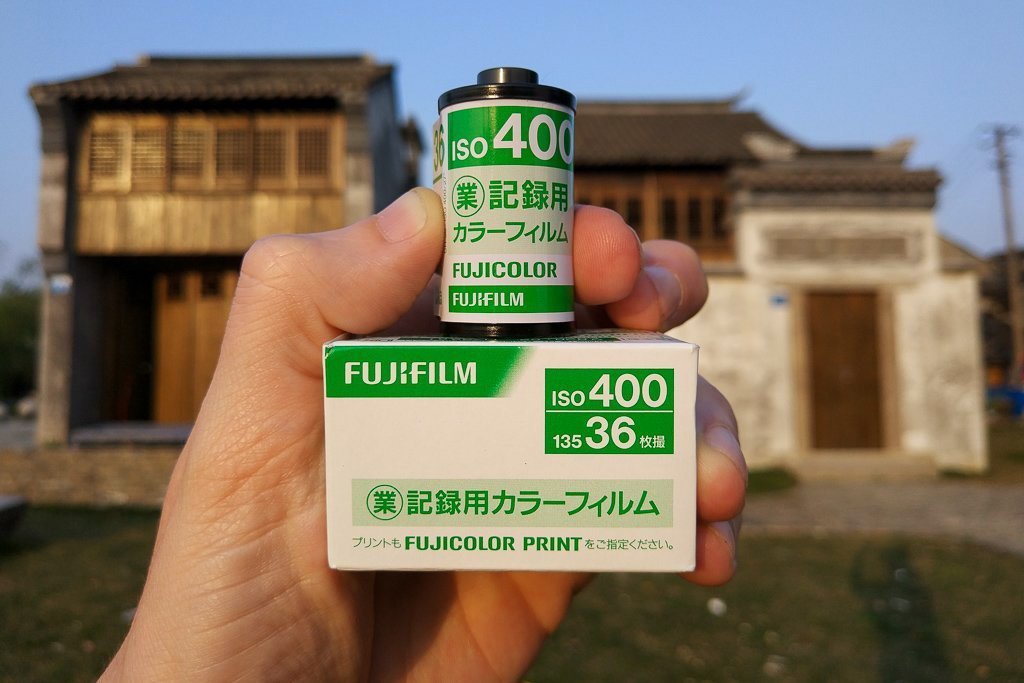
One of the first films I shot after getting into this pastime was Fujicolor Industrial 100. I found it to be a decent enough stock; inexpensive yet giving nice results. … Read more

Images shot on Fujicolor C200 in Yashica Electro 35 GSN When people look at a list of things to do in China’s largest city, the beach never features very highly. … Read more

Images shot on Kodak Ultramax 400 in Yashica Electro 35 GSN Quite a while ago, before I got into film photography and was still shooting with vintage lenses on a … Read more

Images shot on Fujicolor Industrial 400 in Yashica Electro 35 GSN If you’re into painting scenery and landscapes, I imagine the canals and bridges around Wuxi’s Nanchang Street would be a … Read more

Ultramax 400 is one of three consumer grade colour negative films offered by Kodak, sitting alongside its siblings ColorPlus 200 and Gold 200. And to me, that higher ISO is … Read more

Kentmere 400 isn’t my favourite film in the world, but I could only learn that for myself and know it for sure by shooting some. Part of the roll was shot in a park – hence the title.
Come see how it turned out and why I’m very happy I tried Kentmere 400, even though I generally prefer the results I’ve gotten from other films so far.

Catching colour on Kodak Ultramax 400 in a Yashica Electro in sunny Wuxi, China? That’s what I did. Come have a look how the shots turned out here.

If you look closely at the Kodak line of film stocks, you’ll notice most are lucky enough to wear the name Kodak Professional. Then there are the three I always … Read more

If you think you’ve reached a plateau with your current gear but have never tried a prime lens, I’ve got good news. They can make a huge difference when compared to shooting with your kit lens.
A great one to start with is the ubiquitous 50mm – also known as a nifty fifty. Come see why in this guide to why you should have one in your photography arsenal.

Wherever you are with your photography, there will always be people who can learn something from you. There will also always be people who can teach you something new.
The two simple tips in this article might not be new to you, especially if you’re further along than me. But they can be useful if you’re just starting out and want to make your monochrome work better.
Whichever camp you’re in, there’s also some shots taken with the lovely JCH Street Pan 400 to look at here. So come and do that, if nothing else.

For a city so built up, you’re never short of a park to spend some time at in Shanghai, and these parks are never short of people using them for recreation.
That makes them decent places to shoot some film photography, as I did and then wrote about here in this little blog post. Their recreation became a subject for mine.
Kodak Gold 200’s bright colours make it a good film for sunny days like this, as these shots from the Yashica Electro 35 give a glimpse of. Come see.

Since I started shooting film and reading about all the different stocks available, I’m not sure I’ve found any that stir up such extreme positive and negative emotions as JCH … Read more

You’re never short of places to visit in a country as big as China, as towns like Shitang are constantly proving. To me, anyway.
Most people have probably never heard of the place but I can tell you it’s near the city of Wenling, which is also a place most people have probably never heard of.
Regardless, I went there and shot some JCH Street Pan 400 in a couple of the fishing villages. Come see how that turned out.

Jing’an Sculpture Park offers nice respite from the city outside its boundaries and good artwork to check out once inside them. It’s artwork that’s constantly changing too as new pieces regularly replace existing ones.
I loaded the Yashica Electro 35 with some Oriental Seagull 100 and went to make some photographs of the sculptures there when I was, along with some shots of the people who were too.
This is the write-up of those shots, and it features a sculpture that’s actually kinda famous in certain circles. European sculpture circles, I think. Come see what that is and everything more in this piece on the Jing’an Sculpture Park.

If you were to ask 100 people on the street to name a film brand beginning with K, perhaps in a survey for a game show or something, I’d guess … Read more

Sometimes you have to get away from the sprawling metropolis and head for the small city. Especially when it’s Chinese New Year and you have people to visit.
While you’re there you may as well get in some street photography. That’s what I did, and on Kentmere 400 film no less. A stock I hadn’t shot before now.
Want to see how it turned out? Because you can. Come see the small city street photography, the thoughts surrounding it, and one simple way some of the shots could have been better IMO.

The Cotwolds aren’t the kind of place you’d typically rush around, and I wouldn’t recommend you do so. Not when you have all that scenery to stop and take in.
It’s scenery that deserves your best photography, which is something I didn’t give it. For me it was more of a testing ground for a roll of Silberra Pan 200 – a Russian film I got as a crowdfunding campaign reward.
That explains the daft pun in the title, but it doesn’t tell you how the shots came out. To know that, you’re going to have to click inside and come see for yourself.

In the grand scheme of things, there’s probably nothing special about Ilford Pan 400 for most people. For me though, it will always be the first black and white film … Read more

Zone focus and hyperfocal distance are two timeless techniques that can help you improve your street photography once you’ve learnt how to use them.
Don’t be put off by the fancy sounding names, either. All it takes is a comprehensive yet easy-to-follow tutorial, which is what we have here, and some practice, which is what you’ll need to do after reading it.
Also included is a section on pre-focus, which is another closely related way of going beyond auto-focus and taking your street photography to the next level. Come read. You know you want to.

Sometimes you sit down with a bunch of photographs to share and no idea of what to write about to go with them. It’s not often I do that, but this piece is one of those occasions.
That title comes from a Soft Cell song. It was later covered by David Gray. It also covers a few themes detailed in this post. The passage of time is one. As is a discontinued film. Also a new way to even write stuff for this website.
Come see what we’re saying hello and waving goodbye to, why, and whether these are good or bad things. Hint: I think they’re mainly good.

While it’s true that film’s not dead, it’s an unfortunate fact that some films are. Agfa Vista Plus 200, perennial favourite of many a budget-conscious shooter, is one of them, … Read more

Longhua Martyrs’ Memorial Park offers a few things the rest of Shanghai doesn’t. Soviet-style communist sculptures and peace and quiet being the main ones.
It makes for a decent trip out of the city centre – especially when you consider Longhua temple is right next door too. Take your camera and perhaps even a picnic.
These are some shots I got from Longhua on Agfa Vista Plus 200 in the Yashica Electro 35. Come take a look and come learn more about the place before you visit.

After about a decade away, I returned to one of my very favourite cities in the UK. So of course I had to take the Yashica Electro 35 GSN and a roll of film with me.
That film was Silberra Pan 400 – a Russian stock that ran a Kickstarter campaign in 2017. This roll was one of the rewards I got for backing that.
The last time I went to Scotland’s capital, I wasn’t really into photography that much. So it was nice to go there and come back with some shots of some landmarks and, of course, some Edinburgh street photography.

ColorPlus 200 sits alongside Gold 200 and Ultramax 400 in Kodak’s trifecta of consumer grade colour negative films. It’s also the first film I bought and shot after picking up … Read more

Not the clearest article title there, is it? But it does describe what you’re about to read pretty well if you give it a chance. And that is a 3-step process for shooting the kind of images I like to shoot.
It’s not a hard thing to get your head around and you don’t need to do street photography for it to help you. It can be useful whatever you shoot.
Want to know what the process is? Then come take a read as we go through it from its logical beginning to end, and all illustrated with a bunch of street photographs shot on film using it.

Rangefinder film cameras aren’t always the easiest to get to grips with when you’ve never used one before. As you can see from the title, I’d never used one before I shot this roll in my Yashica Electro.
If you’re wondering how it went, you’re not too far away from what I was thinking while shooting. I had no idea how it was going either.
The short version is it finished better than it began, which is understandable as you get used to a camera. The long version is inside. Come read it.

If you were to go to Amazon, navigate yourself to the film photography section and sort by best selling, you’d see that Fujifilm are doing pretty well right now. Seriously. … Read more

I was asked a question on an Instagram post that went a little something like this – “… how do you manually focus for street; what method do you use to guarantee pin sharp focus?”
It was a good question and one I appreciated receiving. While I did answer at the time, I thought it also deserved a more detailed guide on here. Because maybe you want to know too.
Shooting street photography with vintage lenses really isn’t hard once you get going. Come read and learn how, and get yourself inspired to give it a go.

One thing you’re never going to be short of in your analogue endeavours, from timeless names like Kodak Tri-X and Ilford HP5 to the more new world offerings such as … Read more

Look at that title. It has the number 365 in it. That means the #leesixtyfive project actually got completed. At no point was I 100% sure it ever would.
This update features the last batch of photographs along with some lessons learnt whilst doing the whole thing. If you’re doing a 365 project of your own, you might find some helpful nuggets here.
Come read, come see if the final images were any good or not, and come get inspiration and motivation for your own projects if that sounds like something you want to do.

The Olympus Supertrip is a point and shoot film camera from the 1980s with nothing but the most basic features. Sounds terrible, you might think. I don’t necessarily agree.
I’ve shot some street photography with mine and have not been unhappy with the results. Going out shooting was actually pretty good fun, thanks in the main to that dearth of settings to get bogged down in.
Come read this review to see some example shots and decide whether the Olympus Supertrip should make it into your own collection or not.

Number 11 of the planned 12 #leesixtyfive updates is here and taking us into the final stretch of the street photography marathon I decided to put myself through.
It features some shots from earlier in the project, as I needed to dig myself out of a hole and catch up, and some shot in the more correct time period for this chapter.
Come see how they look, my thoughts on them, and how the project itself is going with just one more update to go after this.

This Canon Sure Shot AF-7 cost me less than the lunch I had before finding it in a charity shop. It cost less than each and every roll of film I’ve since put through it.
So at that price, it must be a heap of junk, right? No, not right. Maybe I have low standards (I definitely do) but it’s actually not bad at all for the street photography I shoot.
Come find out in this review if you should seek one out too, or whether you should take the plunge and spend your hard earned couple of pounds or dollars if you also come across one in the wild.

Sitting out to the west of the city centre but still absolutely in Shanghai, Qibao old town makes a lovely day away from the shiny skyscrapers of China’s biggest metropolis.
If you’re going to go there, try to pick a day with fewer people. So neither a weekend nor a national holiday. Try also to pick a sunny day. Then you can take advantage of the light and get better photographs.
Trust me. I shot parts of Qibao – on Fujicolor Industrial 100 film – on both bright and overcast days. Come see the difference good light makes to your photography here.

I’ve finally done it, friends. I’ve finally gone and raided the archives to give the #leesixtyfive project the boost it needed. All 30 photographs in this update were taken at some point earlier in the year.
You may consider it breaking the rules of a 365 project. I can understand that. But y’know, my project, my rules. And they switched to 365 images in 365 days a long time ago.
Come check out this latest update to find out why the process of your own 365 project is the result, and to see if I’ll ever get mine completed in time.

So we made it past the 250 mark. Although that doesn’t seem too significant a milestone when the target is 365… but it’s better than not making it to 250.
These descriptions are getting harder to write for these middle-of-the-project updates, although I’m happy I have the opportunity to have to come up with something.
In truth, photographs 241 to 270 aren’t the priority right now, even as I type this. Photographs 271 and onwards are. Come read and check out how I plan to get them in the coming weeks.

m50, at Moganshan Road in Shanghai, is one of the city’s most iconic art districts. It’s also one of the only places in town you’ll find genuine street art.
I went there with the old Olympus Supertrip and a roll of Fuijfilm Industrial 100 to get a few shots, which you can see in this short essay.
Come take a look, find out how the m50 art district came about, and how you can get there if you’re in Shanghai and want to check it out too.

The Shitty Camera Challenge was pretty much as the name suggested. That was… to shoot with a shitty camera. You could use any film you wanted and then were to post the results to Twitter.
There was a suitably bad first prize, which I don’t know who won right now but I hope it wasn’t me, and lots of fun to be had on the #shittycamerachallenge hashtag.
For me, it was an excuse to get out again with the Canon Sure Shot AF-7 and try some Rollei Retro 400S for the first time. This is how it went. Come take a look.

Nanxun water town sits not too far from Shanghai, which makes it a good getaway from the city. It’s also a pretty photogenic place, if that’s what you’re into.
And if you are, you won’t want to make the same mistake I did which led to coming back with just four photographs – shot on Fujicolor Industrial 100 – to show for it.
Come read what happened, see how to avoid the same happening to you and why, in the grand scheme of things, it wasn’t really a failed trip at all.

Photographs 211 – 240 of the #leesixtyfive project, you say? And a write-up to go along with them? That’s exactly what we have here.
240 is a lot of photographs but the days are running short. I have a plan, though. Come see what that is and why it might make this thing more ‘Shanghai’ than I thought it was going to be.
Come in, come read, come learn how this instalment went, and come see if it can’t motivate you to do your own project too.

Chapter 7 of the #leesixtyfive project is here and itching for you to read it.
I’ll be honest. I wasn’t sure what to write about in this update, as not much has happened since the last one. Just getting out there and making 30 street photographs, really.
So there was no plan for this. No outline. I just wrote. Father John Misty came up, as did the numbers ‘64%’ and ‘85%’. Can you guess the significance of them? No? Probably a good idea to come read and find out, then.

If you’ve ever considered using vintage lenses on your digital camera but haven’t yet taken the plunge, it’s possible the thing holding you back is uncertainty. That may be uncertainty in how it all works, and uncertainty in whether you’ll be able to make it work for you.
I’m here to dispel those misgivings. The technical aspects of using vintage lenses on digital cameras are not hard, and nor are the creative ones. That means fitting them to your camera isn’t hard, and neither is getting good results from them.
Come read and see how to use vintage lenses on your digital camera.

Using vintage lenses on digital cameras has become pretty popular in recent years. There are plenty of reasons why this is, with a big one being the rise of the mirrorless camera making it so easy to do so.
Whatever the real and full reasons are though, there’s one thing about using vintage lenses on a new camera that cannot be avoided: you’ll probably need a lens adapter.
If you don’t know much about lens adapters and why we need them, this guide is for you. If you do already know and want to find the ones you’re looking for, the handy tables can help you quickly track them down. Come read, come learn, come find the lens adapters you need.

Welcome to the 6th update of the #leesixtyfive project. It’s great that you’re here. Great for a couple of reasons. The first is simply that you’re here, reading what I’m writing.
So if you’re reading, it means I’m still writing. And that means the project isn’t dead, which is the second reason i’ts great that you’re here.
Not for the first time, though, this update is overdue. In more ways than one. However, that’s actually good news. For you as well as for me. Come see why as I present photographs 151 – 180 of the #leesixtyfive project.

Consuming and admiring great street photography books is a fine pastime, but it doesn’t have to be a passive experience. Not when they can also inspire you to create your own.
So to help you with that, I’ve put together a list of some of the best ones ever, and what you can take from them to get yourself included in articles like this one day.
So come read, come learn about some of the best photography books of all time, and see how they can help you make your own masterpiece too.

Chapter 5 of the #leesixtyfive project is done, dusted, and ready to read.
It’s taken longer than expected to get to this stage, but that’s all good. I’m learning more from this project not quite going to plan than I would have otherwise.
Come see what exactly that entails and how it can help you with your projects too.

If you do colour street photography, I’d like to ask you a quick question.
Are you simply shooting ‘in colour’, or are you truly ‘using’ colour in your work? There is a difference, and making the mindset shift to actively using colour can help take your street photography to the next level.
Come read to find out two ways how and, perhaps more importantly, why.

If you’re looking for a 35mm vintage lens, the Minolta MC W.Rokkor-HG 35mm f2.8 could be the one for you.
A legendary name producing one of the most common focal lengths. What’s not to like? Well, there is one thing in particular to be wary of.
Want to know what that is and if it should stop you buying one? Come read and learn.

Images shot with the vintage Minolta MC W.Rokkor-HG 35mm f2.8 For such a humongous city, Shanghai might not have as many temples as you’d expect. The ones it does have … Read more
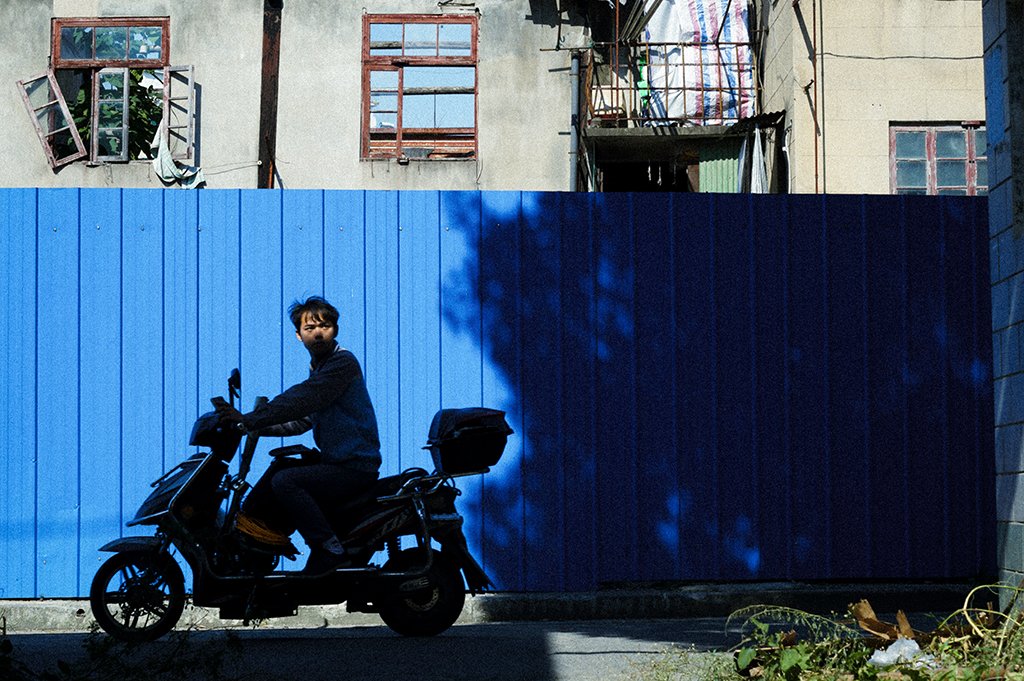
The 4th chapter of the #leesixtyfive project is complete!
It hasn’t been easy though, and certain difficulties have led to a small change in the creation process. We’re not stopping though, and evolution and learning are both good things.
Come see what happened as this 365 photography project reached 33% completion.

There are certain photography types, looks, and styles that fall out of fashion and can make your work look dated at some point in the future.
And then there are eternal composition tips that pre-date photography and will never not be effective. The rule of odds is one of those.
Come learn what it is, why it works, when to use it, and when not to. It can help you improve your street photography from today, and that improvement will last forever more.

The Konica Hexanon AR 50mm f1.7 has always had a reputation for sharpness; ever since it was first produced back in 1973. But how does it stack up today when used on a digital body?
The short answer is ‘pretty well, actually’. The longer answer can be found in this comprehensive review. It includes a brief history of the lens, a report on its build and image quality, my opinion on using it for street photography, and of course some real world test shots.
Come read and learn more about this popular and inexpensive vintage lens here.

Images shot on Ilford Pan 400 in the Canon Sure Shot AF-7 I remember the first time I ever went to Qingdao. 2009. My first time in China. As predicted, … Read more

Photographs 61 – 90 of the #leesixtyfive project are done, which gives me the chance to write you another update.
While the last edition talked about the 20-mile march, this one put it into practice due to me hitting a bit of a wall creatively. The motivation to make photographs waned a little but, thankfully, the desire to not quit the project prevailed.
Come read more about what went down, see the photographs the month produced, and get inspired to work on a photography project of your own.

Film-aged Shanghai is a collection of street photography by the city’s own Lu Yuanmin, shot on monochrome film in a Lomo LC-A.
The photographs themselves are good. Some are very good. But it’s the body of work as a whole that interests me – photography projects and books are always greater than the sum of their parts.
Come see how Film-aged Shanghai can inspire you with your own future photography projects, and maybe even your future photography books, in this review.

If you’re not selling your street photography on any print-on-demand websites – and have never considered doing so – then I’m going to suggest you should be.
I’m also going to tell you it’s not a get rich quick scheme. Think of it as a piece of your overall long-term money making strategy.
It requires some time in the beginning to get everything uploaded. Sales might be slow. But, for me, doing it is better than not doing it. Come learn exactly why.

If you want to improve your colour street photography, it’s essential to understand what makes a good colour photograph.
It takes more than just shooting in colour. You need to know how to deliberately use colour. The question is how, and some of the answers lie in this Captivating Color eBook.
I always want to improve my street photography, which is why I picked it up. But did it help me? And can it help you too? Come find out in this review.

The #leesixtyfive project has passed another milestone, which means writing up another blog post.
This one covers photographs 31 – 60 and features some rambling on the Antarctic explorers Roald Amundsen and Robert Falcon Scott, and Instagram hashtags. You’re going to have to come read it to see how those topics line up.
If you’re doing or thinking of doing a 365 project yourself, the message in this piece can help keep you going. I mean, it’s not like you’re trekking to the South Pole, is it. Is it?

If you want to make better decisions in life, you don’t need to learn any extraordinary new tips or techniques. All you need is to understand *why* you may be making bad decisions and then use that knowledge to cut them out.
The Art of Thinking Clearly by Rolf Dobelli outlines 99 cognitive biases that affect us all, causing us to unknowingly do the wrong thing or feel the wrong way all too regularly.
I recommend you pick it up and give it a good read through. In this review, I’ll tell you why and also explain how it helped me with my photography and blogging.

Confession time. Despite having this website all about vintage lenses and street photography, I haven’t actually been doing as much shooting as I could or should.
Perhaps I was burnt out. Or uninspired. I don’t know, but I needed a reason to go out more often with my camera. So, thinking that every day would probably be often enough, I started a 365 project.
Of course I then had to call it the #leesixtyfive project. This is how the first 30 days of it went down. Come read, come see.

If you’re looking to buy vintage lenses or pretty much any camera gear in Shanghai and don’t want to order online, there’s really only one place you’ll need to go.
That place is Xing Guang Photographic Equipment.
A 6-storey department store full of cameras, lenses, studio equipment, and all the accessories you’ll ever need, it’s my go-to place for my vintage lenses. Come see why, and learn all about how to go there to fulfil your photography gear needs too.

Here’s the truth. The real worth of Lightroom presets is governed by how much value the buyer will get from them.
That means, depending on the type of photography you do and how it rewards you, any given pack may be worth more to you than it is to me. Or less. I can’t possibly say.
But I can get you to ask yourself some questions to help you figure out if that Lightroom presets pack you’ve got your eye on is really worth the asking price. Come read, come learn.
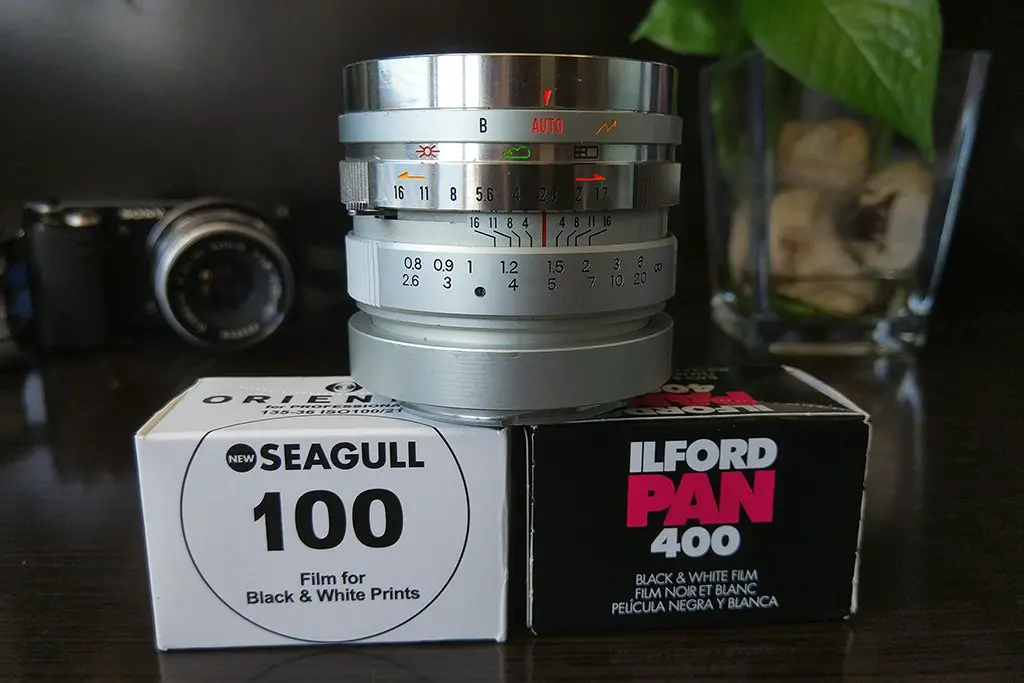
Understanding what ISO, aperture, and shutter speed are isn’t essential in making good photographs, but it can help you to make better ones.
However, for that to happen, simply understanding what they are isn’t enough. You’ll need to know how to use them too.
In this actionable post, you can learn both. Grab your camera and a cup of coffee and come follow along.
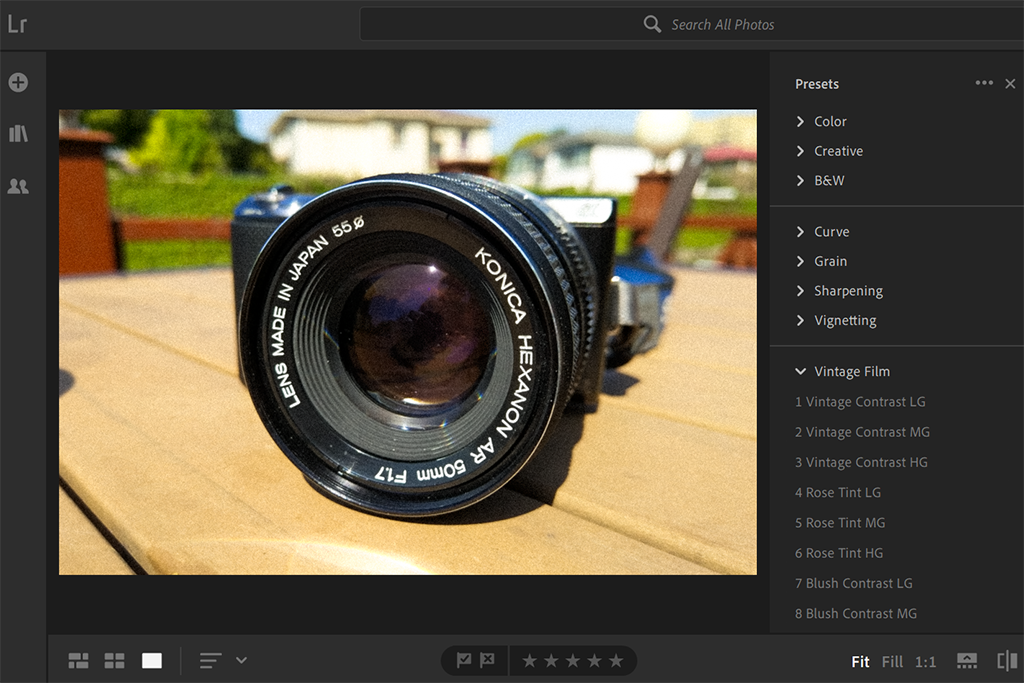
Lightroom presets will dramatically streamline your post-processing workflow. However, before you can use any you’ve bought or downloaded, you’ll have to install them.
The good news is, whatever version of Lightroom you’re using, it’s pretty simple to do so. All is explained in this post. Come read, come learn.

More film photography, right here. And this time we’re shooting monochrome.
Ilford Pan 400 is a film available in Asia. It’s not expensive, but does that make it worth buying if you’re in the area? Or even getting some shipped if you’re not?
To find out, I shot some Shanghai street photography with it. Here, in this very article, you can come see how it turned out. Come one, come all. Come on. Come in.

Looking to improve your photography? Who isn’t?! But seriously, we’d all like to be better at what we do. The question is how.
Pounding the streets and shooting often is one way to improve your photography. It’s the hard work – the graft – that we all need to put in.
Using Lightroom presets to improve your photography is smarter. And it works. Want to know how? Come read, come learn.

Is using Lightroom presets cheating? I’m going to say no. No, it isn’t.
So how about Lightroom and Photoshop themselves, and all the other photo editing software out there? Is that cheating? Nobody wants to think an image has been, gasp, ‘photoshopped’, do they?
Of course, some dishonesty can happen when processing your images. But in most cases, I don’t see it as cheating. Come read and learn why.

Nobody cares about your street photography. Not your friends or family, not the people who only ‘like’ your Instagram posts because they want you to check their work out, and certainly not the general public who have no idea who you are.
But if you do street photography, you probably do want people to care. The question is, how?
The answers lie in this post. Come read. Come learn. Come get people caring about your street photography.

Yuhuan is a small, industrial city on China’s east coast. I don’t think many people go there for the sightseeing.
I went there for a Chinese New Year and took my charity shop film camera and two rolls of Ilford Pan 400. I wanted to tell a story. I wanted to present Yuhuan as I saw it.
This film photography essay is the result of that. Come take a look.

Post-processing. How do you do yours? For me, it’s all about the Lightroom presets. If you’ve never tried them yourself, I think you’re missing out on something that could transform your workflow.
That’s quite a bold statement, but this article explains all, with the main points being that Lightroom presets can save you time, help you find consistency and your own style in your work, and actually improve your editing skills.
Why wouldn’t you want to do all that? Come read to learn how. To learn exactly why you should use Lightroom presets.

If you’re a travelling film photographer, finding a place to buy and develop your rolls on the road can be tricky – especially in a place as big and confusing as Shanghai.
So to make your life easier, I’ll tell you where I’ve had mine done. Right now that’s two places. One called Weima Professional Photo and one called Film Park. This post includes directions, maps, and my thoughts on what you can expect at both.
Come read, come learn, and don’t waste any more time researching where to buy or develop 35mm film in Shanghai.

If you’re a photographer or blogger, or even a photography blogger, you probably want to use photo editing software that you know gives you the best results.
I certainly do for the images I post on here, which is why I use Lightroom. It’s not free, but it does save me time and gives me peace of mind. Both of which I value highly.
Come learn more about why I use and recommend Lightroom in this piece here. If you’re struggling with some other software, it might just change your whole workflow.

I’ll always say the F.Zuiko 38mm f1.8 is a great vintage lens for your street photography.
It’s small, which keeps it discreet. It’s inexpensive, which means you can pick one up without feeling guilty. And the image quality is really good, which is really the most important thing.
I shot with mine in Ciqikou, in Chongqing, China. Come see how it went here.
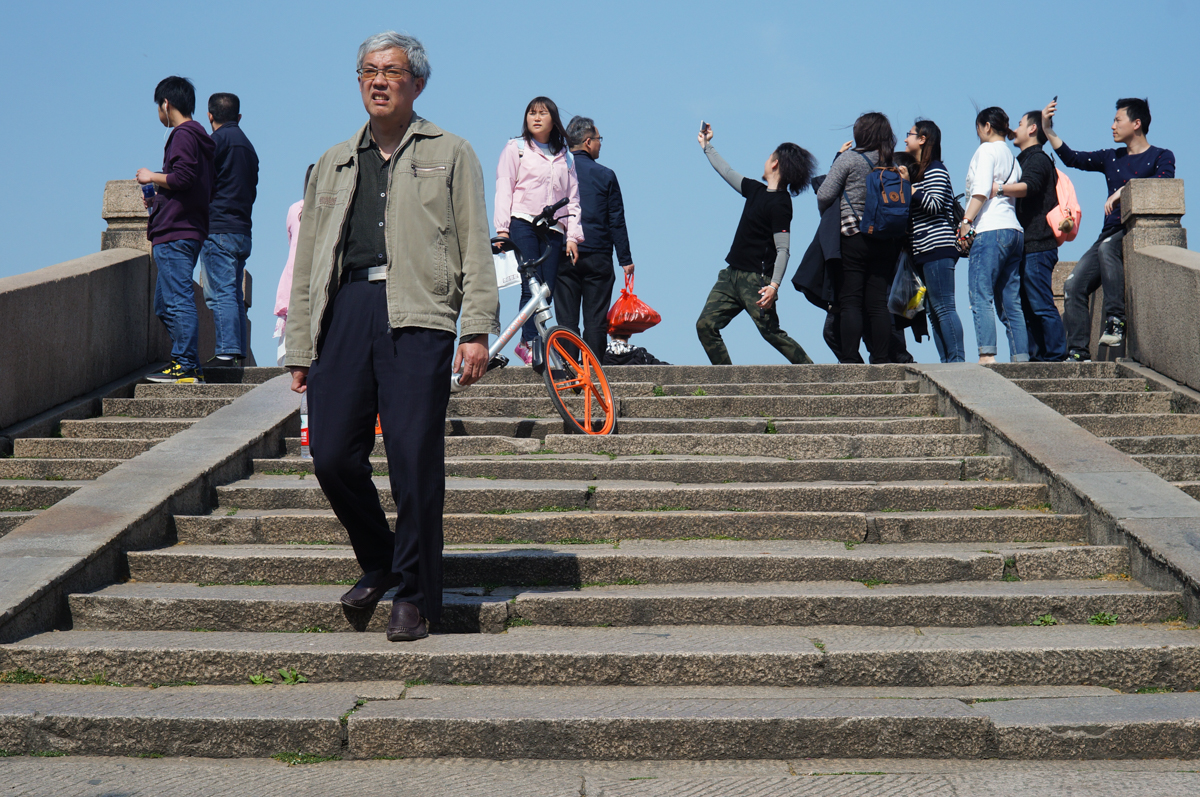
A short trip to Wuxi seemed like the perfect chance to get some more shooting in with the Yashica Yashinon 45mm f1.7.
Still getting back used to the focal length, I needed the practice as much as I wanted photographs I thought good enough to post here.
I got both, and with a lens that I loved shooting with. Come see, come read, come find out more. 🙂

Look at this lens, sitting there all shiny and chrome and making even the old Sony NEX-5N look sexy.
There’s no doubt the Yashica Yashinon-DX 45mm f1.7 is a handsome bastard, but how does actually it perform on your digital camera? What’s the build and image quality like? Is it easy and enjoyable to use? And why doesn’t it need an adapter like most other vintage lenses?
The answers to these questions – and more – can be found in this review. Come learn!

If you’re new to street photography or have been shooting in ‘Auto’ mode, there are probably more settings on your camera than you know what to do with.
It’s useful to learn what they all do, but not all of them are essential for what you want to achieve.
So to save you time, I’ll tell you which is the single most important camera setting for your street photography.

To watermark or not to watermark. That is the question… that seems to never go away in the world of online photo sharing.
I have a simple rule that I came up with while writing this post. If not watermarking your photography is losing you money, then watermark it. If that’s not the case, then don’t.
Most street photographers will fall into the second group, but there’s a further reason why I don’t think you should be watermarking your decisive moments. It’s because you need to be better than that. Want to know what that means exactly? Come read and I’ll tell you.

Got any old cameras and lenses you never use but don’t know what to do with? Having them take up space in your home in some sort of forced retirement seems a waste, to me.
So what should you do with them? What can you do with them? I think the best thing to do, for your gear and for the photography community as a whole, is to get them into the hands of people who will use them. You could even help out a charity while doing so.
There are plenty of options to achieve this. Want to know what they are? Then come on in, read, learn, and figure out the best thing to do with your old cameras and lenses.
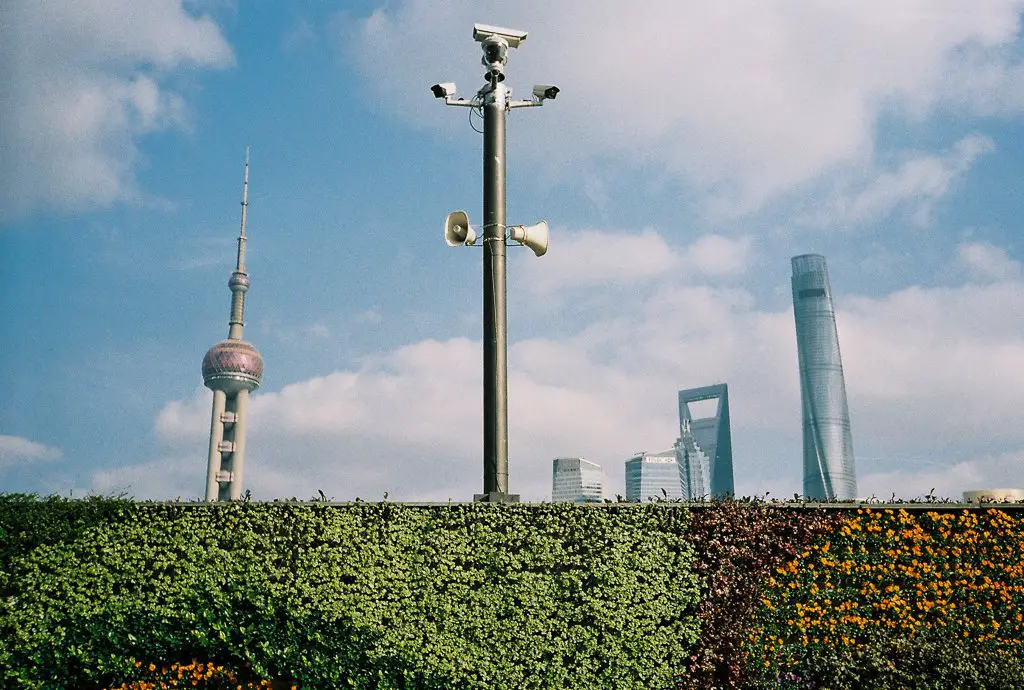
Another new old camera, bought cheap in an English charity shop, and a roll of the only film they had in Tesco. Taken to Shanghai and tested out in the winter sun.
The images I got are presented in this article. There aren’t that many of them but what is here is worth seeing. I wouldn’t have shared them otherwise.
So come take a look and see how a camera that cost less than the roll of Kodak ColorPlus inside it fared on its first outing (I presume) in China.

We need to be honest here. Chongqing’s Airport Square is in no way a place you should ever visit. Chongqing the city certainly is. But spend your time seeing the good stuff in the city centre.
That said, Airport Square was good to me. It provided a nice little location to test out my new old camera – the Canon Sure Shot AF-7. The question is, how did the shots turn out?
The answer is in this post. So maybe you should come on in and find out. Please. Thanks.

Despite shooting with vintage lenses 99% of the time, I’d never really thought about trying my hand at film photography. That changed when I picked up these two cameras and a couple of rolls of Kodak ColorPlus.
So how did that happen? What made me want to give it a go? And how did the pictures turn out?
Come find out in this post. Come on. Humour me.